When I joined The Royal Parks seven and a half years ago, the majority of our budget was provided by the Government, today that has significantly reduced but across The Royal Parks we have managed to gain funding from a variety of sources to continue valuable improvements.
In Richmond Park Robin Hood and Pembroke Lodge car park are undergoing renovation, a new access path and bridge over the Beverley Brook will soon open. A new club house for the golf course opened last week (after 15 years of planning!). All of the parks' road gates and toilets have been refurbished and the tree guards, benches and road posts are undergoing some much needed attention.
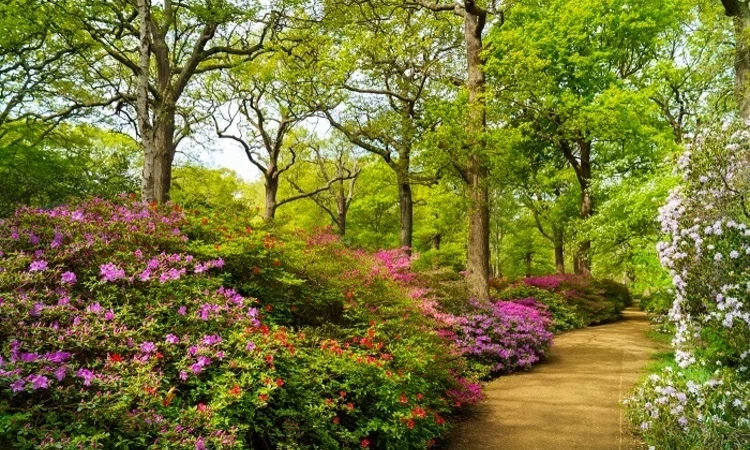
We were very fortunate to secure £1.5 million from The Heritage Lottery Fund and BIG Lottery Fund for the work at Isabella Plantation, which has moved on a pace with the restoration of the three ponds. On May 5th, in partnership with the Holly Lodge Centre we will be running a free minibus service from Ham Common to Isabella Plantation so visitors can see the improvements for themselves.
I am delighted that conservation projects have also been included in this winters work programme with nearly 4 hectares of rhododendron removal and two new fences being completed in Sidmouth woods, funded by the Forestry Commission. The Friends of Richmond Park have funded a new ditch and pond near Robin Hood Gate and the parks' horse riders have all clubbed together to help fund the restoration of the bridleways – true community spirit in these times of austerity. I have also felt heartened through this long winter by our new Shire horse contractors who have worked voluntarily to harrow bracken dominated areas, horse rides and hay meadows.
At last the busy winter work programme is nearing completion and the weather has finally turned summery. The parks wildlife has now declared that spring is finally here and celebrating the warmer weather. Last week I met with the Bat Conservation Trust to test some new bat monitoring equipment and in a little over half an hour we recorded about 30 bats of five different species. At one point I had around eight bats circling my head and over 10 toads croaking at my feet as they migrated to the Pen Ponds to breed.
Frogs and toads tried to emerge from hibernation during a couple of warm days in March but only a few spawned, with the rest being delayed until mid-April. The parks ponds are now abundant with tiny tadpoles and the herons have grown fat as they binge eat on their amphibious treat for a few days.
The gorse flowers in the north of the park fill the air with a heavy scent of coconut – which apparently some people can smell and some people can't, I'm always reminded of the old country saying that 'when gorse is out of bloom, kissing's out of season' – because it actually flowers a little all year round!
In February I found the familiar trails of grass across the park where badgers have 'backwards rolled' balls of dried grass bedding to their setts. They will now be nursing young deep underground. I'm also becoming increasingly aware tawny owls in the park near the lodge where I live (I know I'm very, very lucky). There appears to be one calling to the south and another to the north so in my insomnia I seem to be dividing two owls making territory or courtship calls.
I also do voluntary work for three conservation organisations and last week I took care of a common pipestrelle bat that wasn't able to build up enough fat reserves during last year's wet summer to survive the long winter. We humans have had to endure a long cold winter, but I'm reminded that for much of our native wildlife it's been really tough and the nature conservation value of reserves like Richmond Park is so important to help the natural populations ride through the good and bad years. I guess we are all looking forward to a long, hot summer!
Back in January birdwatchers from around London were all a flutter with the sighting of a pair of Bearded Tits - the first of their species ever to be spotted in inner London.
The pair were first spotted perching on the reed beds of the Serpentine lake in Hyde Park and stayed until mid February before they headed across the Capital to Regent's Park where they stayed for a couple of days.
This is such a rare sighting as these birds are usually found in more rural and suburban areas, such as Suffolk, in large extensive reeds and would normally not take a second glance at areas as small as the ones in the parks.
However, the reed beds that we do have in Hyde and Regent's Parks are scarce habitats in the Capital and since their creation have attracted many species of bird.
This winter period has been exceptional for this species in and around London. There have been birds wintering at three locations: one male in Brent Reservoir, two in the Wetland Centre and the two females in Hyde and Regent's Parks, which were ringed at the RSPB's Rye Meads Nature Reserve in the Lea Valley. Quite often during the autumn migrating birds use a line that takes them north east to south west. If these birds had originated from a reed bed in Suffolk and were travelling as a family group that somehow became separated these birds may well be related. Though there is no easy way of telling this.
I am just overjoyed that though it was great to see them in Hyde Park to have them then turn up and use a reed bed that I helped construct in Regent's Park makes them all the more special and shows the value of this habitat.
2012 proved to be an exceptionally busy year with Hyde Park hosting several Olympic competitions, a concert series, BT London Live, a London 2012 Shop, Proms in The Park and later in the year Winter Wonderland. The prolonged wet weather conditions were also exceptional and have resulted in a more significant restoration programme than in previous years. The Royal Parks are now overseeing a team of specialist contractors and gardeners that will restore Hyde Park to an excellent condition by the end of this spring.
The progress of all restoration work is dependent on the right weather conditions. If it is too wet then the ground preparation and turfing needs to be postponed until the soil dries out sufficiently. To attempt to carry out this work when the soil is very wet would make preparation impossible and damage the underlying soil structure. Plans for different areas of Hyde Park, outlined below, have been carefully developed to allow for this; however prolonged wet weather, frost or heavy snow can cause delays.
The Parade Ground: Between July and September 2012 this large open area of Hyde Park, located between Speaker's Corner and The Serpentine, hosted BT London Live, a concert series and the Proms in The Park. More than one million people from across the globe visited the park during this period. Following unprecedented wet weather conditions, wood chip was laid onto the Parade Ground to ensure that the events could continue and were safe for visitors.
To minimise the impact on park visitors and to ensure that the new grass thrives, the decision was made to complete a programme of restoration work during the spring 2013 growing season. This work, which started on 12 February, is being completed by a team of specialist contractors with expertise in large scale reinstatement under the careful management of The Royal Parks. Every effort will be made to ensure that park visitors can access as much of the park as possible; however large sections of the Parade Ground will need to be fenced off in stages to allow the work to be carried out safely and efficiently and the new areas of turf to establish.
A number of key footpaths on the Parade Ground will be kept open where possible to maximise access for park visitors. If a footpath needs to be closed for the work to take place then a diversion route will be sign-posted.
The scale of the project means a lot of very impressive specialist machinery is being used and it will be really interesting to watch. Such equipment is normally used to create and restore sports pitches and other large areas so it is ideally suited to the project that is taking place.
The majority of the work will consist of removing the wood chip, preparing and improving the ground and laying new turf. The southern section of the Parade Ground will be restored first, then the northern section near Speaker's Corner and finally the middle of the Parade Ground. Subject to the right weather conditions, it is anticipated that the turfing will be completed by the end of April 2013. Once each section of new turf has been laid it will need to be protected for four to six weeks so that the roots have time to establish - it can then be incrementally opened up for park users to access.
The Bandstand and Serpentine Road: Between November and January Winter Wonderland welcomed around two million people in this area of the park. All temporary event structures were removed by 18 January and work to restore this area of the park started on 12 February.
The majority of this work is being carried out by the same specialist contractors that are restoring the Parade Ground and the same approach will be taken. The immediate area around Serpentine Road will be restored by our in-house contractors as in previous years. Subject to the right weather conditions, this area of the park will be restored by the end of March.
The Cockpit: This area of Hyde Park, located at the north-west corner of The Serpentine, hosted the Olympic Triathlon and Marathon Swimming venue. The Royal Parks worked closely with the London Organising Committee for the Games (LOCOG) to develop plans for this Olympic venue and ensure that the impact of the temporary structures on the park was kept to a minimum.
Immediately after the Olympic events, work began to carefully remove the temporary venue structures and by the end of September this phase was complete. A team of our in-house contractors managed by The Royal Parks then started work to restore this area of the park and one month later the majority of the Cockpit reopened to the public. Due to unprecedented wet weather work has taken longer than anticipated and some areas of The Cockpit will be restored during the spring growing season, once the ground has had time to dry out. By the end of March, subject to the right weather conditions, this area will be returned to its pre-Games condition.
The Old Football Pitches: The eastern section of this area was home to a temporary London 2012 Shop between July and September 2012. Royal Parks' contractors will begin a programme of restoration work in late February to restore the site of the shop and the area surrounding it. Subject to the right weather conditions, this area will be improved beyond its pre-Games condition by the end of March as part of a wider project to improve the grassland in this section of the park.
Hyde Park is normally restored immediately after events and going forwards this will continue to be the approach taken by The Royal Parks. There will be fewer events in 2013 than in 2012, with six summer concerts. The Royal Parks is also working closely with AEG, the concert series partner, to minimise the impact of this new event on the park and to ensure that the Parade Ground is quickly and fully restored after the next concert season.
In addition to this restoration work, you may have noticed that elsewhere in the park, our specialist gardeners are busy regenerating old shrub beds and replanting others. One area of particular note is the Dell Gardens where the historic vistas are being restored. This includes the removal of inappropriate planting and implementing a new planting scheme designed to maximise the damp woodland conditions and the historic 'Palm Dell' feel of the garden. Some of the plants we will be using include ferns, primulas, bamboo, Japanese Acers and the impressive gunnera or giant rhubarb as it is sometimes known. The work is well underway and will continue into the spring.
Visit Restoring Hyde Park for further information.
Just after the equestrian cross country day on 31st July our gardeners got to work restoring the park. In early August the ground was prepared through raking and then drill seeding. Drill seeding buries seeds in a slit of soil to prevent the birds from eating them - this gives the young grass a good start. By October over three quarters of the park was opened up to the public and restored to its pre-Games condition, if not better.
Over on Queen's Field, site of the Equestrian arena, a different approach was required. The last of the temporary venue structures were removed at the end of November and this meant that the ground was too cold to sow seed. The best option was therefore to prepare the ground and lay turf.
Laying 35,000 square metres of turf is not a quick job. Fortunately our team of gardeners, under experienced supervision, are well practised. Ground preparation is the key to laying good lawns. Under the Equestrian arena the grass had died, however the soil was in good condition. The ground was de-compacted by punching thousands of drainage holes. Dead grass was then removed through scarification, followed by a couple of passes with the chain harrow and a final hand rake created the perfect bed for laying turf.
At the same time as this restoration work is taking place, we are carrying out a major refurbishment to the roads and footpaths in the park. We assessed them before the London 2012 events and after the temporary venue was removed. Some roads and footpaths had deteriorated during this time and some were already in need of general repair. By the end of March the roads and paths will be restored beyond their pre-Games condition. In addition to this we are also in the process of installing new gates at Blackheath Gate.
It's all go, but in just a few months Greenwich Park will look better than ever.
While on a recent holiday in Australia I was delighted to be able to have a look around Centennial Parklands and to learn more about these wonderful public spaces Sydneysiders are very fortunate to have such a space so central to the city.
Walking round Centennial Parklands with Peter Hadfield, Executive Officer of Centennial Parklands Foundation, I was struck by the many similarities that we have. Aside from our heritage, and the pride and pleasure we both provide to the public, it seems many of the challenges we face in preserving and enhancing London's eight Royal Parks are present here in Sydney.
Like Centennial Parklands, The Royal Parks needs to balance our environmental and social aims with our financial situation. Our funding is similar, in that The Royal Parks is required to raise a large proportion of its operating budget. We both therefore have to think creatively and sensitively about how to achieve this.
A substantial amount of funding is raised by hosting a variety of cultural events such as music concerts and art exhibitions; we even have Taste of London, which is similar to your Taste of Sydney!
Like the parklands, our spaces are free to visit and enjoy, and we encourage visitors to enjoy refreshments in our cafes and restaurants and hire sporting facilities. We also lease park buildings as private dwellings, or for art galleries and wedding venues, while licensing the use of parks for film crews all help generate revenue in a manner that has a low impact on the park and its visitors.
The Royal Parks Foundation also helps raise funds by enabling people to adopt ducks and deer, as well as engaging sponsors to help restore and maintain different aspects of our parks.
Managing high profile spaces like the parklands and the Royal Parks comes with expectations of the standards and attention to detail we will meet. For example, did you know the red geraniums which are planted in the summer months in the Memorial Gardens outside of Buckingham Palace are chosen to match the red uniforms of the Guards who protect the Palace?
The Mall, probably the world's most famous ceremonial procession route, and Horse Guards Parade actually form part of St James Park, and the Park Manager regularly works with members of the Royal Household, government agencies and event organisers to plan national state occasions and high profile events.
Last summer was particularly spectacular and intense with The Queen's Diamond Jubilee Concert, big viewing screens and, not forgetting, the royal carriage procession all featuring parts of St James's and Hyde parks. With barely time to breathe the parks were transformed for the Games with The Mall becoming the most famous finishing line in the world, Horse Guards a beach volleyball arena and Hyde a triathlon course.
In all we were very proud to successfully host 11 Olympic and Paralympic events including Equestrian, Marathon Swim, Marathon and Triathlon events.
However, even success sometimes presents a challenge and since the world wide promotion of the parks during London 2012, we face extra demand to host an increased number of sporting events and facilities. This challenge of expectation and hosting events of course is also linked with the need to restore the parks - a delicate challenge universally faced by park managers.
As well as working with official partners, it seems that like Centennial Parklands we have communities that love the parks, but who use them in a number of diverse ways such as sporting activity, attending events, or simply enjoying the features of the natural landscape for relaxation. As challenging as it can be managing these sometimes competing expectations and demands, it is absolutely key to achieving our aims that we engage with all our local communities and stakeholders to ensure they understand our aims and actions, and we understand theirs.
Talking to Peter I was very interested to learn more about Centennial Parklands' volunteer programmes and absolutely loved hearing about the value of the Men's Sheds. It's clear they carry out invaluable work, by amongst other things restoring and repairing park furniture and I am sure their efforts are appreciated by all.
At The Royal Parks we could not do without the help of our volunteers and Friends groups; each park has a Friends Group whose support varies from helping to run information kiosks, to raising funds for specific projects and running guided walks. Our large band of volunteers, help with specific tasks such as recording wildlife or helping to look after allotment gardens.
So looking at Centennial Parklands and The Royal Parks one cannot help but be struck by the similarity of our challenges; the ways we look to generate income, working with partners and having the support of the local community is absolutely critical to the future of our parks.
I would like to conclude by sending a heartfelt thank you to Peter, who took time out to give me a tour of the Parklands. It was a wonderful experience and a highlight of my trip so far.
We had planned to meet during the Games, but my busy schedule and Peter's commentary commitments on ABC meant it didn't work out. Fortunately due to my decision to visit friends who emigrated to Wahroonga means I was able to accept Peter's kind offer of hosting a visit around these wonderful parklands. I have no doubt we will stay in touch, sharing our experiences and knowledge.
Finally I'd like to wish a happy birthday to Centennial Park. There can be fewer better looking 125 years olds! It is a marvellous park, and at this grand age offers so much to the residents of Sydney and all those who are lucky enough to visit.
It has been a busy week in Richmond Park. We operate a rotational on-call system for out of hours work and my 1st week on-call for 2013 landed at the same time as the snow.
The park is generally a few degrees cooler than central London so when it snows we generally have it deeper and for longer than our colleagues in Hyde and St James Parks. On Friday we started gritting the eight or so miles of roads in the morning just after the rush hour traffic had died down and we kept working into the evening to push any slush off the road. Then on Saturday, Sunday and Monday mornings we had a full team of eight working from 02.00am to grit the roads, drive the snow into the grit and the snow plough.
We also had to deploy road signs and cones and a team to grit pedestrian gates. My role is to monitor the state of the weather, instruct the team and assess when the park roads are safe to open. We are then kept busy for most of the day dealing with issues the large numbers of visitors bring with them.
The park was very, very busy this weekend and it's great to see so many people enjoying the countryside with friends and family. I was very impressed with the brilliant snowmen people built and one group of friends even built an amazing igloo that took them 5 hours!
As staff, though, we also always worry about the amount of litter (mostly broken sledges!) and damage to the park infrastructure and habitats. However my young son has enjoyed collecting rubbish on his sledge much to the delight of our litter crew. The police were also very busy issuing parking tickets for people that used the verges instead of the car parks.
Amongst the snow related issues I also had a lost Jack Russell dog that the owner thought may have disappeared down a rabbit hole. I made a search of the park (to no avail) and heard nothing more. One assumes they were re-united as luckily the dog had a collar with a phone number. Every year we get lots of dogs found without tags and they always take up a lot of time as they get taken to kennels by the dog warden unless the owner is found straight away.
I also fed the deer at night in the snow. It is a truly magical experience driving across the park distributing deer pellets and maize to a herd of hundreds of deer, who are delighted to receive their rations when there isn't much grass to be found.
Although it's been busy, the team spirit between park contractors and Royal Parks staff is excellent. Without exception the team here always help out when they are called upon, and I'm once again in their debt for helping to get the park fit for the public to enjoy the snow.
| < newer blog posts | 1 2 3 4 | older blog posts > |
Subscribe to this blog feed

I’m Linda Lennon, Chief Executive of The Royal Parks.
We manage the eight parks to protect, conserve and enhance their wonderful features for future generations.
To give an insight into how we do that, colleagues and I are writing a blog.
The Royal Parks manages London's eight Royal Parks. They are: Hyde Park, Richmond Park, The Regent's Park and Primrose Hill, The Green Park, St James's Park, Bushy Park, Kensington Gardens and Greenwich Park.
When I joined The Royal Parks seven and a half years ago, the majority of our budget was provided by the Government, today that has significantly reduced but across The Royal Parks we have managed to gain funding from a variety of sources to continue valuable improvements.
In Richmond Park Robin Hood and Pembroke Lodge car park are undergoing renovation, a new access path and bridge over the Beverley Brook will soon open. A new club house for the golf course opened last week (after 15 years of planning!). All of the parks' road gates and toilets have been refurbished and the tree guards, benches and road posts are undergoing some much needed attention.
We were very fortunate to secure £1.5 million from The Heritage Lottery Fund and BIG Lottery Fund for the work at Isabella Plantation, which has moved on a pace with the restoration of the three ponds. On May 5th, in partnership with the Holly Lodge Centre we will be running a free minibus service from Ham Common to Isabella Plantation so visitors can see the improvements for themselves.
I am delighted that conservation projects have also been included in this winters work programme with nearly 4 hectares of rhododendron removal and two new fences being completed in Sidmouth woods, funded by the Forestry Commission. The Friends of Richmond Park have funded a new ditch and pond near Robin Hood Gate and the parks' horse riders have all clubbed together to help fund the restoration of the bridleways – true community spirit in these times of austerity. I have also felt heartened through this long winter by our new Shire horse contractors who have worked voluntarily to harrow bracken dominated areas, horse rides and hay meadows.
At last the busy winter work programme is nearing completion and the weather has finally turned summery. The parks wildlife has now declared that spring is finally here and celebrating the warmer weather. Last week I met with the Bat Conservation Trust to test some new bat monitoring equipment and in a little over half an hour we recorded about 30 bats of five different species. At one point I had around eight bats circling my head and over 10 toads croaking at my feet as they migrated to the Pen Ponds to breed.
Frogs and toads tried to emerge from hibernation during a couple of warm days in March but only a few spawned, with the rest being delayed until mid-April. The parks ponds are now abundant with tiny tadpoles and the herons have grown fat as they binge eat on their amphibious treat for a few days.
The gorse flowers in the north of the park fill the air with a heavy scent of coconut – which apparently some people can smell and some people can't, I'm always reminded of the old country saying that 'when gorse is out of bloom, kissing's out of season' – because it actually flowers a little all year round!
In February I found the familiar trails of grass across the park where badgers have 'backwards rolled' balls of dried grass bedding to their setts. They will now be nursing young deep underground. I'm also becoming increasingly aware tawny owls in the park near the lodge where I live (I know I'm very, very lucky). There appears to be one calling to the south and another to the north so in my insomnia I seem to be dividing two owls making territory or courtship calls.
I also do voluntary work for three conservation organisations and last week I took care of a common pipestrelle bat that wasn't able to build up enough fat reserves during last year's wet summer to survive the long winter. We humans have had to endure a long cold winter, but I'm reminded that for much of our native wildlife it's been really tough and the nature conservation value of reserves like Richmond Park is so important to help the natural populations ride through the good and bad years. I guess we are all looking forward to a long, hot summer!
Back in January birdwatchers from around London were all a flutter with the sighting of a pair of Bearded Tits - the first of their species ever to be spotted in inner London.
The pair were first spotted perching on the reed beds of the Serpentine lake in Hyde Park and stayed until mid February before they headed across the Capital to Regent's Park where they stayed for a couple of days.
This is such a rare sighting as these birds are usually found in more rural and suburban areas, such as Suffolk, in large extensive reeds and would normally not take a second glance at areas as small as the ones in the parks.
However, the reed beds that we do have in Hyde and Regent's Parks are scarce habitats in the Capital and since their creation have attracted many species of bird.
This winter period has been exceptional for this species in and around London. There have been birds wintering at three locations: one male in Brent Reservoir, two in the Wetland Centre and the two females in Hyde and Regent's Parks, which were ringed at the RSPB's Rye Meads Nature Reserve in the Lea Valley. Quite often during the autumn migrating birds use a line that takes them north east to south west. If these birds had originated from a reed bed in Suffolk and were travelling as a family group that somehow became separated these birds may well be related. Though there is no easy way of telling this.
I am just overjoyed that though it was great to see them in Hyde Park to have them then turn up and use a reed bed that I helped construct in Regent's Park makes them all the more special and shows the value of this habitat.
2012 proved to be an exceptionally busy year with Hyde Park hosting several Olympic competitions, a concert series, BT London Live, a London 2012 Shop, Proms in The Park and later in the year Winter Wonderland. The prolonged wet weather conditions were also exceptional and have resulted in a more significant restoration programme than in previous years. The Royal Parks are now overseeing a team of specialist contractors and gardeners that will restore Hyde Park to an excellent condition by the end of this spring.
The progress of all restoration work is dependent on the right weather conditions. If it is too wet then the ground preparation and turfing needs to be postponed until the soil dries out sufficiently. To attempt to carry out this work when the soil is very wet would make preparation impossible and damage the underlying soil structure. Plans for different areas of Hyde Park, outlined below, have been carefully developed to allow for this; however prolonged wet weather, frost or heavy snow can cause delays.
The Parade Ground: Between July and September 2012 this large open area of Hyde Park, located between Speaker's Corner and The Serpentine, hosted BT London Live, a concert series and the Proms in The Park. More than one million people from across the globe visited the park during this period. Following unprecedented wet weather conditions, wood chip was laid onto the Parade Ground to ensure that the events could continue and were safe for visitors.
To minimise the impact on park visitors and to ensure that the new grass thrives, the decision was made to complete a programme of restoration work during the spring 2013 growing season. This work, which started on 12 February, is being completed by a team of specialist contractors with expertise in large scale reinstatement under the careful management of The Royal Parks. Every effort will be made to ensure that park visitors can access as much of the park as possible; however large sections of the Parade Ground will need to be fenced off in stages to allow the work to be carried out safely and efficiently and the new areas of turf to establish.
A number of key footpaths on the Parade Ground will be kept open where possible to maximise access for park visitors. If a footpath needs to be closed for the work to take place then a diversion route will be sign-posted.
The scale of the project means a lot of very impressive specialist machinery is being used and it will be really interesting to watch. Such equipment is normally used to create and restore sports pitches and other large areas so it is ideally suited to the project that is taking place.
The majority of the work will consist of removing the wood chip, preparing and improving the ground and laying new turf. The southern section of the Parade Ground will be restored first, then the northern section near Speaker's Corner and finally the middle of the Parade Ground. Subject to the right weather conditions, it is anticipated that the turfing will be completed by the end of April 2013. Once each section of new turf has been laid it will need to be protected for four to six weeks so that the roots have time to establish - it can then be incrementally opened up for park users to access.
The Bandstand and Serpentine Road: Between November and January Winter Wonderland welcomed around two million people in this area of the park. All temporary event structures were removed by 18 January and work to restore this area of the park started on 12 February.
The majority of this work is being carried out by the same specialist contractors that are restoring the Parade Ground and the same approach will be taken. The immediate area around Serpentine Road will be restored by our in-house contractors as in previous years. Subject to the right weather conditions, this area of the park will be restored by the end of March.
The Cockpit: This area of Hyde Park, located at the north-west corner of The Serpentine, hosted the Olympic Triathlon and Marathon Swimming venue. The Royal Parks worked closely with the London Organising Committee for the Games (LOCOG) to develop plans for this Olympic venue and ensure that the impact of the temporary structures on the park was kept to a minimum.
Immediately after the Olympic events, work began to carefully remove the temporary venue structures and by the end of September this phase was complete. A team of our in-house contractors managed by The Royal Parks then started work to restore this area of the park and one month later the majority of the Cockpit reopened to the public. Due to unprecedented wet weather work has taken longer than anticipated and some areas of The Cockpit will be restored during the spring growing season, once the ground has had time to dry out. By the end of March, subject to the right weather conditions, this area will be returned to its pre-Games condition.
The Old Football Pitches: The eastern section of this area was home to a temporary London 2012 Shop between July and September 2012. Royal Parks' contractors will begin a programme of restoration work in late February to restore the site of the shop and the area surrounding it. Subject to the right weather conditions, this area will be improved beyond its pre-Games condition by the end of March as part of a wider project to improve the grassland in this section of the park.
Hyde Park is normally restored immediately after events and going forwards this will continue to be the approach taken by The Royal Parks. There will be fewer events in 2013 than in 2012, with six summer concerts. The Royal Parks is also working closely with AEG, the concert series partner, to minimise the impact of this new event on the park and to ensure that the Parade Ground is quickly and fully restored after the next concert season.
In addition to this restoration work, you may have noticed that elsewhere in the park, our specialist gardeners are busy regenerating old shrub beds and replanting others. One area of particular note is the Dell Gardens where the historic vistas are being restored. This includes the removal of inappropriate planting and implementing a new planting scheme designed to maximise the damp woodland conditions and the historic 'Palm Dell' feel of the garden. Some of the plants we will be using include ferns, primulas, bamboo, Japanese Acers and the impressive gunnera or giant rhubarb as it is sometimes known. The work is well underway and will continue into the spring.
Visit Restoring Hyde Park for further information.
Just after the equestrian cross country day on 31st July our gardeners got to work restoring the park. In early August the ground was prepared through raking and then drill seeding. Drill seeding buries seeds in a slit of soil to prevent the birds from eating them - this gives the young grass a good start. By October over three quarters of the park was opened up to the public and restored to its pre-Games condition, if not better.
Over on Queen's Field, site of the Equestrian arena, a different approach was required. The last of the temporary venue structures were removed at the end of November and this meant that the ground was too cold to sow seed. The best option was therefore to prepare the ground and lay turf.
Laying 35,000 square metres of turf is not a quick job. Fortunately our team of gardeners, under experienced supervision, are well practised. Ground preparation is the key to laying good lawns. Under the Equestrian arena the grass had died, however the soil was in good condition. The ground was de-compacted by punching thousands of drainage holes. Dead grass was then removed through scarification, followed by a couple of passes with the chain harrow and a final hand rake created the perfect bed for laying turf.
At the same time as this restoration work is taking place, we are carrying out a major refurbishment to the roads and footpaths in the park. We assessed them before the London 2012 events and after the temporary venue was removed. Some roads and footpaths had deteriorated during this time and some were already in need of general repair. By the end of March the roads and paths will be restored beyond their pre-Games condition. In addition to this we are also in the process of installing new gates at Blackheath Gate.
It's all go, but in just a few months Greenwich Park will look better than ever.
While on a recent holiday in Australia I was delighted to be able to have a look around Centennial Parklands and to learn more about these wonderful public spaces Sydneysiders are very fortunate to have such a space so central to the city.
Walking round Centennial Parklands with Peter Hadfield, Executive Officer of Centennial Parklands Foundation, I was struck by the many similarities that we have. Aside from our heritage, and the pride and pleasure we both provide to the public, it seems many of the challenges we face in preserving and enhancing London's eight Royal Parks are present here in Sydney.
Like Centennial Parklands, The Royal Parks needs to balance our environmental and social aims with our financial situation. Our funding is similar, in that The Royal Parks is required to raise a large proportion of its operating budget. We both therefore have to think creatively and sensitively about how to achieve this.
A substantial amount of funding is raised by hosting a variety of cultural events such as music concerts and art exhibitions; we even have Taste of London, which is similar to your Taste of Sydney!
Like the parklands, our spaces are free to visit and enjoy, and we encourage visitors to enjoy refreshments in our cafes and restaurants and hire sporting facilities. We also lease park buildings as private dwellings, or for art galleries and wedding venues, while licensing the use of parks for film crews all help generate revenue in a manner that has a low impact on the park and its visitors.
The Royal Parks Foundation also helps raise funds by enabling people to adopt ducks and deer, as well as engaging sponsors to help restore and maintain different aspects of our parks.
Managing high profile spaces like the parklands and the Royal Parks comes with expectations of the standards and attention to detail we will meet. For example, did you know the red geraniums which are planted in the summer months in the Memorial Gardens outside of Buckingham Palace are chosen to match the red uniforms of the Guards who protect the Palace?
The Mall, probably the world's most famous ceremonial procession route, and Horse Guards Parade actually form part of St James Park, and the Park Manager regularly works with members of the Royal Household, government agencies and event organisers to plan national state occasions and high profile events.
Last summer was particularly spectacular and intense with The Queen's Diamond Jubilee Concert, big viewing screens and, not forgetting, the royal carriage procession all featuring parts of St James's and Hyde parks. With barely time to breathe the parks were transformed for the Games with The Mall becoming the most famous finishing line in the world, Horse Guards a beach volleyball arena and Hyde a triathlon course.
In all we were very proud to successfully host 11 Olympic and Paralympic events including Equestrian, Marathon Swim, Marathon and Triathlon events.
However, even success sometimes presents a challenge and since the world wide promotion of the parks during London 2012, we face extra demand to host an increased number of sporting events and facilities. This challenge of expectation and hosting events of course is also linked with the need to restore the parks - a delicate challenge universally faced by park managers.
As well as working with official partners, it seems that like Centennial Parklands we have communities that love the parks, but who use them in a number of diverse ways such as sporting activity, attending events, or simply enjoying the features of the natural landscape for relaxation. As challenging as it can be managing these sometimes competing expectations and demands, it is absolutely key to achieving our aims that we engage with all our local communities and stakeholders to ensure they understand our aims and actions, and we understand theirs.
Talking to Peter I was very interested to learn more about Centennial Parklands' volunteer programmes and absolutely loved hearing about the value of the Men's Sheds. It's clear they carry out invaluable work, by amongst other things restoring and repairing park furniture and I am sure their efforts are appreciated by all.
At The Royal Parks we could not do without the help of our volunteers and Friends groups; each park has a Friends Group whose support varies from helping to run information kiosks, to raising funds for specific projects and running guided walks. Our large band of volunteers, help with specific tasks such as recording wildlife or helping to look after allotment gardens.
So looking at Centennial Parklands and The Royal Parks one cannot help but be struck by the similarity of our challenges; the ways we look to generate income, working with partners and having the support of the local community is absolutely critical to the future of our parks.
I would like to conclude by sending a heartfelt thank you to Peter, who took time out to give me a tour of the Parklands. It was a wonderful experience and a highlight of my trip so far.
We had planned to meet during the Games, but my busy schedule and Peter's commentary commitments on ABC meant it didn't work out. Fortunately due to my decision to visit friends who emigrated to Wahroonga means I was able to accept Peter's kind offer of hosting a visit around these wonderful parklands. I have no doubt we will stay in touch, sharing our experiences and knowledge.
Finally I'd like to wish a happy birthday to Centennial Park. There can be fewer better looking 125 years olds! It is a marvellous park, and at this grand age offers so much to the residents of Sydney and all those who are lucky enough to visit.
It has been a busy week in Richmond Park. We operate a rotational on-call system for out of hours work and my 1st week on-call for 2013 landed at the same time as the snow.
The park is generally a few degrees cooler than central London so when it snows we generally have it deeper and for longer than our colleagues in Hyde and St James Parks. On Friday we started gritting the eight or so miles of roads in the morning just after the rush hour traffic had died down and we kept working into the evening to push any slush off the road. Then on Saturday, Sunday and Monday mornings we had a full team of eight working from 02.00am to grit the roads, drive the snow into the grit and the snow plough.
We also had to deploy road signs and cones and a team to grit pedestrian gates. My role is to monitor the state of the weather, instruct the team and assess when the park roads are safe to open. We are then kept busy for most of the day dealing with issues the large numbers of visitors bring with them.
The park was very, very busy this weekend and it's great to see so many people enjoying the countryside with friends and family. I was very impressed with the brilliant snowmen people built and one group of friends even built an amazing igloo that took them 5 hours!
As staff, though, we also always worry about the amount of litter (mostly broken sledges!) and damage to the park infrastructure and habitats. However my young son has enjoyed collecting rubbish on his sledge much to the delight of our litter crew. The police were also very busy issuing parking tickets for people that used the verges instead of the car parks.
Amongst the snow related issues I also had a lost Jack Russell dog that the owner thought may have disappeared down a rabbit hole. I made a search of the park (to no avail) and heard nothing more. One assumes they were re-united as luckily the dog had a collar with a phone number. Every year we get lots of dogs found without tags and they always take up a lot of time as they get taken to kennels by the dog warden unless the owner is found straight away.
I also fed the deer at night in the snow. It is a truly magical experience driving across the park distributing deer pellets and maize to a herd of hundreds of deer, who are delighted to receive their rations when there isn't much grass to be found.
Although it's been busy, the team spirit between park contractors and Royal Parks staff is excellent. Without exception the team here always help out when they are called upon, and I'm once again in their debt for helping to get the park fit for the public to enjoy the snow.
| < newer blog posts | 1 2 3 4 | older blog posts > |
Subscribe to this blog feed

I’m Linda Lennon, Chief Executive of The Royal Parks.
We manage the eight parks to protect, conserve and enhance their wonderful features for future generations.
To give an insight into how we do that, colleagues and I are writing a blog.
The Royal Parks manages London's eight Royal Parks. They are: Hyde Park, Richmond Park, The Regent's Park and Primrose Hill, The Green Park, St James's Park, Bushy Park, Kensington Gardens and Greenwich Park.
This is some blurb text. This should be changed in the metadata screen for this asset.
Lorem ipsum dolor sit amet pulvinar consectetur elit adisciplin donec avec elit magna pul vinar estbul ipsum elit sit donec ipsum.
Buy now...
Barclaycard presents British Summer Time Hyde Park, a ground breaking new concert series and outdoor experience from 5 July - 14 July 2013.
More things to do...
A permanent memorial to honour the victims of the 7 July 2005 London Bombings was unveiled in Hyde Park by Their Royal Highnesses, The Prince of Wales and The Duchess of Cornwall.
More things to do...
This unique Memorial to Diana, Princess of Wales was opened by Her Majesty The Queen on 6th July 2004 and was built with the best materials, talent and technology.
More things to do...
Royal Gun Salutes mark special royal occasions. On these days salutes are fired from locations in London including Hyde Park and Green Park.
More things to do...
Daily public swimming in The Serpentine from June - September. Serpentine Swimming Club swims every day, including the famous race on Christmas day.
More things to do...
Rowing and pedal boats are available to hire on the Serpentine in Hyde Park. You can also take a ride on the UK's first Solarshuttle, powered only by the sun.
More things to do...
The Diana Princess of Wales Memorial Walk is a seven-mile-long walk, charted by 90 plaques set in the ground, that takes you within sight of famous buildings and locations associated with the Princess during her life.
More things to do...When I joined The Royal Parks seven and a half years ago, the majority of our budget was provided by the Government, today that has significantly reduced but across The Royal Parks we have managed to gain funding from a variety of sources to continue valuable improvements.
In Richmond Park Robin Hood and Pembroke Lodge car park are undergoing renovation, a new access path and bridge over the Beverley Brook will soon open. A new club house for the golf course opened last week (after 15 years of planning!). All of the parks' road gates and toilets have been refurbished and the tree guards, benches and road posts are undergoing some much needed attention.
We were very fortunate to secure £1.5 million from The Heritage Lottery Fund and BIG Lottery Fund for the work at Isabella Plantation, which has moved on a pace with the restoration of the three ponds. On May 5th, in partnership with the Holly Lodge Centre we will be running a free minibus service from Ham Common to Isabella Plantation so visitors can see the improvements for themselves.
I am delighted that conservation projects have also been included in this winters work programme with nearly 4 hectares of rhododendron removal and two new fences being completed in Sidmouth woods, funded by the Forestry Commission. The Friends of Richmond Park have funded a new ditch and pond near Robin Hood Gate and the parks' horse riders have all clubbed together to help fund the restoration of the bridleways – true community spirit in these times of austerity. I have also felt heartened through this long winter by our new Shire horse contractors who have worked voluntarily to harrow bracken dominated areas, horse rides and hay meadows.
At last the busy winter work programme is nearing completion and the weather has finally turned summery. The parks wildlife has now declared that spring is finally here and celebrating the warmer weather. Last week I met with the Bat Conservation Trust to test some new bat monitoring equipment and in a little over half an hour we recorded about 30 bats of five different species. At one point I had around eight bats circling my head and over 10 toads croaking at my feet as they migrated to the Pen Ponds to breed.
Frogs and toads tried to emerge from hibernation during a couple of warm days in March but only a few spawned, with the rest being delayed until mid-April. The parks ponds are now abundant with tiny tadpoles and the herons have grown fat as they binge eat on their amphibious treat for a few days.
The gorse flowers in the north of the park fill the air with a heavy scent of coconut – which apparently some people can smell and some people can't, I'm always reminded of the old country saying that 'when gorse is out of bloom, kissing's out of season' – because it actually flowers a little all year round!
In February I found the familiar trails of grass across the park where badgers have 'backwards rolled' balls of dried grass bedding to their setts. They will now be nursing young deep underground. I'm also becoming increasingly aware tawny owls in the park near the lodge where I live (I know I'm very, very lucky). There appears to be one calling to the south and another to the north so in my insomnia I seem to be dividing two owls making territory or courtship calls.
I also do voluntary work for three conservation organisations and last week I took care of a common pipestrelle bat that wasn't able to build up enough fat reserves during last year's wet summer to survive the long winter. We humans have had to endure a long cold winter, but I'm reminded that for much of our native wildlife it's been really tough and the nature conservation value of reserves like Richmond Park is so important to help the natural populations ride through the good and bad years. I guess we are all looking forward to a long, hot summer!
Back in January birdwatchers from around London were all a flutter with the sighting of a pair of Bearded Tits - the first of their species ever to be spotted in inner London.
The pair were first spotted perching on the reed beds of the Serpentine lake in Hyde Park and stayed until mid February before they headed across the Capital to Regent's Park where they stayed for a couple of days.
This is such a rare sighting as these birds are usually found in more rural and suburban areas, such as Suffolk, in large extensive reeds and would normally not take a second glance at areas as small as the ones in the parks.
However, the reed beds that we do have in Hyde and Regent's Parks are scarce habitats in the Capital and since their creation have attracted many species of bird.
This winter period has been exceptional for this species in and around London. There have been birds wintering at three locations: one male in Brent Reservoir, two in the Wetland Centre and the two females in Hyde and Regent's Parks, which were ringed at the RSPB's Rye Meads Nature Reserve in the Lea Valley. Quite often during the autumn migrating birds use a line that takes them north east to south west. If these birds had originated from a reed bed in Suffolk and were travelling as a family group that somehow became separated these birds may well be related. Though there is no easy way of telling this.
I am just overjoyed that though it was great to see them in Hyde Park to have them then turn up and use a reed bed that I helped construct in Regent's Park makes them all the more special and shows the value of this habitat.
2012 proved to be an exceptionally busy year with Hyde Park hosting several Olympic competitions, a concert series, BT London Live, a London 2012 Shop, Proms in The Park and later in the year Winter Wonderland. The prolonged wet weather conditions were also exceptional and have resulted in a more significant restoration programme than in previous years. The Royal Parks are now overseeing a team of specialist contractors and gardeners that will restore Hyde Park to an excellent condition by the end of this spring.
The progress of all restoration work is dependent on the right weather conditions. If it is too wet then the ground preparation and turfing needs to be postponed until the soil dries out sufficiently. To attempt to carry out this work when the soil is very wet would make preparation impossible and damage the underlying soil structure. Plans for different areas of Hyde Park, outlined below, have been carefully developed to allow for this; however prolonged wet weather, frost or heavy snow can cause delays.
The Parade Ground: Between July and September 2012 this large open area of Hyde Park, located between Speaker's Corner and The Serpentine, hosted BT London Live, a concert series and the Proms in The Park. More than one million people from across the globe visited the park during this period. Following unprecedented wet weather conditions, wood chip was laid onto the Parade Ground to ensure that the events could continue and were safe for visitors.
To minimise the impact on park visitors and to ensure that the new grass thrives, the decision was made to complete a programme of restoration work during the spring 2013 growing season. This work, which started on 12 February, is being completed by a team of specialist contractors with expertise in large scale reinstatement under the careful management of The Royal Parks. Every effort will be made to ensure that park visitors can access as much of the park as possible; however large sections of the Parade Ground will need to be fenced off in stages to allow the work to be carried out safely and efficiently and the new areas of turf to establish.
A number of key footpaths on the Parade Ground will be kept open where possible to maximise access for park visitors. If a footpath needs to be closed for the work to take place then a diversion route will be sign-posted.
The scale of the project means a lot of very impressive specialist machinery is being used and it will be really interesting to watch. Such equipment is normally used to create and restore sports pitches and other large areas so it is ideally suited to the project that is taking place.
The majority of the work will consist of removing the wood chip, preparing and improving the ground and laying new turf. The southern section of the Parade Ground will be restored first, then the northern section near Speaker's Corner and finally the middle of the Parade Ground. Subject to the right weather conditions, it is anticipated that the turfing will be completed by the end of April 2013. Once each section of new turf has been laid it will need to be protected for four to six weeks so that the roots have time to establish - it can then be incrementally opened up for park users to access.
The Bandstand and Serpentine Road: Between November and January Winter Wonderland welcomed around two million people in this area of the park. All temporary event structures were removed by 18 January and work to restore this area of the park started on 12 February.
The majority of this work is being carried out by the same specialist contractors that are restoring the Parade Ground and the same approach will be taken. The immediate area around Serpentine Road will be restored by our in-house contractors as in previous years. Subject to the right weather conditions, this area of the park will be restored by the end of March.
The Cockpit: This area of Hyde Park, located at the north-west corner of The Serpentine, hosted the Olympic Triathlon and Marathon Swimming venue. The Royal Parks worked closely with the London Organising Committee for the Games (LOCOG) to develop plans for this Olympic venue and ensure that the impact of the temporary structures on the park was kept to a minimum.
Immediately after the Olympic events, work began to carefully remove the temporary venue structures and by the end of September this phase was complete. A team of our in-house contractors managed by The Royal Parks then started work to restore this area of the park and one month later the majority of the Cockpit reopened to the public. Due to unprecedented wet weather work has taken longer than anticipated and some areas of The Cockpit will be restored during the spring growing season, once the ground has had time to dry out. By the end of March, subject to the right weather conditions, this area will be returned to its pre-Games condition.
The Old Football Pitches: The eastern section of this area was home to a temporary London 2012 Shop between July and September 2012. Royal Parks' contractors will begin a programme of restoration work in late February to restore the site of the shop and the area surrounding it. Subject to the right weather conditions, this area will be improved beyond its pre-Games condition by the end of March as part of a wider project to improve the grassland in this section of the park.
Hyde Park is normally restored immediately after events and going forwards this will continue to be the approach taken by The Royal Parks. There will be fewer events in 2013 than in 2012, with six summer concerts. The Royal Parks is also working closely with AEG, the concert series partner, to minimise the impact of this new event on the park and to ensure that the Parade Ground is quickly and fully restored after the next concert season.
In addition to this restoration work, you may have noticed that elsewhere in the park, our specialist gardeners are busy regenerating old shrub beds and replanting others. One area of particular note is the Dell Gardens where the historic vistas are being restored. This includes the removal of inappropriate planting and implementing a new planting scheme designed to maximise the damp woodland conditions and the historic 'Palm Dell' feel of the garden. Some of the plants we will be using include ferns, primulas, bamboo, Japanese Acers and the impressive gunnera or giant rhubarb as it is sometimes known. The work is well underway and will continue into the spring.
Visit Restoring Hyde Park for further information.
Just after the equestrian cross country day on 31st July our gardeners got to work restoring the park. In early August the ground was prepared through raking and then drill seeding. Drill seeding buries seeds in a slit of soil to prevent the birds from eating them - this gives the young grass a good start. By October over three quarters of the park was opened up to the public and restored to its pre-Games condition, if not better.
Over on Queen's Field, site of the Equestrian arena, a different approach was required. The last of the temporary venue structures were removed at the end of November and this meant that the ground was too cold to sow seed. The best option was therefore to prepare the ground and lay turf.
Laying 35,000 square metres of turf is not a quick job. Fortunately our team of gardeners, under experienced supervision, are well practised. Ground preparation is the key to laying good lawns. Under the Equestrian arena the grass had died, however the soil was in good condition. The ground was de-compacted by punching thousands of drainage holes. Dead grass was then removed through scarification, followed by a couple of passes with the chain harrow and a final hand rake created the perfect bed for laying turf.
At the same time as this restoration work is taking place, we are carrying out a major refurbishment to the roads and footpaths in the park. We assessed them before the London 2012 events and after the temporary venue was removed. Some roads and footpaths had deteriorated during this time and some were already in need of general repair. By the end of March the roads and paths will be restored beyond their pre-Games condition. In addition to this we are also in the process of installing new gates at Blackheath Gate.
It's all go, but in just a few months Greenwich Park will look better than ever.
While on a recent holiday in Australia I was delighted to be able to have a look around Centennial Parklands and to learn more about these wonderful public spaces Sydneysiders are very fortunate to have such a space so central to the city.
Walking round Centennial Parklands with Peter Hadfield, Executive Officer of Centennial Parklands Foundation, I was struck by the many similarities that we have. Aside from our heritage, and the pride and pleasure we both provide to the public, it seems many of the challenges we face in preserving and enhancing London's eight Royal Parks are present here in Sydney.
Like Centennial Parklands, The Royal Parks needs to balance our environmental and social aims with our financial situation. Our funding is similar, in that The Royal Parks is required to raise a large proportion of its operating budget. We both therefore have to think creatively and sensitively about how to achieve this.
A substantial amount of funding is raised by hosting a variety of cultural events such as music concerts and art exhibitions; we even have Taste of London, which is similar to your Taste of Sydney!
Like the parklands, our spaces are free to visit and enjoy, and we encourage visitors to enjoy refreshments in our cafes and restaurants and hire sporting facilities. We also lease park buildings as private dwellings, or for art galleries and wedding venues, while licensing the use of parks for film crews all help generate revenue in a manner that has a low impact on the park and its visitors.
The Royal Parks Foundation also helps raise funds by enabling people to adopt ducks and deer, as well as engaging sponsors to help restore and maintain different aspects of our parks.
Managing high profile spaces like the parklands and the Royal Parks comes with expectations of the standards and attention to detail we will meet. For example, did you know the red geraniums which are planted in the summer months in the Memorial Gardens outside of Buckingham Palace are chosen to match the red uniforms of the Guards who protect the Palace?
The Mall, probably the world's most famous ceremonial procession route, and Horse Guards Parade actually form part of St James Park, and the Park Manager regularly works with members of the Royal Household, government agencies and event organisers to plan national state occasions and high profile events.
Last summer was particularly spectacular and intense with The Queen's Diamond Jubilee Concert, big viewing screens and, not forgetting, the royal carriage procession all featuring parts of St James's and Hyde parks. With barely time to breathe the parks were transformed for the Games with The Mall becoming the most famous finishing line in the world, Horse Guards a beach volleyball arena and Hyde a triathlon course.
In all we were very proud to successfully host 11 Olympic and Paralympic events including Equestrian, Marathon Swim, Marathon and Triathlon events.
However, even success sometimes presents a challenge and since the world wide promotion of the parks during London 2012, we face extra demand to host an increased number of sporting events and facilities. This challenge of expectation and hosting events of course is also linked with the need to restore the parks - a delicate challenge universally faced by park managers.
As well as working with official partners, it seems that like Centennial Parklands we have communities that love the parks, but who use them in a number of diverse ways such as sporting activity, attending events, or simply enjoying the features of the natural landscape for relaxation. As challenging as it can be managing these sometimes competing expectations and demands, it is absolutely key to achieving our aims that we engage with all our local communities and stakeholders to ensure they understand our aims and actions, and we understand theirs.
Talking to Peter I was very interested to learn more about Centennial Parklands' volunteer programmes and absolutely loved hearing about the value of the Men's Sheds. It's clear they carry out invaluable work, by amongst other things restoring and repairing park furniture and I am sure their efforts are appreciated by all.
At The Royal Parks we could not do without the help of our volunteers and Friends groups; each park has a Friends Group whose support varies from helping to run information kiosks, to raising funds for specific projects and running guided walks. Our large band of volunteers, help with specific tasks such as recording wildlife or helping to look after allotment gardens.
So looking at Centennial Parklands and The Royal Parks one cannot help but be struck by the similarity of our challenges; the ways we look to generate income, working with partners and having the support of the local community is absolutely critical to the future of our parks.
I would like to conclude by sending a heartfelt thank you to Peter, who took time out to give me a tour of the Parklands. It was a wonderful experience and a highlight of my trip so far.
We had planned to meet during the Games, but my busy schedule and Peter's commentary commitments on ABC meant it didn't work out. Fortunately due to my decision to visit friends who emigrated to Wahroonga means I was able to accept Peter's kind offer of hosting a visit around these wonderful parklands. I have no doubt we will stay in touch, sharing our experiences and knowledge.
Finally I'd like to wish a happy birthday to Centennial Park. There can be fewer better looking 125 years olds! It is a marvellous park, and at this grand age offers so much to the residents of Sydney and all those who are lucky enough to visit.
It has been a busy week in Richmond Park. We operate a rotational on-call system for out of hours work and my 1st week on-call for 2013 landed at the same time as the snow.
The park is generally a few degrees cooler than central London so when it snows we generally have it deeper and for longer than our colleagues in Hyde and St James Parks. On Friday we started gritting the eight or so miles of roads in the morning just after the rush hour traffic had died down and we kept working into the evening to push any slush off the road. Then on Saturday, Sunday and Monday mornings we had a full team of eight working from 02.00am to grit the roads, drive the snow into the grit and the snow plough.
We also had to deploy road signs and cones and a team to grit pedestrian gates. My role is to monitor the state of the weather, instruct the team and assess when the park roads are safe to open. We are then kept busy for most of the day dealing with issues the large numbers of visitors bring with them.
The park was very, very busy this weekend and it's great to see so many people enjoying the countryside with friends and family. I was very impressed with the brilliant snowmen people built and one group of friends even built an amazing igloo that took them 5 hours!
As staff, though, we also always worry about the amount of litter (mostly broken sledges!) and damage to the park infrastructure and habitats. However my young son has enjoyed collecting rubbish on his sledge much to the delight of our litter crew. The police were also very busy issuing parking tickets for people that used the verges instead of the car parks.
Amongst the snow related issues I also had a lost Jack Russell dog that the owner thought may have disappeared down a rabbit hole. I made a search of the park (to no avail) and heard nothing more. One assumes they were re-united as luckily the dog had a collar with a phone number. Every year we get lots of dogs found without tags and they always take up a lot of time as they get taken to kennels by the dog warden unless the owner is found straight away.
I also fed the deer at night in the snow. It is a truly magical experience driving across the park distributing deer pellets and maize to a herd of hundreds of deer, who are delighted to receive their rations when there isn't much grass to be found.
Although it's been busy, the team spirit between park contractors and Royal Parks staff is excellent. Without exception the team here always help out when they are called upon, and I'm once again in their debt for helping to get the park fit for the public to enjoy the snow.
| < newer blog posts | 1 2 3 4 | older blog posts > |
Subscribe to this blog feed

I’m Linda Lennon, Chief Executive of The Royal Parks.
We manage the eight parks to protect, conserve and enhance their wonderful features for future generations.
To give an insight into how we do that, colleagues and I are writing a blog.
The Royal Parks manages London's eight Royal Parks. They are: Hyde Park, Richmond Park, The Regent's Park and Primrose Hill, The Green Park, St James's Park, Bushy Park, Kensington Gardens and Greenwich Park.