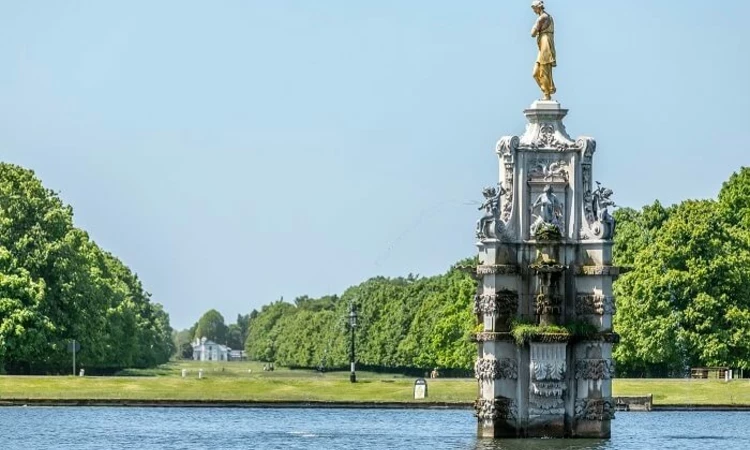
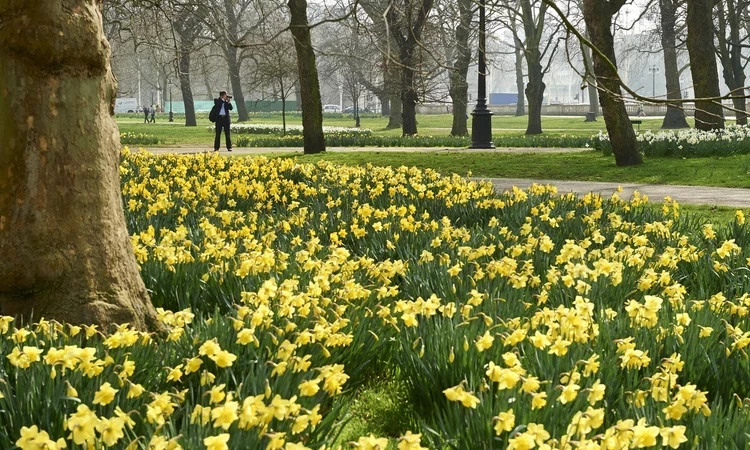
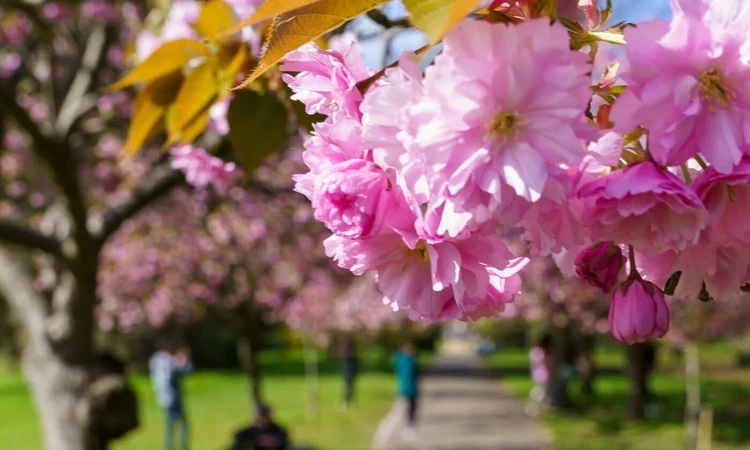
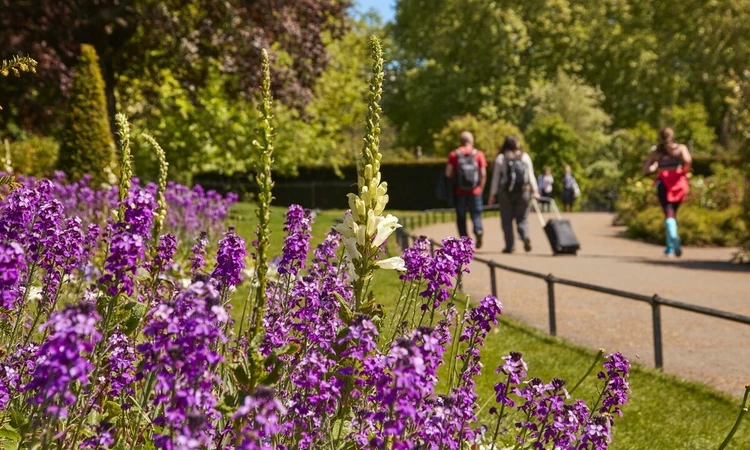
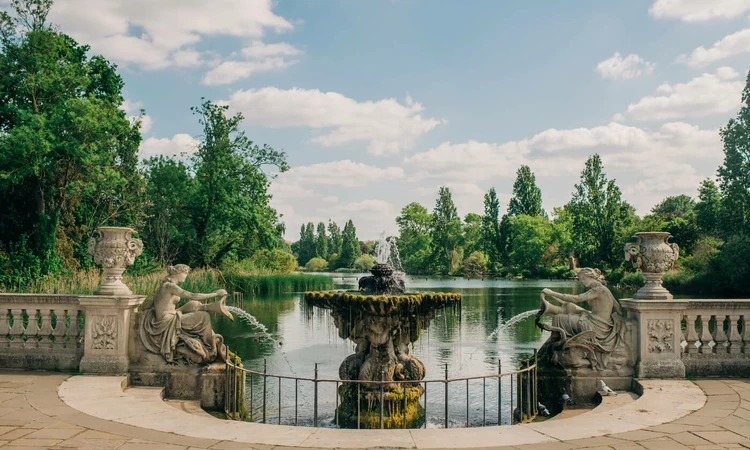
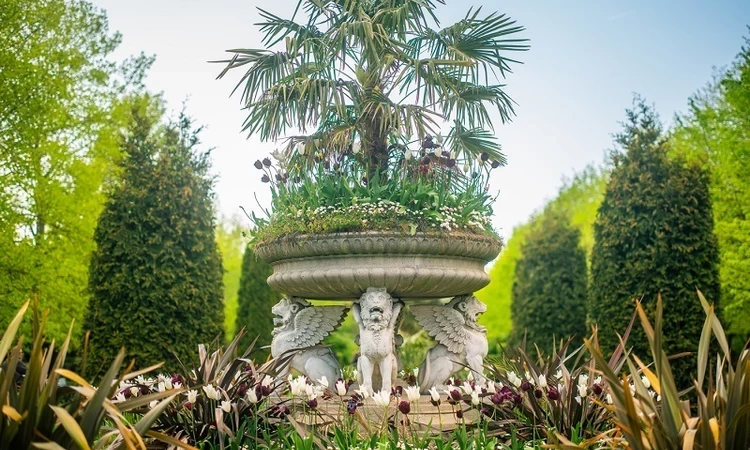
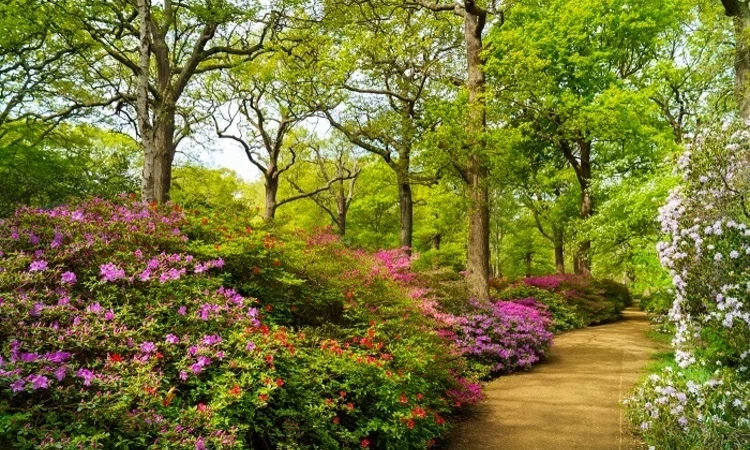
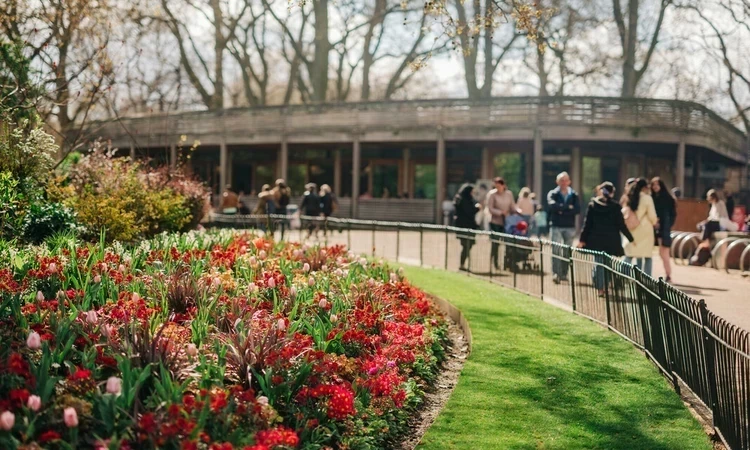
Hyde Park is one of London's finest landscapes and covers over 350 acres.
Henry VIII acquired Hyde Park from the monks of Westminster Abbey in 1536; he and his court were often to be seen on thundering steeds in the hunt for deer. It remained a private hunting ground until James I came to the throne and permitted limited access. The King appointed a ranger, or keeper, to take charge of the park. It was Charles I who changed the nature of the park completely. He had the Ring (north of the present Serpentine boathouses) created and in 1637 opened the park to the general public.
In 1665, the year of the Great Plague, many citizens of London fled the City to camp on Hyde Park, in the hope of escaping the disease.
Towards the end of the 17th century William III moved his court to Kensington Palace. He found that his walk to St James's was very dangerous, so he had 300 oil lamps installed, creating the first artificially lit highway in the country. This route later became known as Rotten Row, which is a corruption of the French 'Route de Roi' or King's Road.
Queen Caroline, wife of George II, had extensive renovations carried out and in the 1730s had The Serpentine, a lake of some 11.34 hectares, created.
Hyde Park became a venue for national celebrations. In 1814 the Prince Regent organised fireworks to mark the end of the Napoleonic Wars, in 1851 (during Queen Victoria's reign) the Great Exhibition was held and in 1977 a Silver Jubilee Exhibition was held in honour of Queen Elizabeth II's 25 years on the throne.
In 1866 Edmund Beales' Reform League marched on Hyde Park where great scuffles broke out between the League and the police. Eventually the Prime Minister allowed the meetings to continue unchallenged and since 1872, people have been allowed to speak at Speaker's Corner on any subject they want to.
The Lido was set up by George Lansbury, the first Commissioner of Works, in 1930 and in warm weather is used for sunbathing and swimming.
Hyde Park is one of London's finest landscapes and covers over 350 acres.
Henry VIII acquired Hyde Park from the monks of Westminster Abbey in 1536; he and his court were often to be seen on thundering steeds in the hunt for deer. It remained a private hunting ground until James I came to the throne and permitted limited access. The King appointed a ranger, or keeper, to take charge of the park. It was Charles I who changed the nature of the park completely. He had the Ring (north of the present Serpentine boathouses) created and in 1637 opened the park to the general public.
In 1665, the year of the Great Plague, many citizens of London fled the City to camp on Hyde Park, in the hope of escaping the disease.
Towards the end of the 17th century William III moved his court to Kensington Palace. He found that his walk to St James's was very dangerous, so he had 300 oil lamps installed, creating the first artificially lit highway in the country. This route later became known as Rotten Row, which is a corruption of the French 'Route de Roi' or King's Road.
Queen Caroline, wife of George II, had extensive renovations carried out and in the 1730s had The Serpentine, a lake of some 11.34 hectares, created.
Hyde Park became a venue for national celebrations. In 1814 the Prince Regent organised fireworks to mark the end of the Napoleonic Wars, in 1851 (during Queen Victoria's reign) the Great Exhibition was held and in 1977 a Silver Jubilee Exhibition was held in honour of Queen Elizabeth II's 25 years on the throne.
In 1866 Edmund Beales' Reform League marched on Hyde Park where great scuffles broke out between the League and the police. Eventually the Prime Minister allowed the meetings to continue unchallenged and since 1872, people have been allowed to speak at Speaker's Corner on any subject they want to.
The Lido was set up by George Lansbury, the first Commissioner of Works, in 1930 and in warm weather is used for sunbathing and swimming.
This is some blurb text. This should be changed in the metadata screen for this asset.
Lorem ipsum dolor sit amet pulvinar consectetur elit adisciplin donec avec elit magna pul vinar estbul ipsum elit sit donec ipsum.
Buy now...
Barclaycard presents British Summer Time Hyde Park, a ground breaking new concert series and outdoor experience from 5 July - 14 July 2013.
More things to do...
A permanent memorial to honour the victims of the 7 July 2005 London Bombings was unveiled in Hyde Park by Their Royal Highnesses, The Prince of Wales and The Duchess of Cornwall.
More things to do...
This unique Memorial to Diana, Princess of Wales was opened by Her Majesty The Queen on 6th July 2004 and was built with the best materials, talent and technology.
More things to do...
Royal Gun Salutes mark special royal occasions. On these days salutes are fired from locations in London including Hyde Park and Green Park.
More things to do...
Daily public swimming in The Serpentine from June - September. Serpentine Swimming Club swims every day, including the famous race on Christmas day.
More things to do...
Rowing and pedal boats are available to hire on the Serpentine in Hyde Park. You can also take a ride on the UK's first Solarshuttle, powered only by the sun.
More things to do...
The Diana Princess of Wales Memorial Walk is a seven-mile-long walk, charted by 90 plaques set in the ground, that takes you within sight of famous buildings and locations associated with the Princess during her life.
More things to do...Hyde Park is one of London's finest landscapes and covers over 350 acres.
Henry VIII acquired Hyde Park from the monks of Westminster Abbey in 1536; he and his court were often to be seen on thundering steeds in the hunt for deer. It remained a private hunting ground until James I came to the throne and permitted limited access. The King appointed a ranger, or keeper, to take charge of the park. It was Charles I who changed the nature of the park completely. He had the Ring (north of the present Serpentine boathouses) created and in 1637 opened the park to the general public.
In 1665, the year of the Great Plague, many citizens of London fled the City to camp on Hyde Park, in the hope of escaping the disease.
Towards the end of the 17th century William III moved his court to Kensington Palace. He found that his walk to St James's was very dangerous, so he had 300 oil lamps installed, creating the first artificially lit highway in the country. This route later became known as Rotten Row, which is a corruption of the French 'Route de Roi' or King's Road.
Queen Caroline, wife of George II, had extensive renovations carried out and in the 1730s had The Serpentine, a lake of some 11.34 hectares, created.
Hyde Park became a venue for national celebrations. In 1814 the Prince Regent organised fireworks to mark the end of the Napoleonic Wars, in 1851 (during Queen Victoria's reign) the Great Exhibition was held and in 1977 a Silver Jubilee Exhibition was held in honour of Queen Elizabeth II's 25 years on the throne.
In 1866 Edmund Beales' Reform League marched on Hyde Park where great scuffles broke out between the League and the police. Eventually the Prime Minister allowed the meetings to continue unchallenged and since 1872, people have been allowed to speak at Speaker's Corner on any subject they want to.
The Lido was set up by George Lansbury, the first Commissioner of Works, in 1930 and in warm weather is used for sunbathing and swimming.