
Sustainability
Creating climate-resilient parks for future generations
"We are facing a climate and biodiversity emergency.
As the charity that cares for London’s eight Royal Parks and other important spaces in the capital, we welcome all visitors to step outside, breathe deeply, and discover the beauty of nature in the heart of the capital.
But we need to act now to ensure that the Royal Parks are always here, for everyone to enjoy, forever.
We have a vital role to nurture these valuable green spaces which are integral to the mental and physical wellbeing of millions of visitors.
That’s why we’ve published an ambitious new sustainability strategy to ‘create climate-resilient parks for future generations’'.
Andrew Scattergood CBE, Chief Executive of The Royal Parks


Turning words into actions
Conserving the parks
We are conserving and enhancing the natural landscapes to protect crucial habitats to support wildlife and to create beautiful green spaces.
Sustainable park operations
We are taking bold steps to reduce our carbon emissions across everything we do, to effectively manage energy use and waste management, so that by 2030, we will have eliminated all greenhouse gas emissions from our direct operations. But we are not stopping there. We are going further by addressing the carbon emissions produced by our supply chains and ensuring that we deliver resilient and responsible events, too.
Parks for people
We will take action so that the parks benefit every visitor, now and in the future. We welcome everyone, no matter their background, to enjoy the nature on their doorsteps. Serving every visitor, is at the heart of everything that we do. We are committed to engaging communities, and all visitors from further afield.
We are delivering volunteering, educational and cultural opportunities which we hope will inspire a collective responsibility for everyone to come together and protect these precious green spaces.
Discover some of our sustainability successes using the tabs below:
Slow the Flow
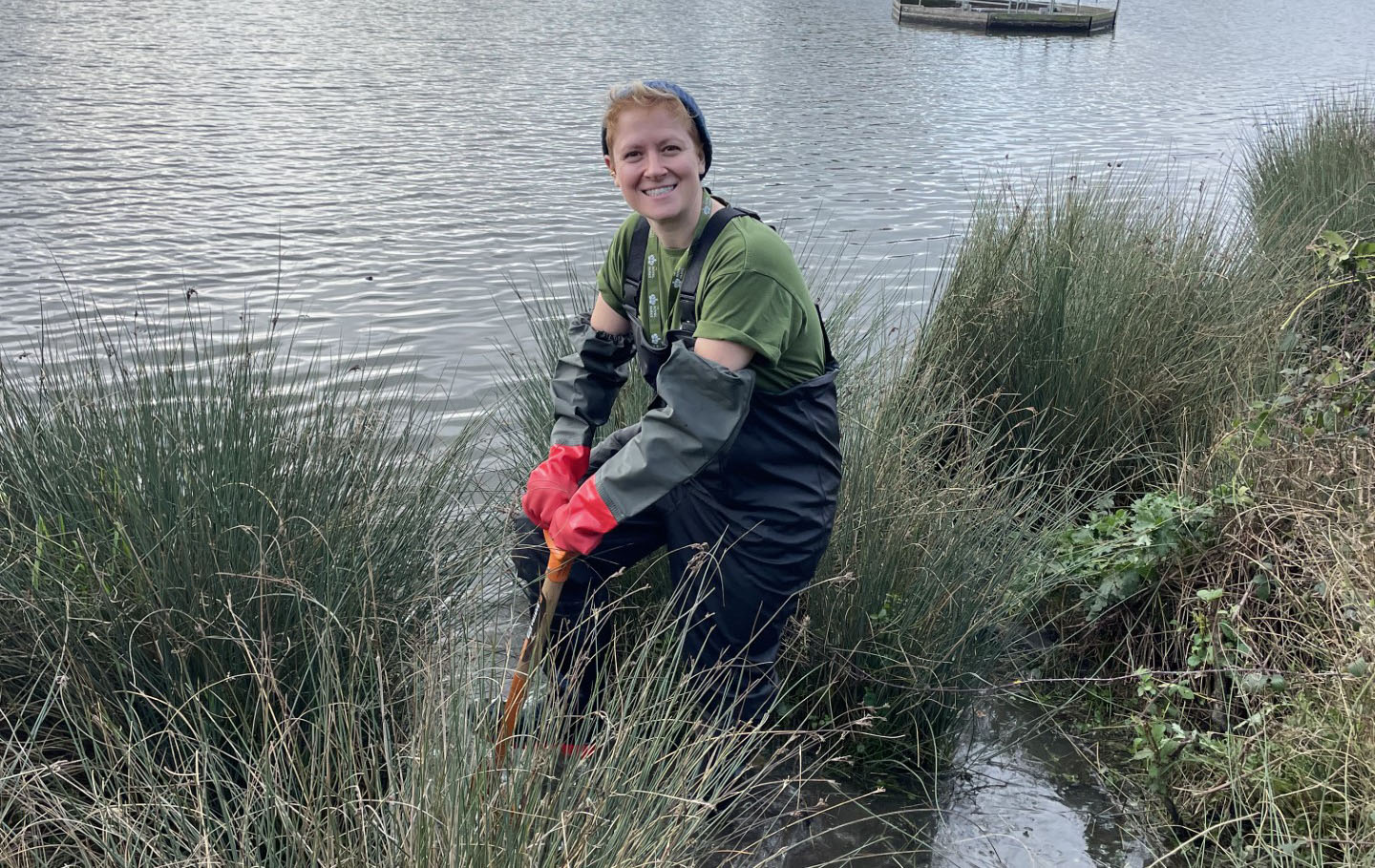
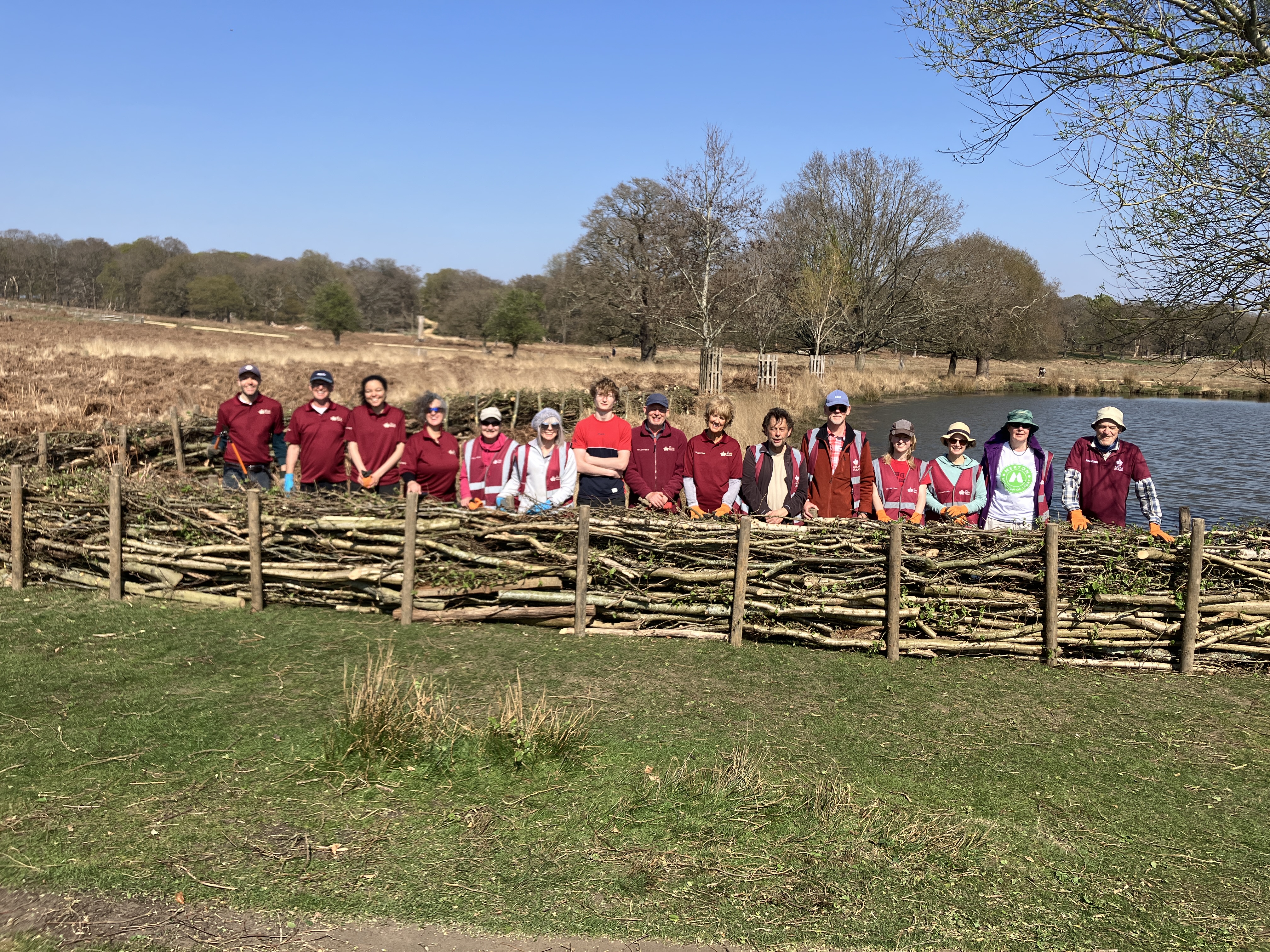
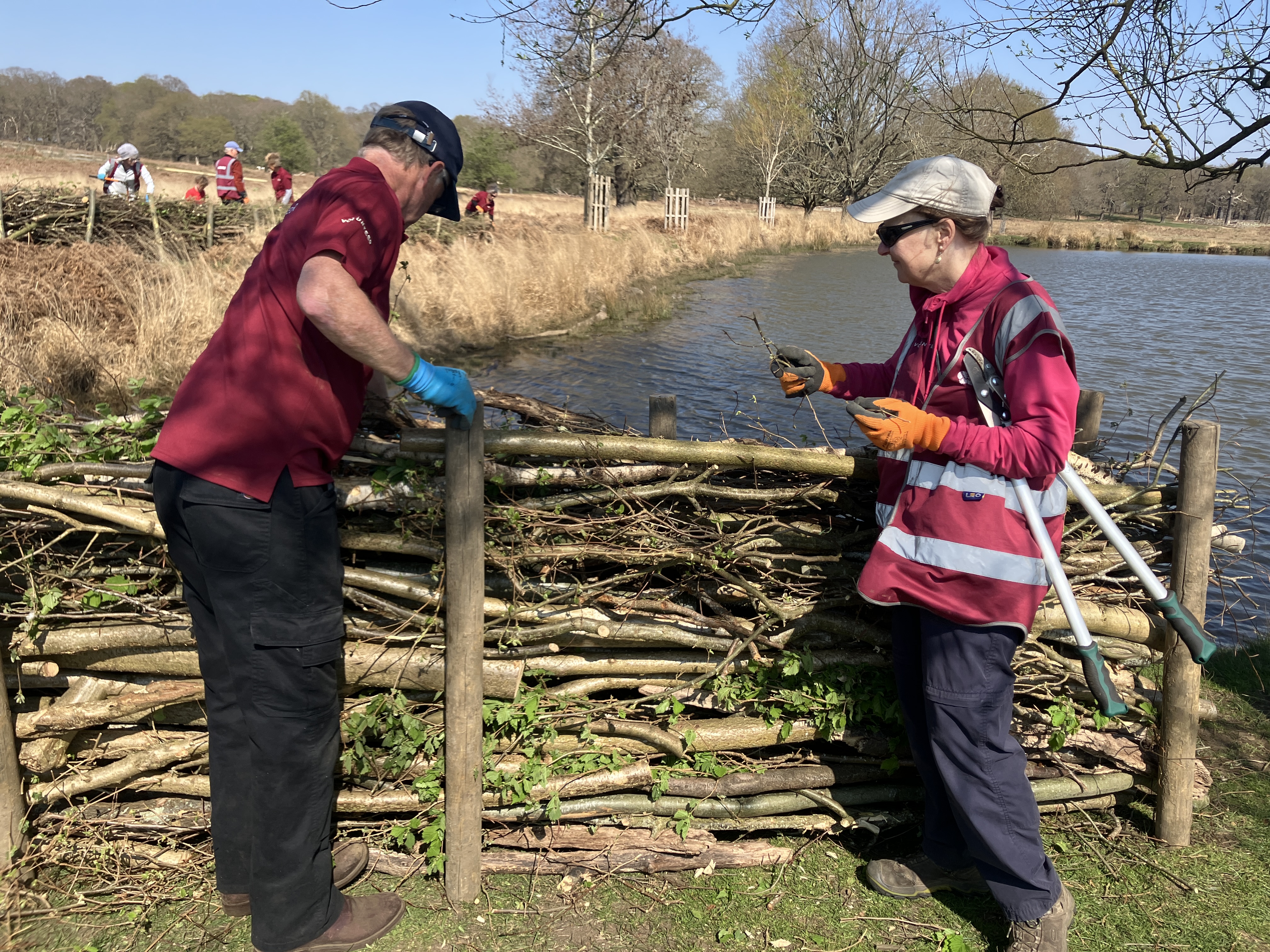
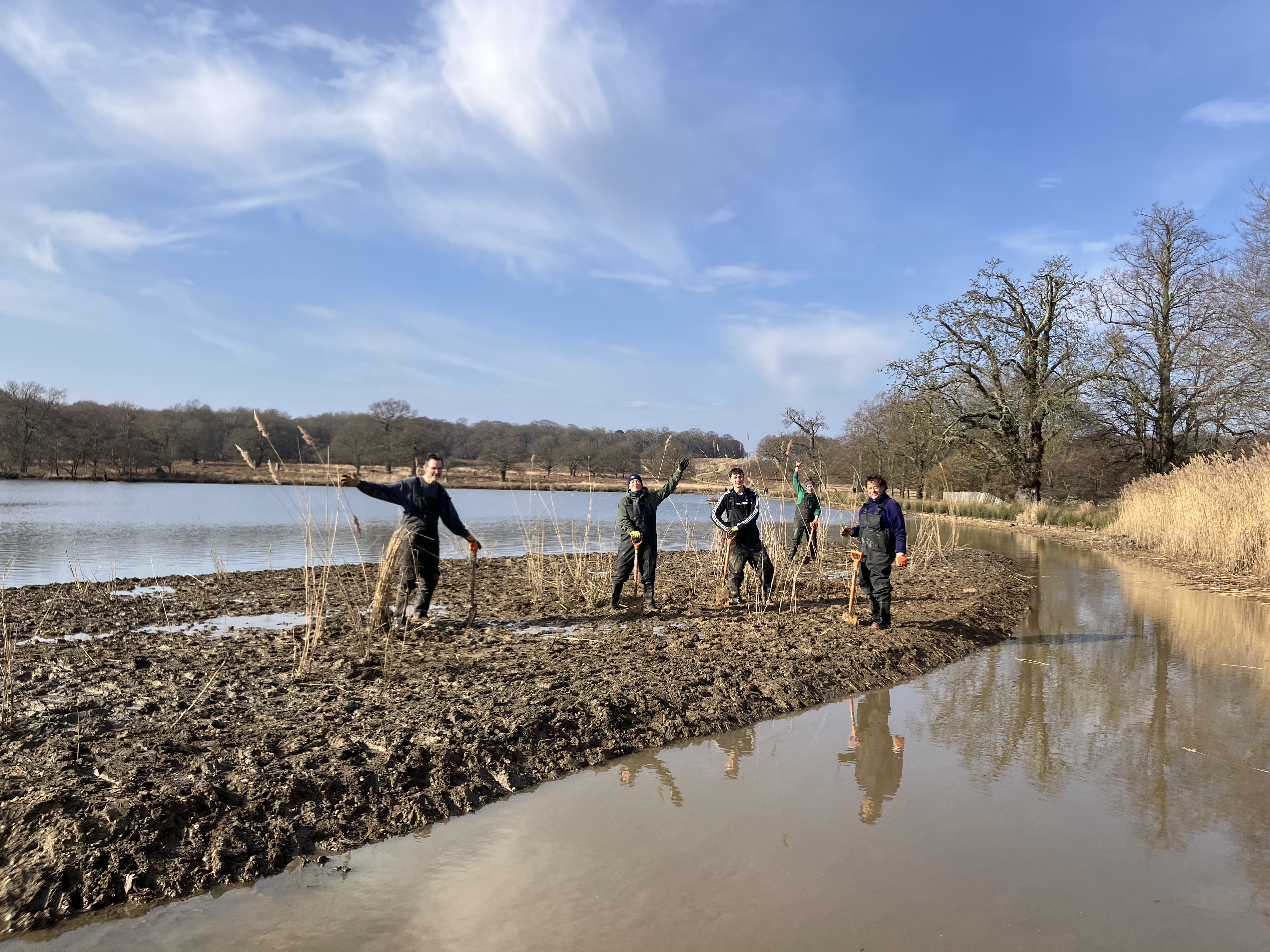
Biodiversity and conservation are at the heart of everything that The Royal Parks deliver. With the support of Players of People's Postcode Lottery and dedicated volunteers, our ‘Slow the Flow' project has improved water management in Richmond Park and created a more resilient landscape to adapt to a changing climate.
Unpredictable weather is reshaping our parks. We’re seeing hotter, drier summers, and warmer wetter winters, with increased risk of flash floods. These extremes disrupt natural habitats found in waterbodies, threaten wildlife, and hinder visitor access.
To adapt to changing weather, we researched how to manage natural water stores more effectively and implemented ways to curb flash floods and boost drought resilience.
We desilted waterbodies, created new ditches, installed “leaky dams” and log barriers to slow water flow, and created varied micro-habitats for wildlife.
We restored natural bends to Beverley Brook, extended reedbeds, and created fish refuge areas, for spawning. We also carried out semi-aquatic planting around pond edges and created channels to provide shelter for waterfowl.
New interventions have boosted Richmond Park’s water-holding capacity and reduced flood risk:
- New ditches along the Tamsin Trail channel water away from paths, improving wet weather access.
- The creation and protection of wetland landscapes allows mosses, bog asphodel, and white-beaked sedge to thrive.
- This work supports invertebrates, like dragonflies and damselflies, and amphibians, such as frogs and toads.
- Visitors will notice faster-flowing stretches of water, attracting fish and kingfishers, and calm pools, providing breeding grounds for dragonflies.
- Extended reedbeds offer shelter for reed warblers, wainscot moths, and even passing bittern, while improved water quality benefits aquatic life.
We’re restoring more ponds and protecting aquatic habitats. We’re focusing on water quality, biodiversity, and resilience to climate change, ensuring that the parks remain vibrant wildlife sanctuaries for everyone to enjoy.


-
 Richmond Park
 -
-
-
A new garden to commemorate the life of Queen Elizabeth II
We are delivering a flagship project to create a sustainable and climate-change resilient garden in The Regent’s Park, to commemorate the life and work of Queen Elizabeth II.
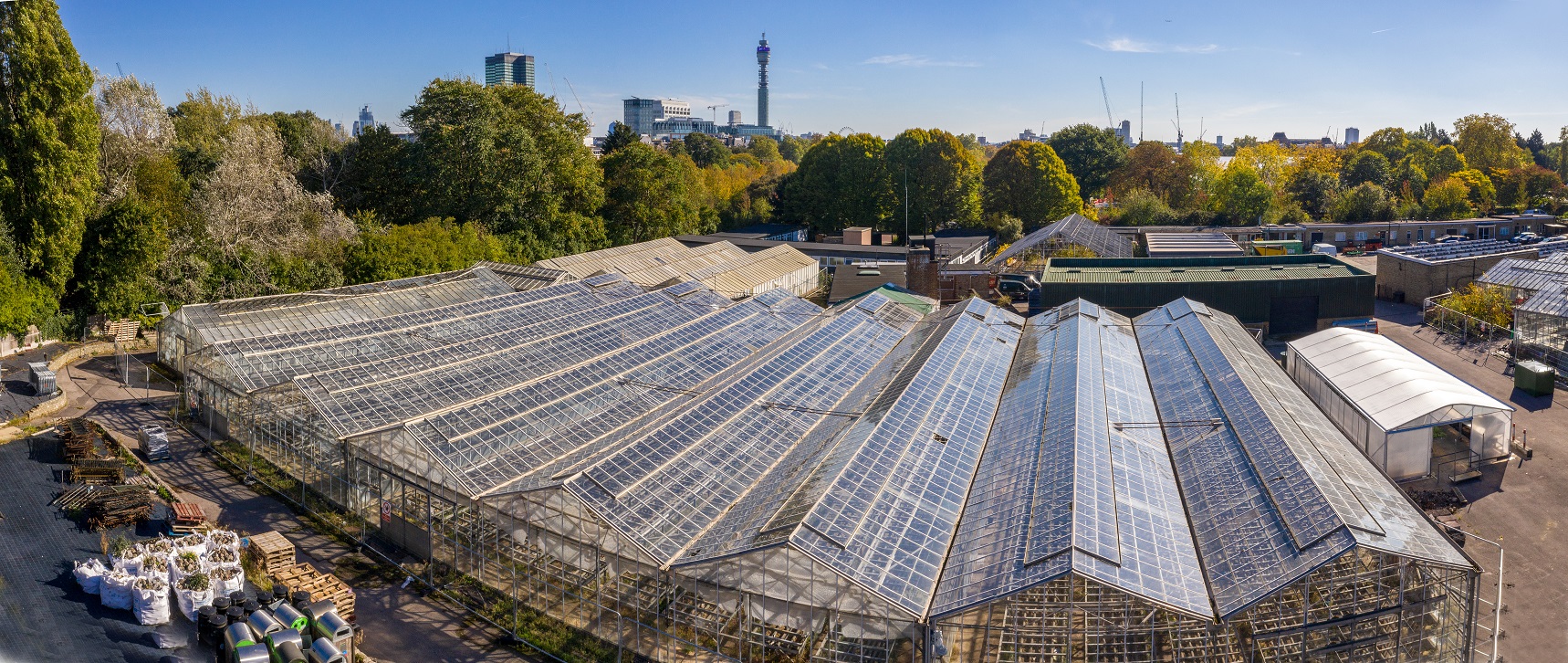
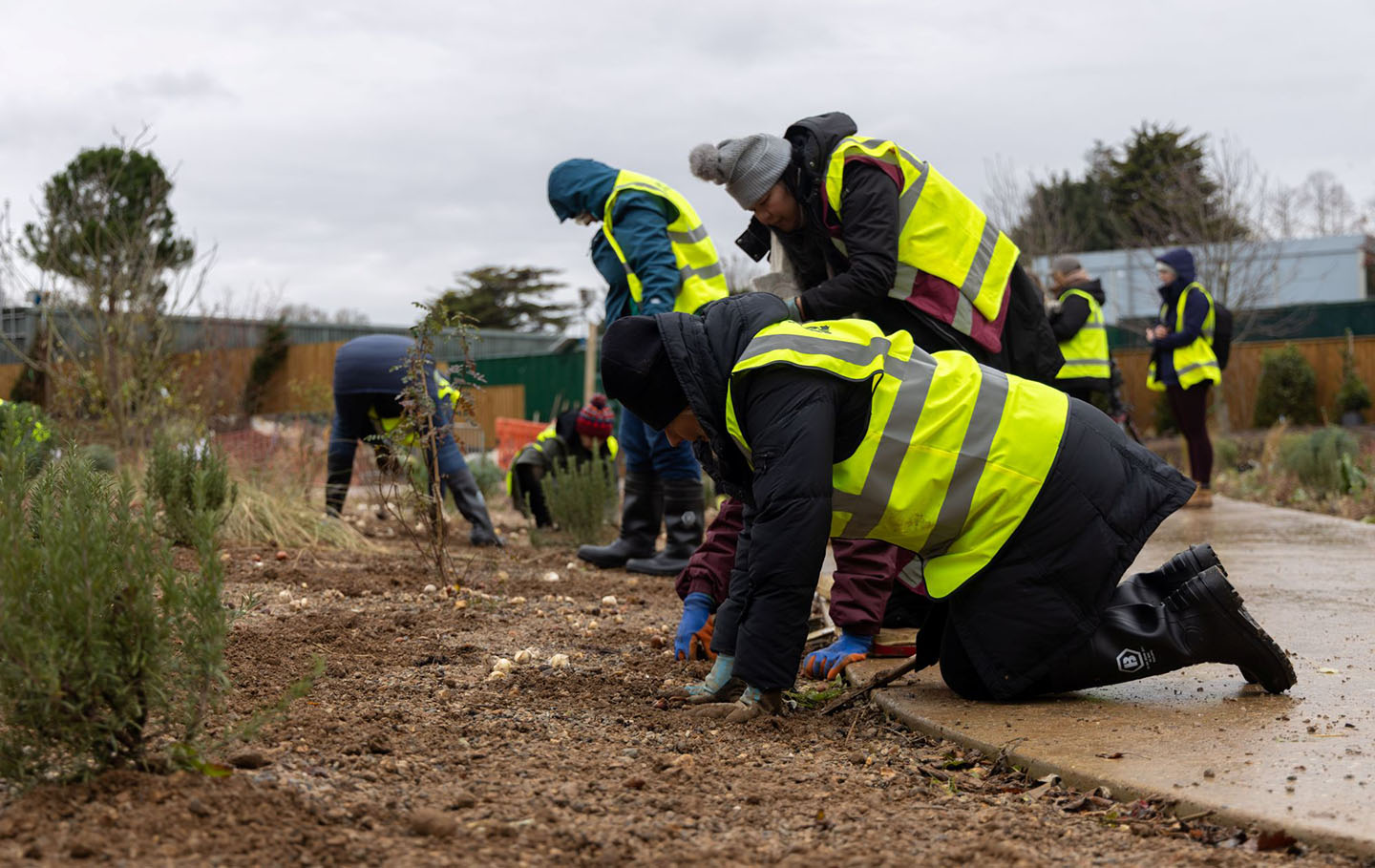
A disused nursery site in The Regent’s Park is being transformed into a two-acre garden containing a beautiful, sensory, biodiverse planting scheme that will be resilient to climate change.
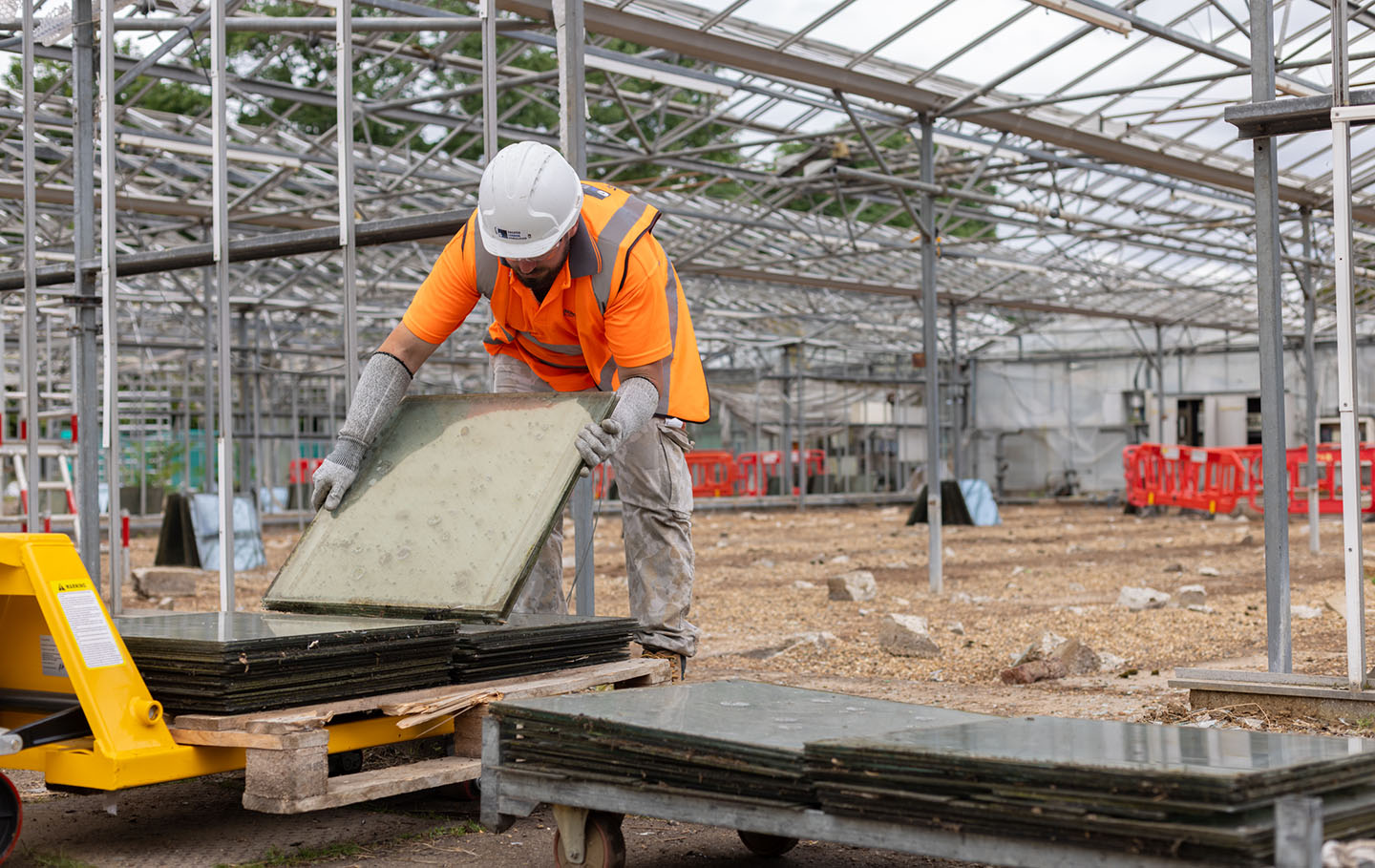
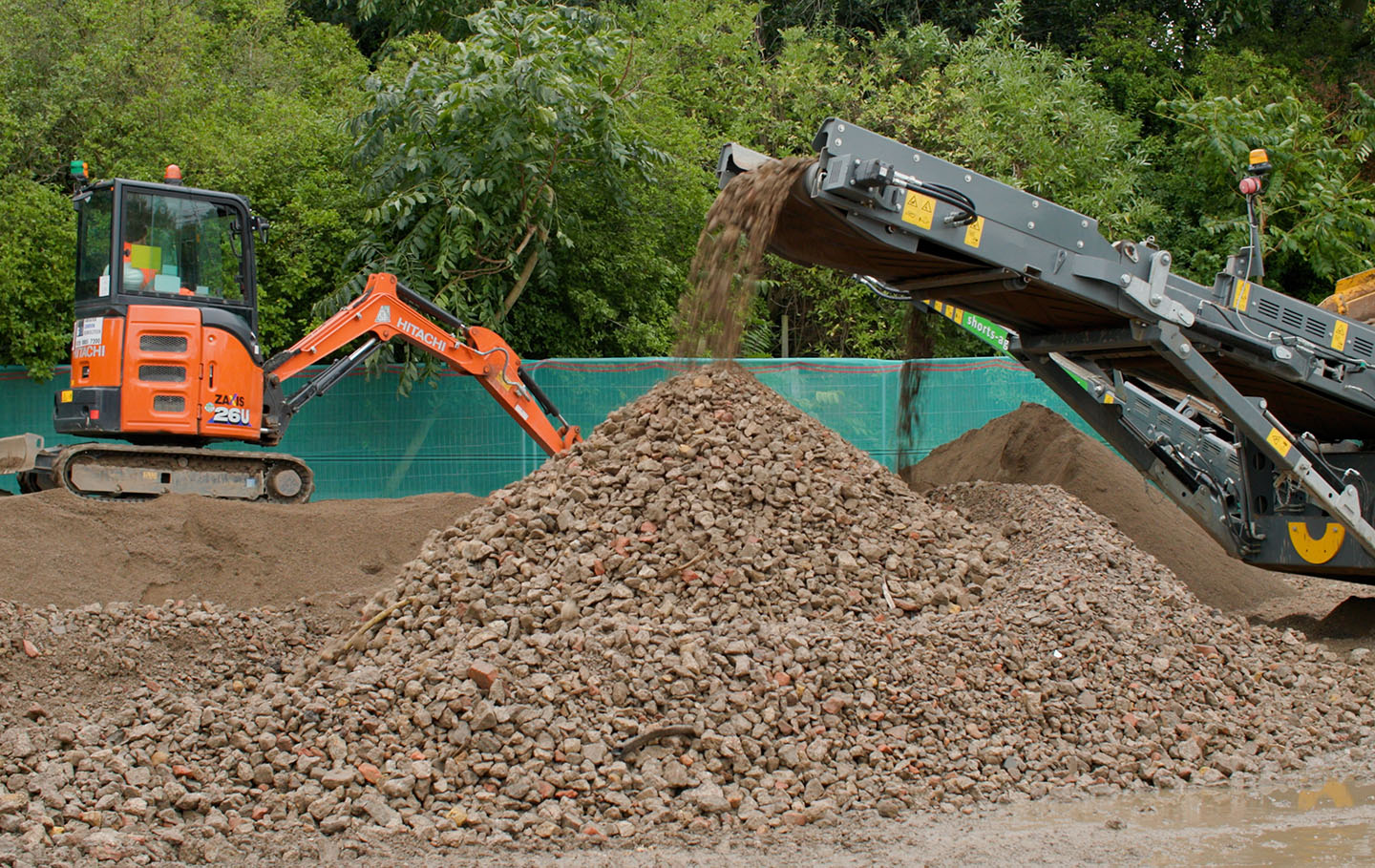
Materials from a former nursery site are being repurposed for the new garden, using an innovative circular economy approach.
Crushed concrete incorporated into bedding will create free-draining soils, boost aeration and release essential minerals like calcium and potassium. This helps plants adapt to hotter, drier summers and outcompete weeds. Deep-rooted species will reach water during droughts and will avoid being waterlogged in winter, making them hardier and better able to withstand frost.
Steel from old glasshouses will form new pergolas, and recycled aggregates will create low-carbon paths.
A redundant water tower will be converted into a garden folly with a viewing platform, rainwater store, and nesting sites for bats and swifts.
The garden will also feature disease-resistant trees and species adapted to extreme weather. This will include the ornamental strawberry tree, (Arbutus unedo), with strawberry-like fruits. Chinese dogwood (Cornus kousa chinesis), will provide a show of cream flowers, while Euphorbia myrsinites, an alpine plant, will display bluish leaves and green flowers.
The new 2,000 square meter wildflower meadow will boost wildlife in the heart of the city.
Overall, it will create a 184% biodiversity net gain through a mosaic of habitats including a flower-rich grassland, hedges, a new pond with aquatic planting and a sensory flower garden.
The free public garden, to open in 2026, will be a lasting tribute to Queen Elizabeth II – a space for reflection, biodiversity, and connection with the natural world. Many of the trees and plants have been carefully chosen to withstand climatic extremes, ensuring long-term resilience.


-
 The Regent's Park & Primrose Hill
 -
 The Regent's Park & Primrose Hill
 -
 The Regent's Park & Primrose Hill
 -
 The Regent's Park & Primrose Hill
Achieving Operational Net Zero by 2030
Our sustainability approach covers initiatives from reducing emissions to adopting better practices in waste and water management. We are committed to reducing our carbon footprint through exemplary and responsible park management.
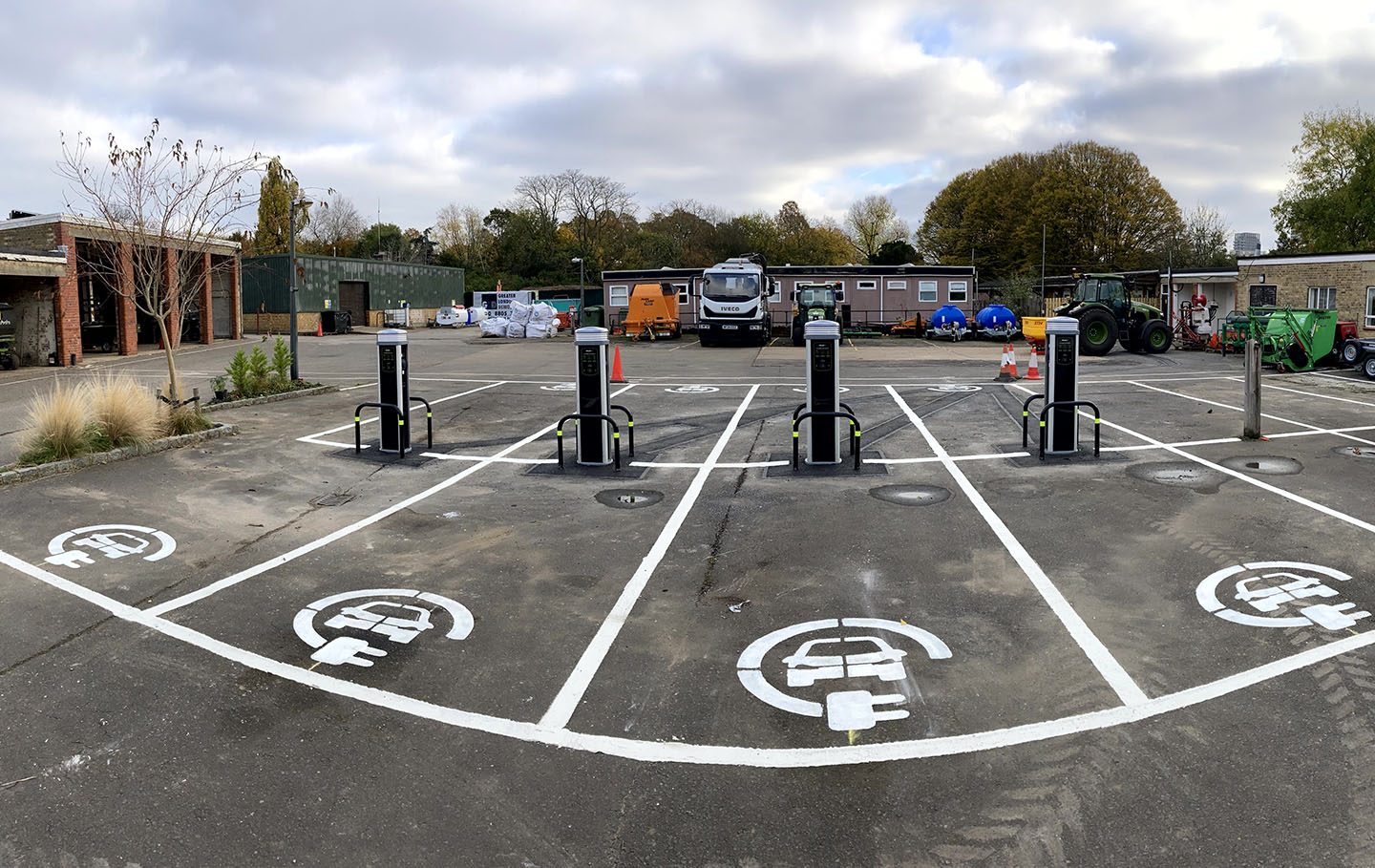
Our ambition is to eliminate all emissions from fossil fuels from The Royal Parks’ directly controlled operations by 2030, and switch to renewable energy sources. In other words, we want to achieve ‘Operational Net Zero’ by 2030.
We are targeting the emissions within our direct control, for example emissions caused by directly burning fuel (known as ‘scope one’ emissions).
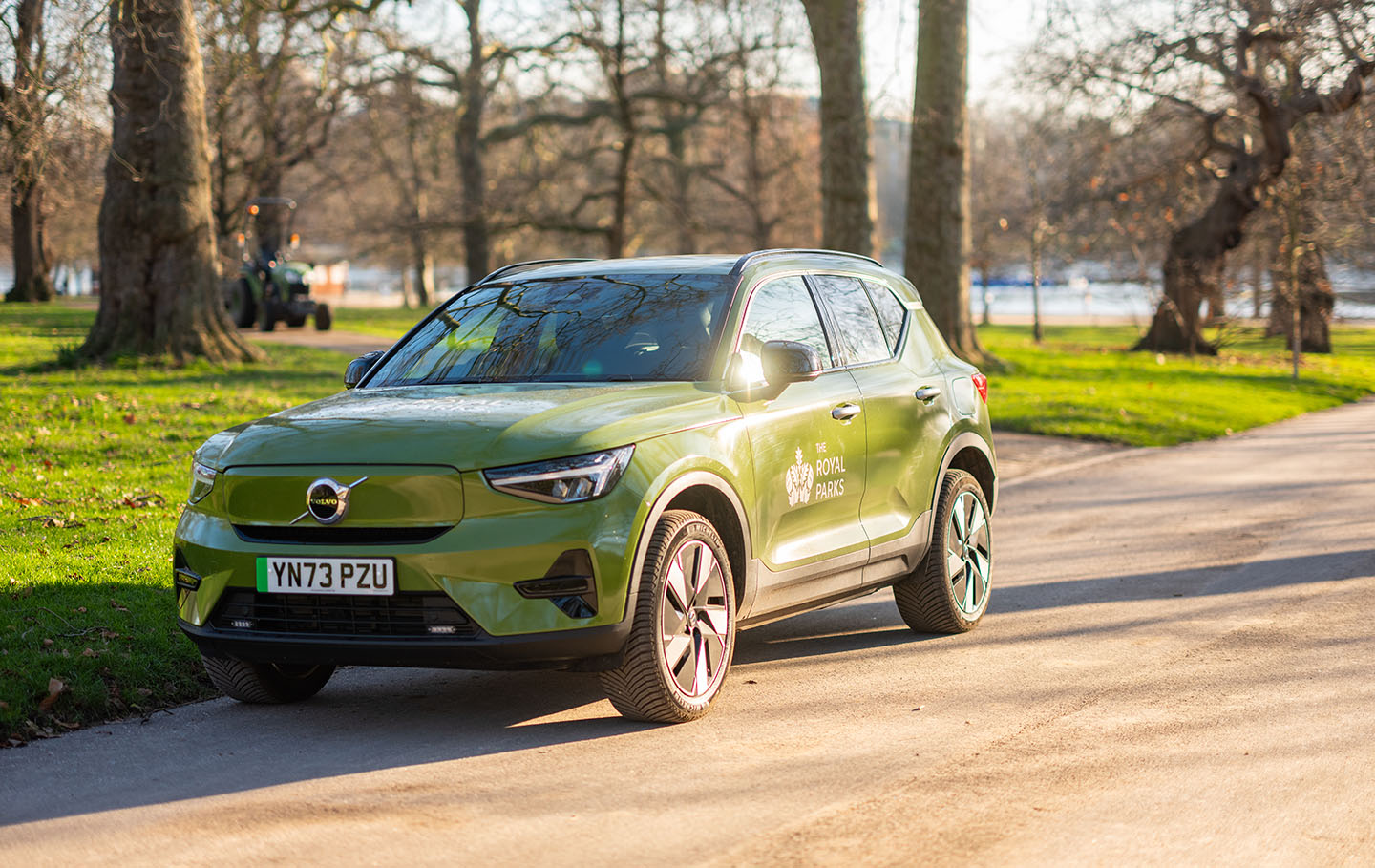
We are also targeting the emissions that we create indirectly from the energy we purchase and use, for example the electricity that we use in our buildings (known as ‘scope 2’ emissions). For example, emissions associated with heating and lighting in buildings, our vehicles, park lighting and event power.
Scope 1 direct emissions:
We have tackled the emissions associated with natural gas consumption, responsible for over 70 percent of our direct (scope 1) emissions, for example the gas used to heat buildings.
We have sourced biomethane. This renewable energy is produced from waste, processed into biogas and then refined into biomethane. All the biomethane we buy has been sourced sustainably, backed by Renewable Gas Guarantees of Origin (RGGO) certification.
Scope 2 indirect emissions:
All our electricity is now sourced from renewable sources, backed by Renewable Energy Guarantee of Origin certification (REGO). This provides transparency and credibility to our energy procurement process, ensuring full traceability in our energy providers’ supply chain.
We are committed to going beyond tackling just our direct operational emissions.
We are also working towards reducing indirect greenhouse emissions from sources not owned or controlled by us, but that are a consequence of our activities. For example, emissions from ‘goods and services that we buy’ and ‘products that we sell’. These are known as ‘scope 3’ emissions and they represent over 85 percent of our total emissions.
We now have the ambition to eliminate these indirect emissions by 2050, which will allow us to achieve ‘overall’ Net Zero.


-
 The Regent's Park & Primrose Hill
 -
 Hyde Park
 -

-
Royal Parks Half Marathon
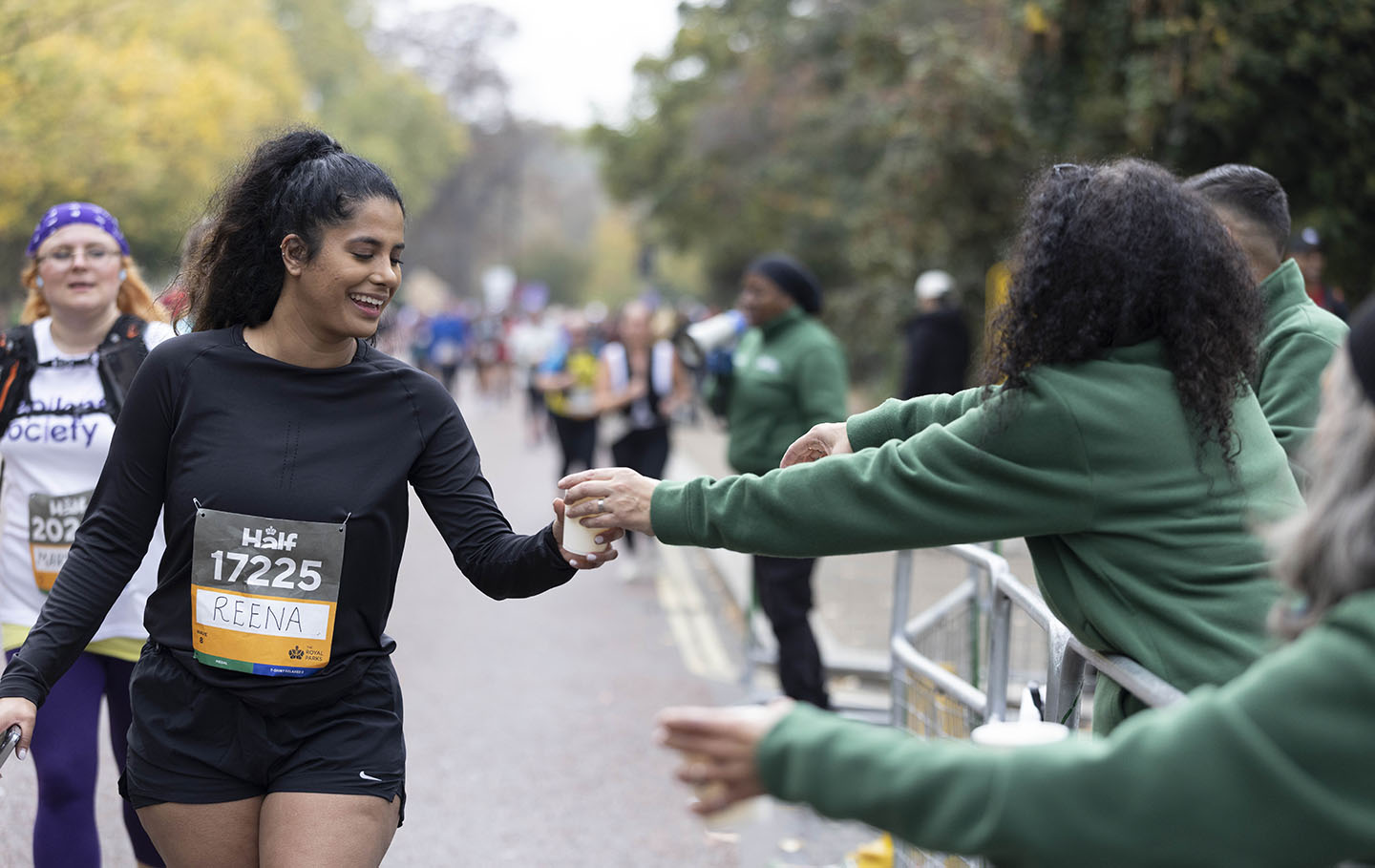
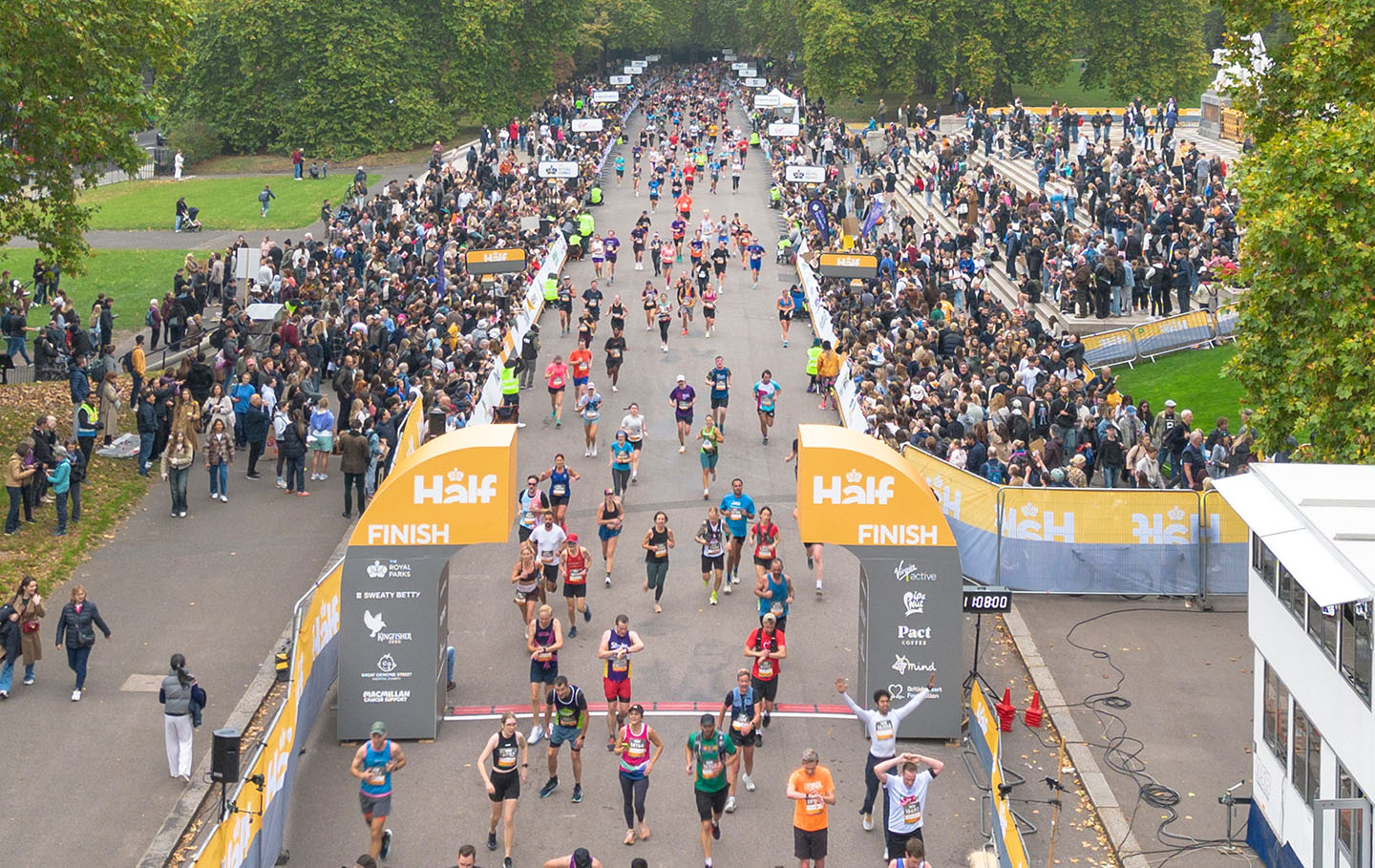
The Royal Parks Half Marathon team oversees all operations, working closely with our event delivery partner, London Marathon Events. We have committed to making the event as sustainable as possible, while maintaining the high-quality race experience that everyone deserves.
With more than 16,000 runners participating each year, by 2025 the event has raised over £80 million for over 1900 charities since 2008. With a bustling event village in Hyde Park, we also welcome thousands of supporters on race day.
Our approach to sustainability is key to limiting the impact of the Royal Parks Half Marathon on the environment.
Several green initiatives such as eliminating plastic bottles, reducing waste, minimising race packs, increasing recycling and incorporating waste stations help us achieve our goal of becoming one of the UK’s most sustainable major half marathons.
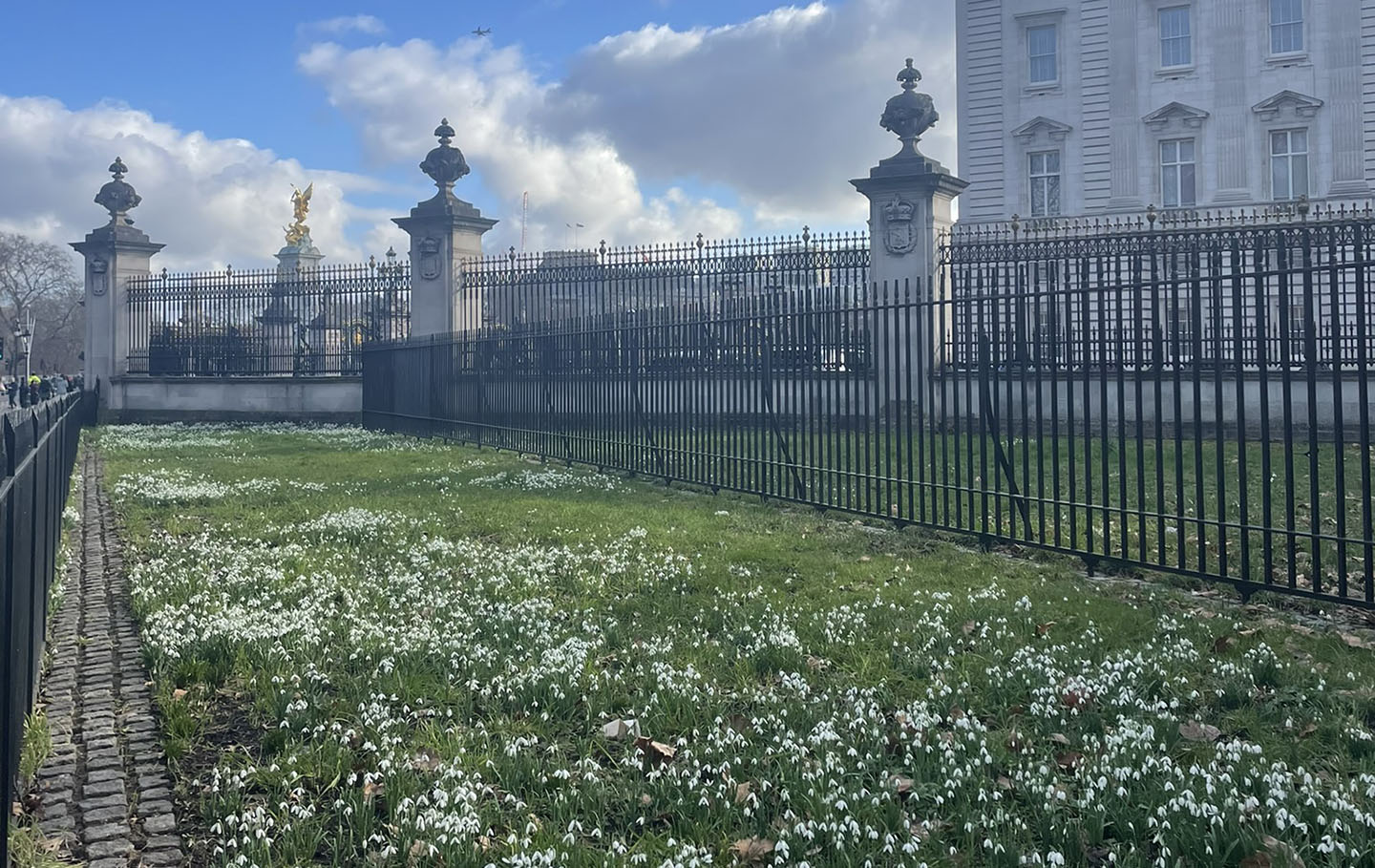
- Participants can choose to forgo a finisher T-shirt, and instead contribute to the planting of snowdrops and native bulbs along the route.
- All race communications are digital, making them more accessible while also lowering our carbon footprint by reducing paper waste.
- Race packs contain the race numbers, safety pins and baggage labels only, meaning no unnecessary printouts.
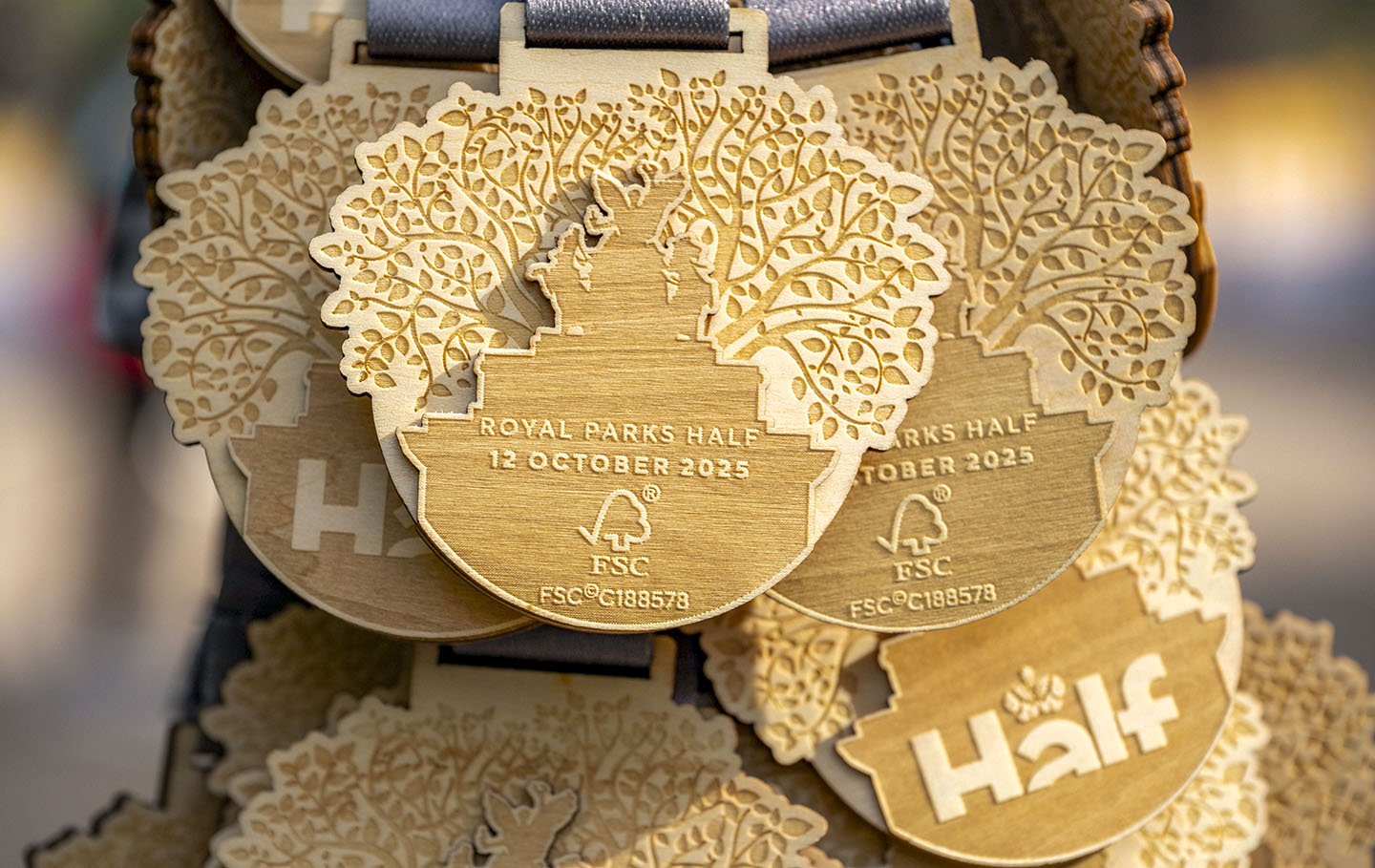
- Since the race began in 2008, we’ve awarded wooden medals, using FSC-certified wood since 2012.
- JogOn will be in the event village on race day: people can donate unwanted running shoes, which are redistributed to those in need.
- In the event village, we have staffed designated waste stations to recycle separated waste.
- We ask everyone to avoid celebrating with confetti cannons, balloons, or glitter to help protect natural habitats.
- We eliminated plastic bottles in 2019, one of the first major half marathons to do so.
Across our event, we're taking action to reduce our environmental impact while monitoring our carbon footprint closely.
Reducing the number of people travelling by air to take part will have a significant impact on reducing our carbon footprint.
In 2025 we stopped working with International Tour Operators that sell package tours including half marathon entries and introduced a separate ballot for entrants who live outside the UK to limit the number of entries for those travelling to the event by air.


Green Futures
Our Learning Team offers a warm, face-to-face welcome to families, adults and school groups of all ages. The team provides learning and engagement opportunities to inspire visitors with the parks’ unique history, culture, heritage and natural environments, and to raise awareness of our work as a charity to care for them.
We feel that it is a human right to have access to green space. Yet many young Londoners living in the heart of the city may have limited access to the natural world.
Evidence suggests that teens and young adults feel excluded from, and thus ‘outside of’ green spaces in London, visiting these places the least (Aw, 2022; Whitten, 2025).
We welcome all young Londoners to the parks to explore, understand, appreciate and enjoy the wonder and value of the nature on their doorsteps.
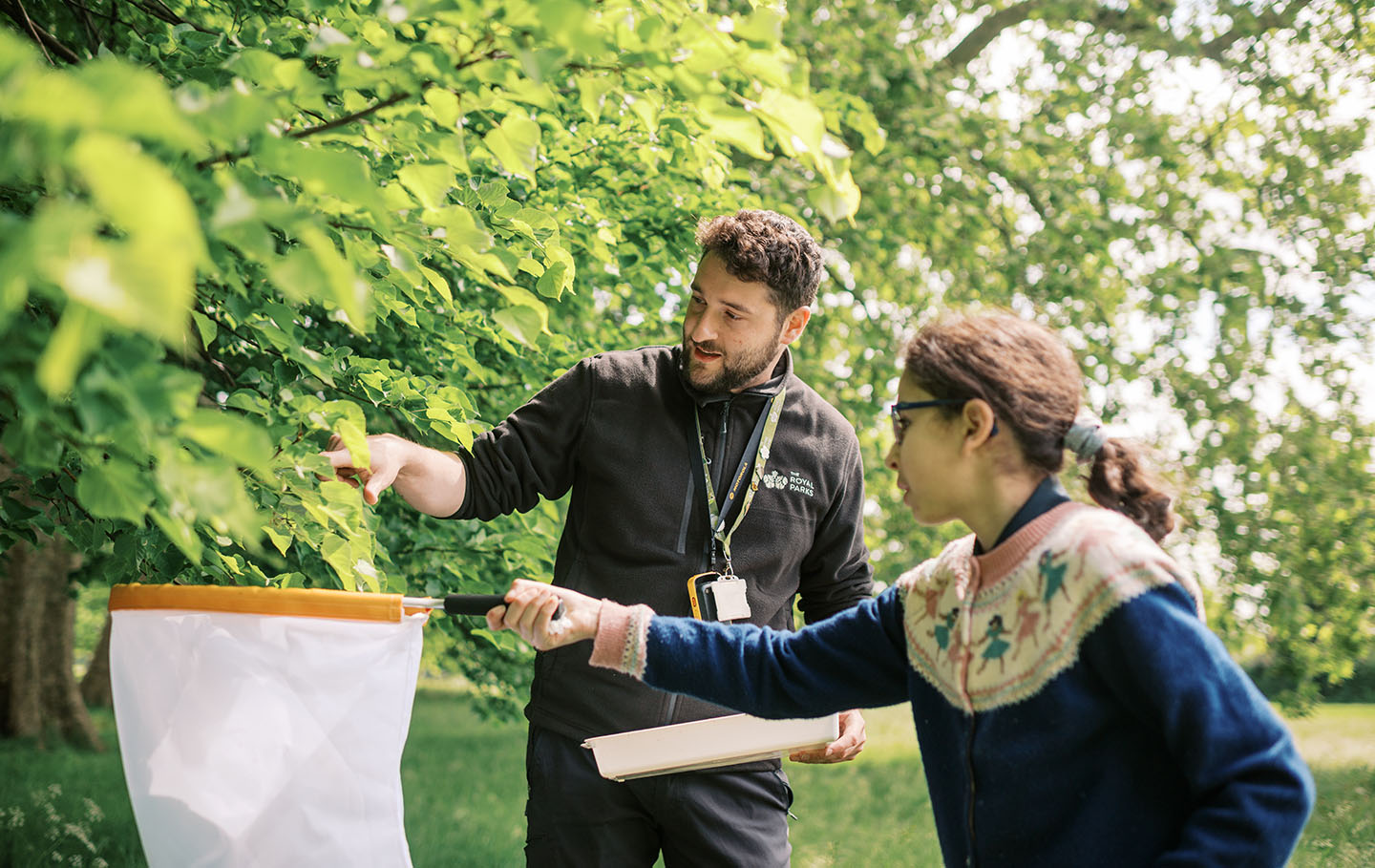
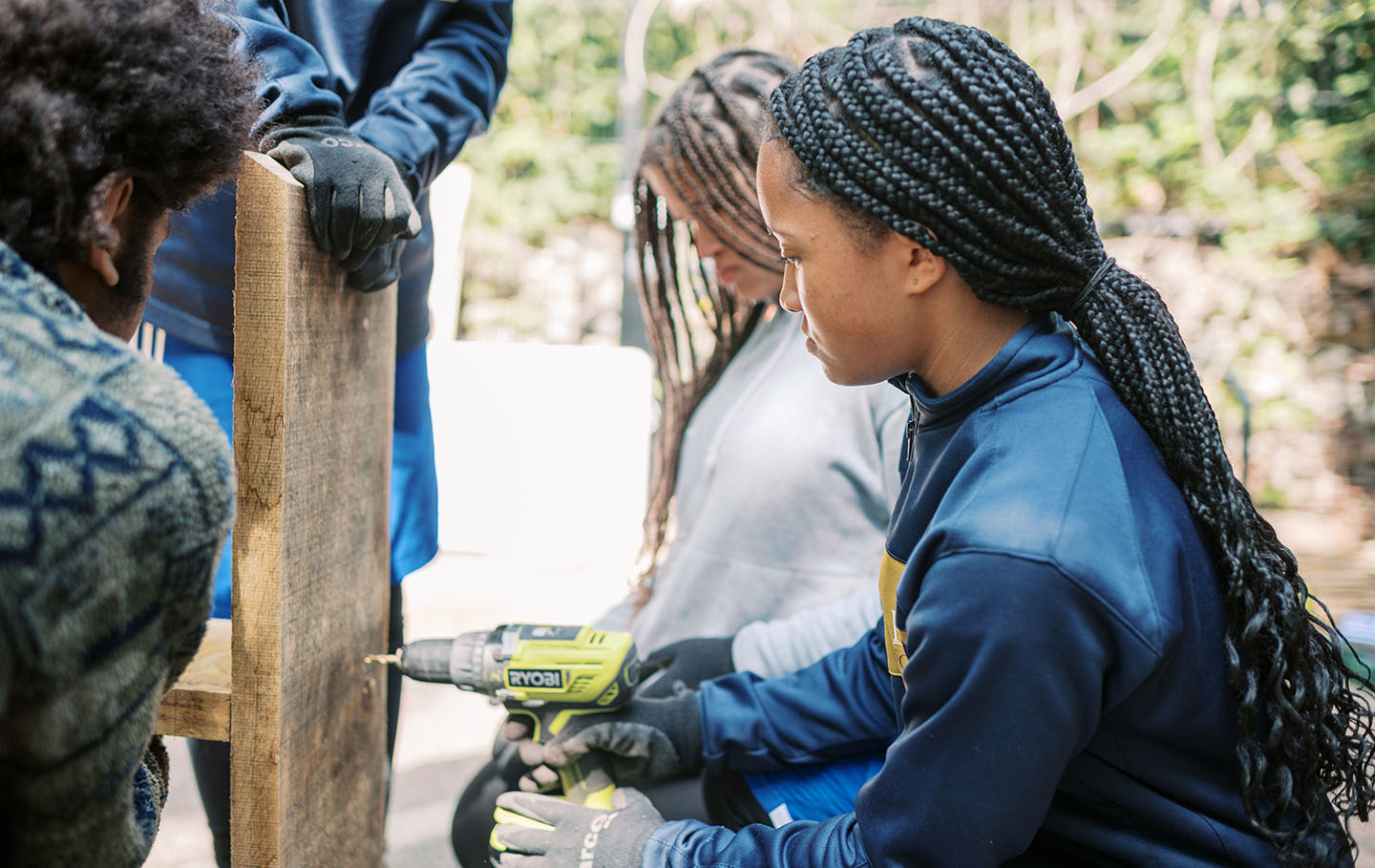
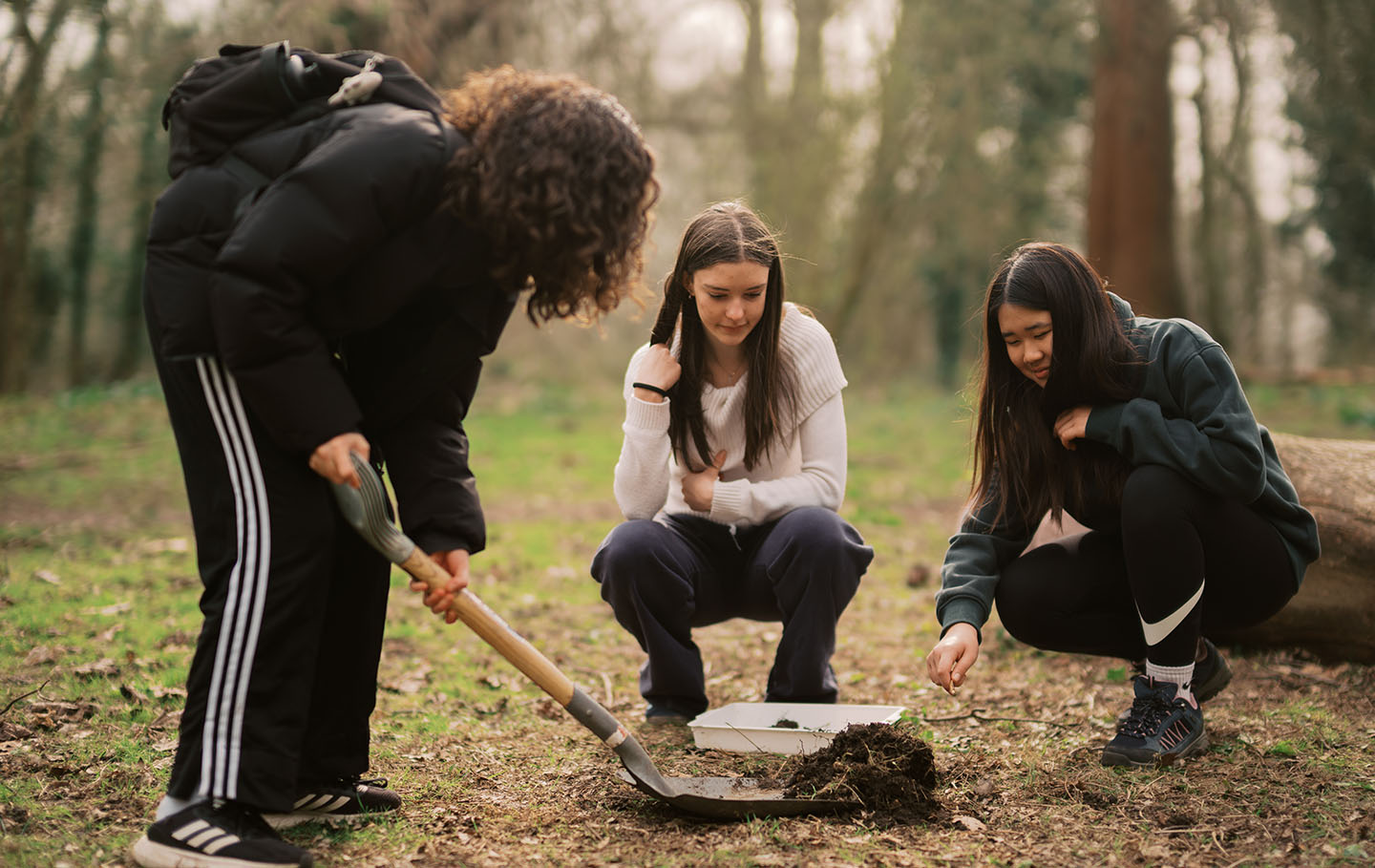
Our innovative Green Futures project launched in 2021 to give local teenagers a taste of what a career in the green sector could look like. The project continues to inspire and engage students, providing hands-on experience of conservation and park management and helping them to foster positive environmental behaviours.
Three times a year, selected state schools near Hyde Park and Kensington Gardens bring students aged 11 - 14 to participate in ‘Park Days’ of practical outdoor activities.
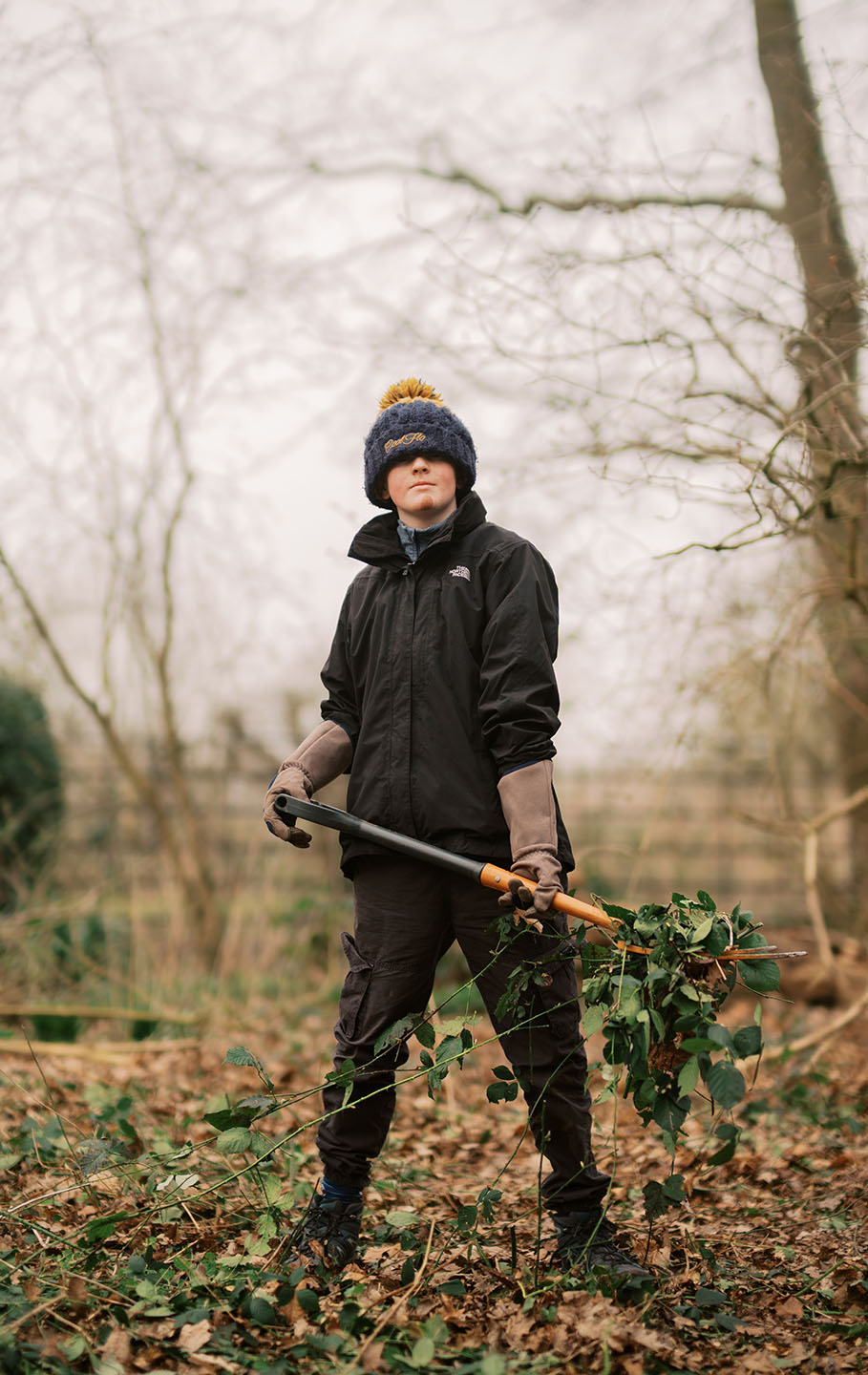
School groups from KS3, (Y7, 8 and 9), connect with nature in creative and practical ways. For example, planting trees and bulbs, clearing bramble or creating dead hedges. Students also carry out scientific studies, observe and record wildlife, engage visitors and build bug hotels to take back to school and help support biodiversity in their school grounds.
Year 12 students lead KS3 groups on Park Days and work toward completing an Award Scheme Development and Accreditation Network (ASDAN) leadership course, improving their communication and confidence skills for future careers.
We have extended the programme to Bushy Park and also delivered a pilot in Richmond Park.
Our Green Futures project addresses young people’s growing disconnect from nature, particularly those from underserved London communities with limited access to green spaces.
Thousands of students have participated in these free, transformative experiences in their local park, with consistently positive feedback from schools.
Thanks to new funding from the Mohn Westlake Foundation, Green Futures will run until September 2028.
This investment means thousands of students can work with our experts, gaining real-world experience and a deeper connection to nature. We hope these experiences will spark future careers within The Royal Parks.


-
-
-
 Bushy Park
 -
Diana, Princess of Wales Memorial Playground
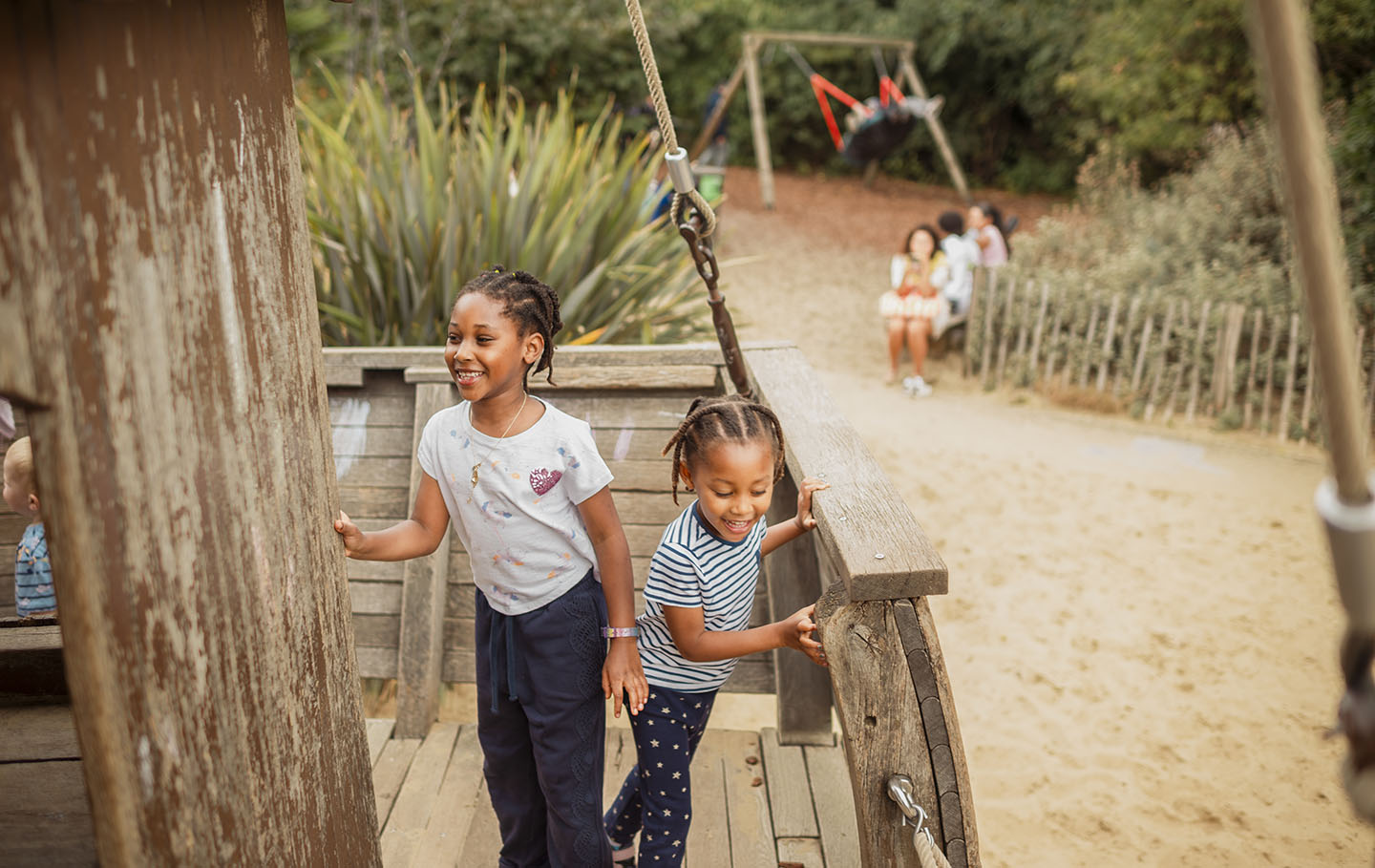
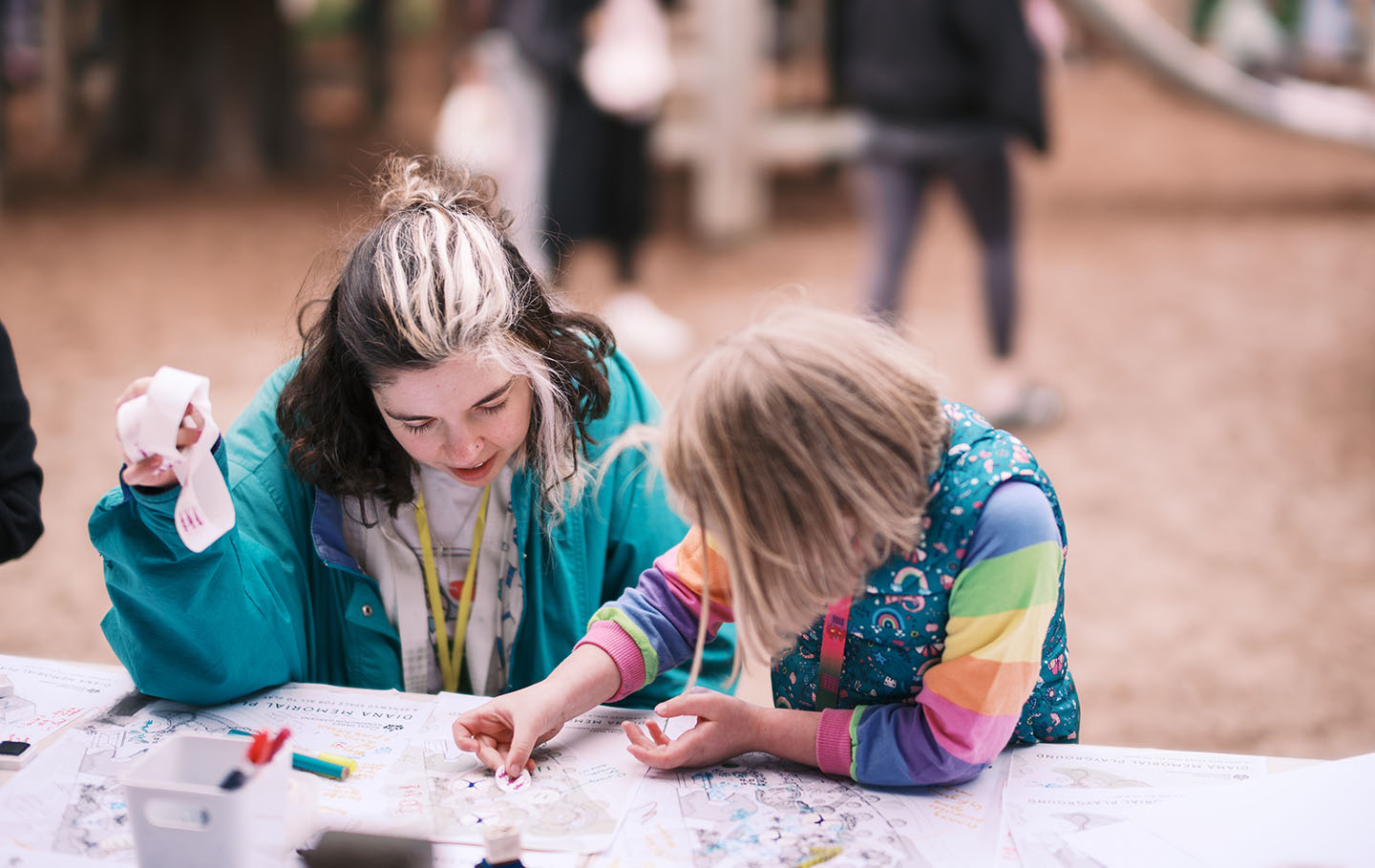
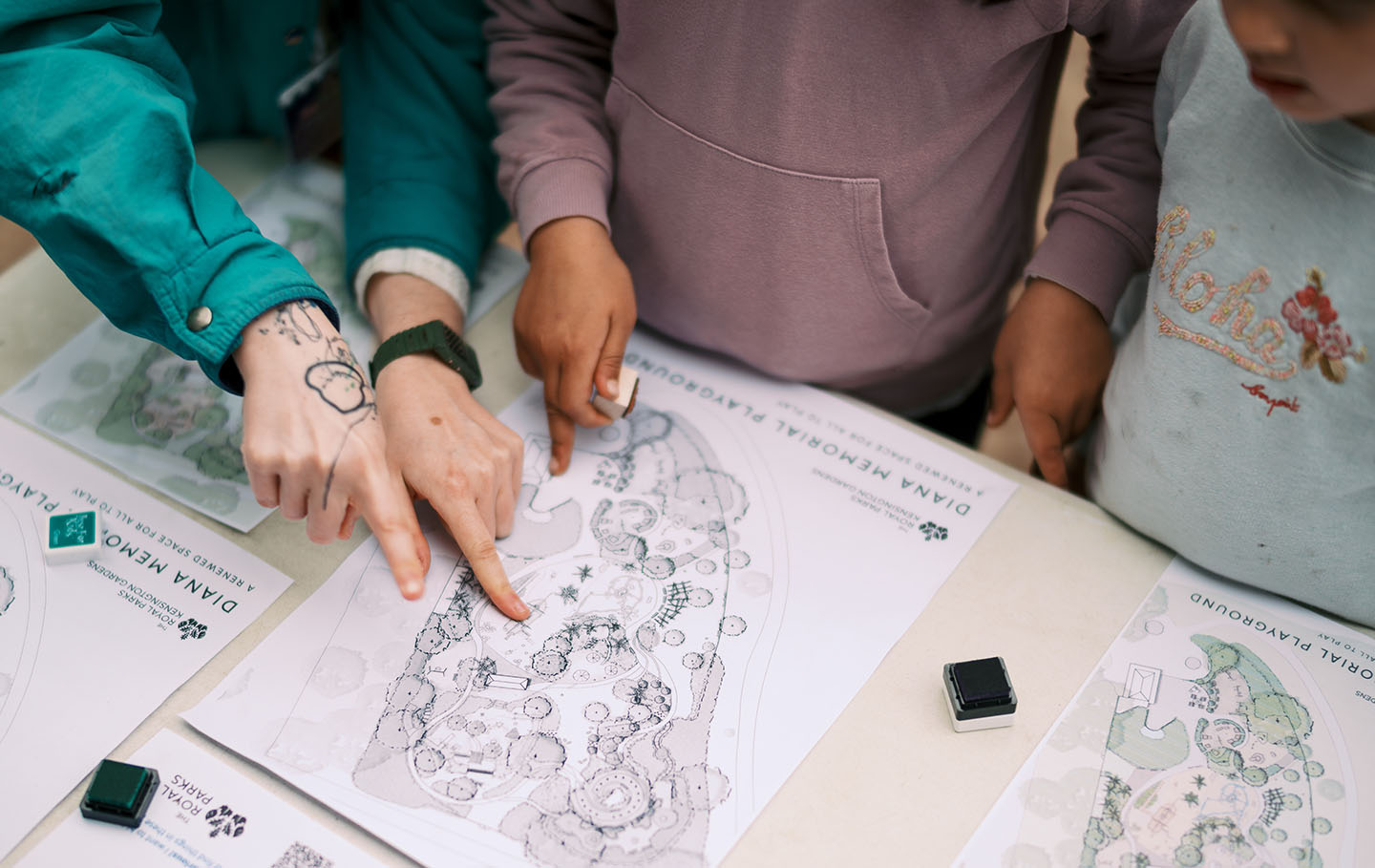
The delivery of a £3million renewal project to the Diana Princess of Wales Memorial Playground in Kensington Gardens has sustainability and accessibility at its heart. The project focuses on incorporating accessibility and sustainability into the designs.
The playground in Kensington Gardens was built in 2000 to commemorate the late Diana, Princess of Wales, who resided at the nearby Kensington Palace.
The playground welcomes over one million visits a year. But after decades of play, some of the equipment had reached the end of its life and needed replacing. The playground is being renewed, with a focus on inclusive play, so that children of all abilities can play together and engage with nature.
Accessibility
We’re making the playground welcoming for everyone. Working with AccessibleUK, we’ve designed features like wheelchair-accessible spaces in the Galleon and Treehouse, wider paths, and a new accessible route. Visitors will also enjoy new seating throughout the playground.
Sustainability
The Galleon and Treehouse will use timber from sustainably managed European forests, and the redesigned Mermaid Fountain will recycle runoff water to be reused for irrigation.
We’re reusing timber from the existing Galleon and Treehouse and introducing planting schemes that increase biodiversity and create safe, sensory and comfortable spaces for children.
- Several playground features, including the Galleon and Treehouse, will be replaced and the existing structures will be carefully dismantled for repurposing and recycling where possible.
- Design improvements in the Galleon’s decking will provide airflow, reducing maintenance over time.
- The Treehouse will use gravel and recycled aggregate in some of the support columns instead of concrete, ensuring safety and sustainability.
- Tent coverings will switch from fabric to timber for durability and lower upkeep.
- In 2025, we introduced ‘Peaceful Playtimes’, an hour of quiet play for children who prefer calmer environments.
- Once a month, the playground opens an hour early with a reduced capacity of 100 (compared to the usual 450), creating a more inclusive experience for children with sensory needs.
The renewed playground will open in spring 2026 and will include a new Galleon with a tunnel slide and two ‘crows’ nest’ lookout points.
A treehouse with three towers will feature different climbing opportunities and interactive features such as talk tubes.
Visitors can also enjoy a redesigned water play area incorporating the iconic Mermaid Rock, plus a dedicated play zone for children under three.


-
 Kensington Gardens
 -
 Kensington Gardens
 -
 Kensington Gardens
 -
 Kensington Gardens