
The Real‑Life Bridgerton: London’s Royal Parks as Inspiration
Dearest Gentle Reader,
If you love Bridgerton, you’ll know that parks are where so much of the drama unfolds, from carefully choreographed promenades and whispered gossip to blossoming romances, raised eyebrows and reputations made (or spectacularly undone).
While the series itself is fictional, the social world it portrays was very real.
During the Regency period, London’s parks were places to see and be seen. The elite social set known as ‘the ton’ flocked to Hyde Park and Kensington Gardens to show off fashionable clothes, socialise and keep up with the latest gossip, much as they do in the show.
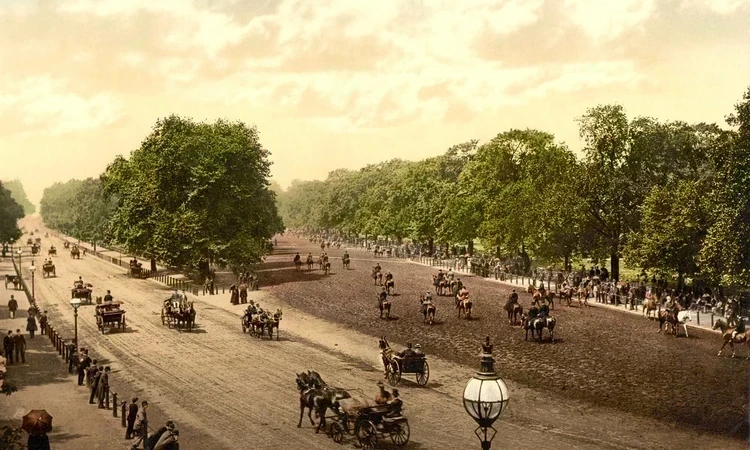
Promenading on Rotten Row
Although Bridgerton was not filmed in Hyde Park itself, park scenes are used to represent the kind of public gatherings and promenades that once took place there.
During the London Season (which generally ran from around Easter into the summer) wealthy families moved to the capital for months of balls, parties and carefully orchestrated social events.
And when they weren’t at a glittering soirée? The fashionable set could be found promenading in Hyde Park, particularly during the late afternoon and early evening.
Shining carriages rolled slowly past. Riders showed off their horses. Silk dresses rustled along the pathways. Everyone was watching and being watched.
If a young couple were seen walking together (always with a chaperone, of course) society might begin to speculate. A simple walk could spark weeks of gossip.
One stretch in particular became famous: Rotten Row.
Here, London’s elite gathered in full view of one another, turning the park into a moving display of fashion, wealth and status. Newspapers even reported on who was spotted there.
On Monday 15 June 1815 (the year in which Season Three of Bridgerton is set) London’s Morning Herald reported:
“… every part of the Parks, yesterday, were again crowded excessively […] all exhibited an extensive display of well-dressed persons […] Among the most conspicuous, were the Duchess of Marlborough, the Duke of St. Albans, the Duke of Leeds, Baron Fagel, and the Marquess Cholmondeley.”
A few years later, on Monday 8 June 1818, the same newspaper described:
”Rotten Row […] had a fine display of dandies […] Here the dust was raised in unceasing clouds by an endless chain of glittering equipages [carriages], moving for hours together in compact double lines, whilst its parallel promenades were thickly covered with gaily dressed pedestrians, sacrificing comforts and costume at the shrine of fashion.”
In other words, if Lady Whistledown had needed material, she would only have had to take a stroll.


Fashion in Kensington Gardens
If Hyde Park was the social theatre, Kensington Gardens was its runway.
Kensington Gardens is referenced in Bridgerton as part of London’s fashionable circuit, though, like Hyde Park, scenes were filmed elsewhere.
In real life, it was a place to show off new looks.
Society magazines such as La Belle Assemblée regularly published illustrations of the latest gowns and bonnets, often depicting women strolling through the park.
Readers across Britain would study these images and ask their dressmakers to recreate the styles seen in London.
Not every trend was universally admired though.
By the late 1820s, satirical cartoonist George Cruickshank was poking fun at the ever-growing size and extravagance of fashionable hats, capturing what he described as both the ‘fashions’ and the ‘frights’ on display in Kensington Gardens. He made fun of some of the garish clothes on display in Hyde Park too.
Even then, it seems, trend cycles moved quickly.


Ballooning in the parks
In Season Three of Bridgerton, there’s a dramatic moment in Hyde Park when a hot-air balloon goes rogue and Colin Bridgerton rushes to the rescue. The incident is fictional but the fascination with ballooning is not.
In the late eighteenth and early nineteenth centuries, Britain experienced a craze for hot-air balloons, sometimes nicknamed ‘balloonomania’.
This drew crowds to London’s parks and pleasure gardens where they gathered to watch the balloons ascend above the treetops.
One particularly memorable ascent took place in 1814 during the Grand Jubilee Fair. This occasion marked 100 years since the accession of George I and also celebrated the apparent end of the Napoleonic Wars.
To mark the occasion, large-scale entertainments were staged across the Royal Parks.
A hot-air balloon and fireworks were launched from The Green Park as part of the celebrations, watched by thousands, including Queen Charlotte herself.
In Hyde Park, a mock naval battle was performed on the Serpentine. In St. James’s Park, an illuminated Chinese-style pagoda was built across the lake and famously caught fire during the festivities!
It’s easy to picture the cast of Bridgerton swept up in the antics of the day.
One suspects even Lady Whistledown would have struggled to keep up.


Bridgerton at Greenwich
We couldn’t explore the real-life world behind Bridgerton without mentioning Greenwich.
The Bridgerton family home is, in fact, Ranger’s House, managed by English Heritage, which overlooks the Rose Garden in Greenwich Park.
The exterior of the house appears on screen throughout the series, with the show’s famous purple wisteria added digitally in post-production.
Greenwich Park’s Rose Garden was also used as a filming location, linking the fictional world of the Bridgertons with a very real Royal Park.
It’s a rare moment where Regency-inspired drama and historic landscape visibly overlap; where visitors today can stand in a setting connected to the series, and perhaps imagine the rustle of silk or the whisper of scandal on the breeze.

Related Articles
-
 Read
ReadRotten Row
Find out more about the history of Rotten Row in Hyde Park
-
 Watch
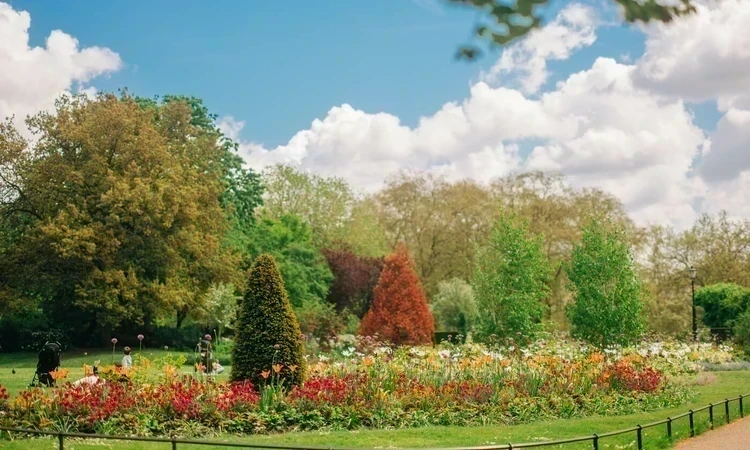
WatchSpring walkthrough: Hyde Park
Take a quick tour through Hyde Park in spring with this mapped walking route, showing some of the park's highlights.
-
 Watch
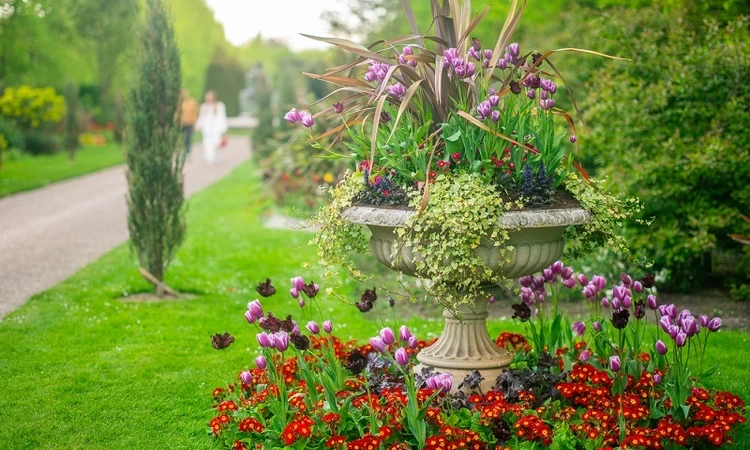
WatchSpring walkthrough: The Regent's Park & Primrose Hill
Take a quick tour through The Regent's Park & Primrose Hill in spring with this mapped walking route, showing some of the park's highlights.


