
Tree species
The trees of London's Royal Parks are among the city's greatest natural treasures. Across the parks, visitors can discover a remarkable diversity of species, from ancient native oaks to ornamental cherries, majestic planes and rare specimen trees, each contributing to the character and beauty of these historic landscapes.
Explore our tree guide to discover the unique features, history and ecological value of the many species found across the Royal Parks. Whether you are identifying a tree on your next visit or simply curious to learn more, you'll find information to help you recognise and appreciate the rich variety of trees that make these landscapes so special.
Cedar of Lebanon
Cedrus libani
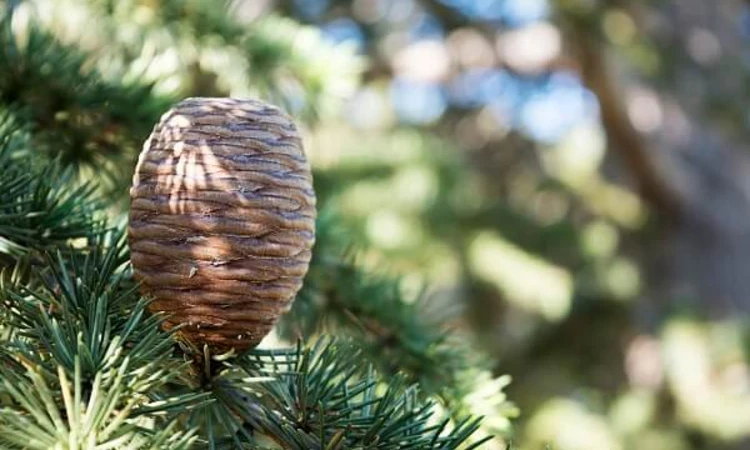
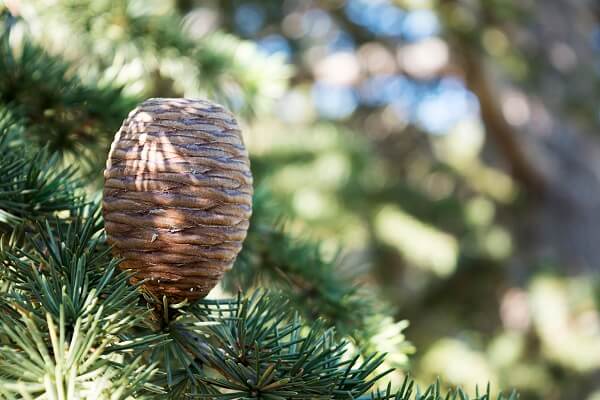
The distinctive evergreen cedar, which comes originally from the Middle East, has long been associated with everlasting life. It can grow to a great age – some thriving cedars are known to be over a thousand years old.
The trees are also a symbol of fertility, and regarded as the tree of life and the tree of knowledge. They symbolise purity and protection, and it is a Jewish tradition to burn cedar branches at New Year.
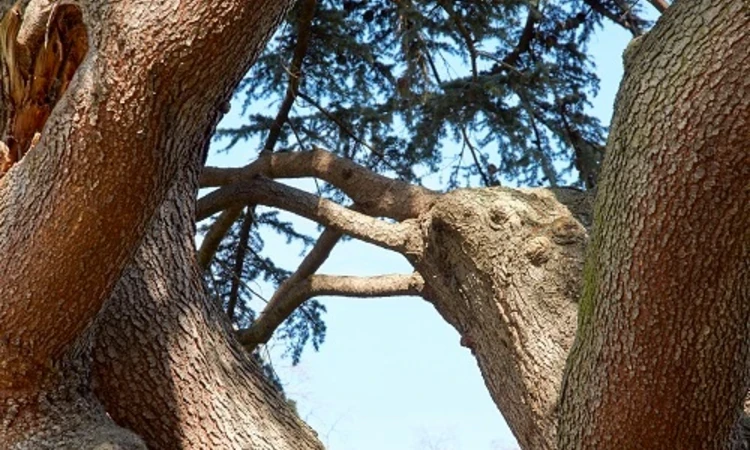
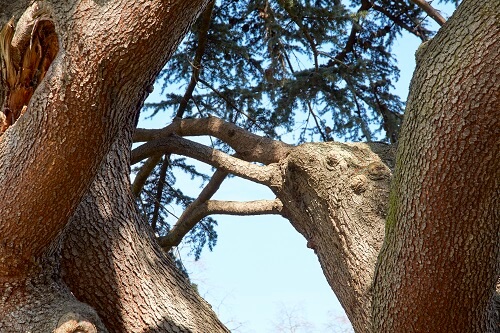
The Cedar of Lebanon was introduced to Britain around 400 years ago, and became very fashionable for parks, gardens and estates. They are prized for their sweeping branches that spread out in horizontal layers, often hanging low to the ground.
Cedars can grow up to 40 metres tall, about the height of a ten-storey building. The resin gives cedar wood an appealing fragrance that’s also as an insect repellent, which makes it an ideal timber for building wardrobes and chests.

-
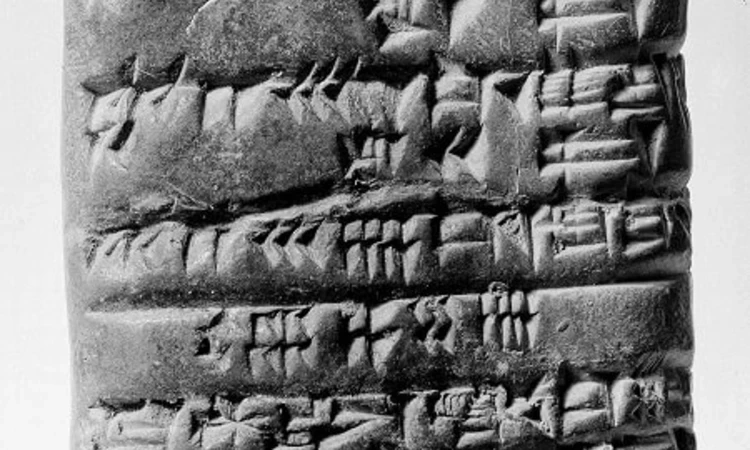 Cedar of Lebanon cuneiform tablet
-
-


-
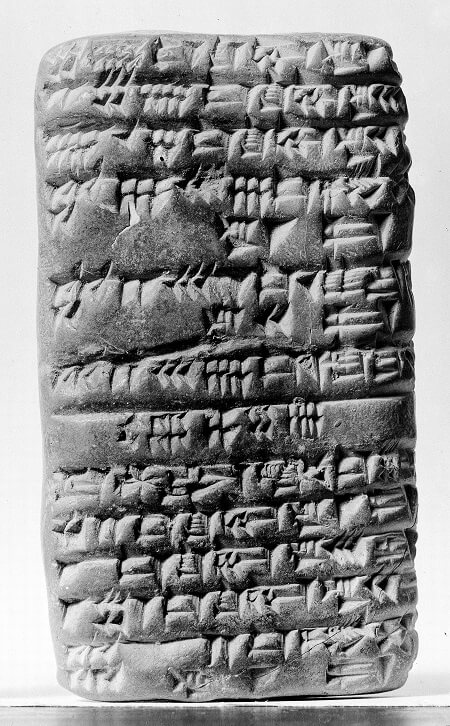 Cedar of Lebanon cuneiform tablet
-
-
Copper Beech
Fagus sylvatica
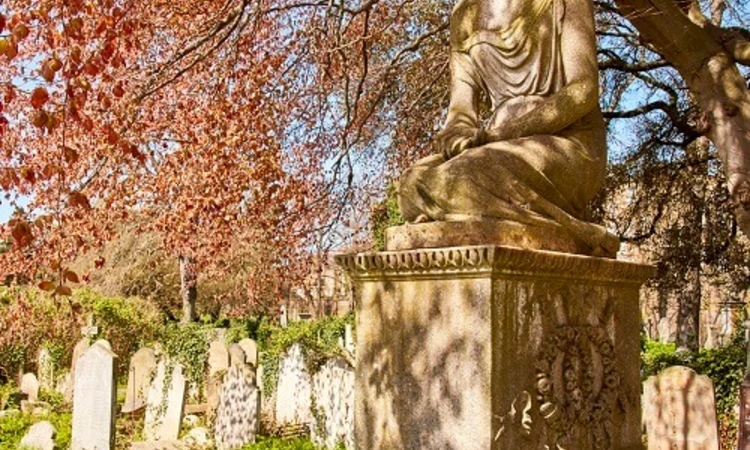
When this tree is in leaf, it is one of the easiest to identify in the cemetery. Its dark red leaves look particularly beautiful when lit by the summer sun, and they turn glorious shades of yellow and orange in autumn. That’s why copper beeches are such popular trees for parks and gardens.
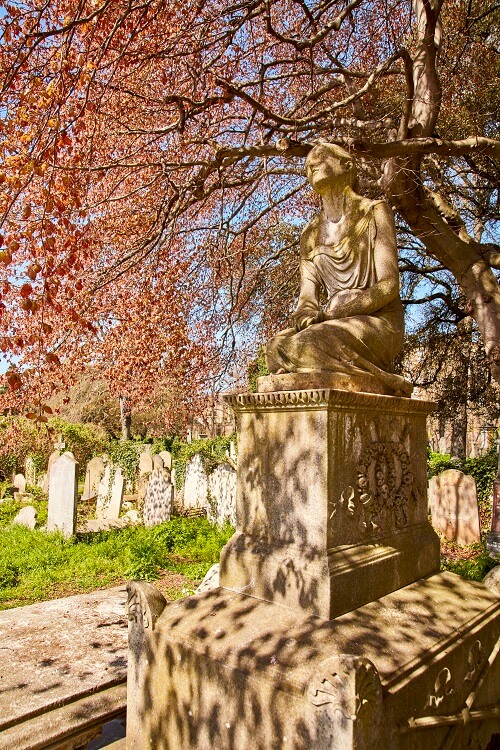
Brompton’s copper beech is probably about the same age as the cemetery, which opened in 1840. It has become an important feature in the cemetery landscape, so the tree team is looking after it carefully.
The team carefully monitors the impact of the bracket fungi that grow on the trunk, as they are very slowly rotting the tree. The decaying wood is an important habitat for wildlife, so it’s valuable to have both the tree and the fungi in the cemetery. However, the tree is weakened as a result, and is vulnerable to damage during strong winds. This means occasionally cutting back the tree’s canopy to help protect it. It’s surviving very well so far!
The copper beech produces distinctive triangular nuts in autumn, usually found in pairs in spiny cases. The nuts are known as ‘beechmast’ and were traditionally used as food for pigs. Beech burns well, and is the preferred wood for smoking herrings.

-
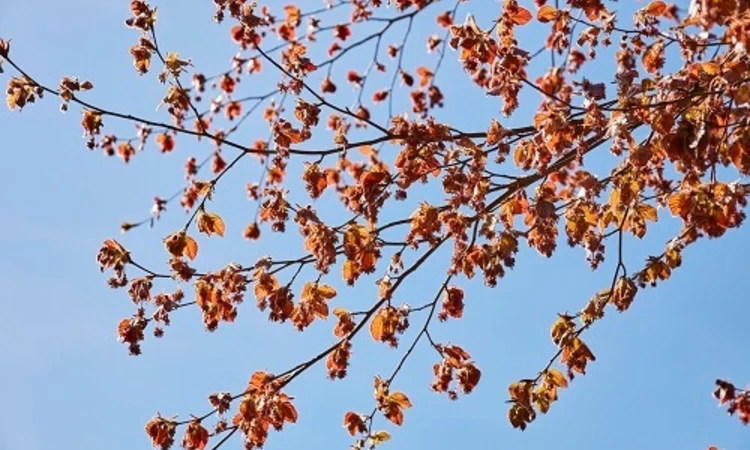 The leaves of the Copper Beech tree
-
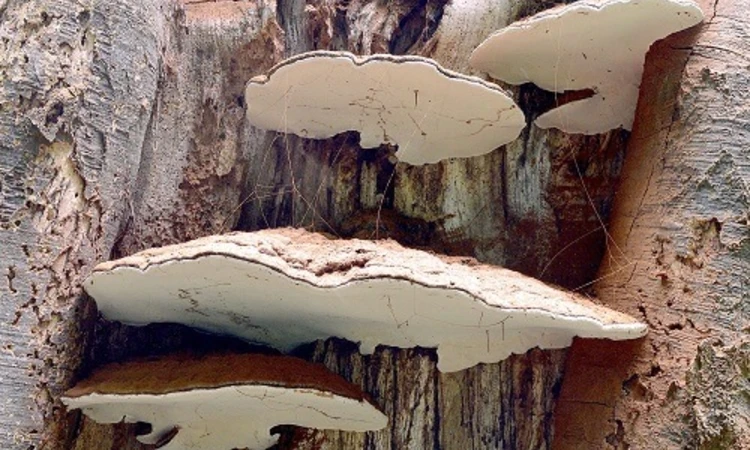 Bracket fungi on the Copper Beech in the cemetery
-


-
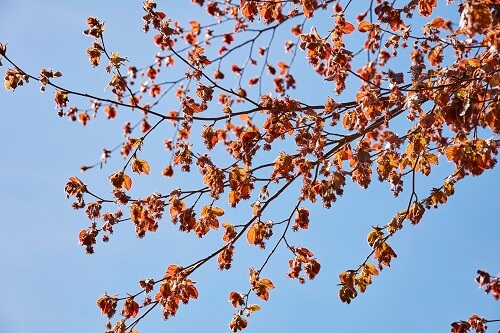 The leaves of the Copper Beech tree Brompton Cemetery
-
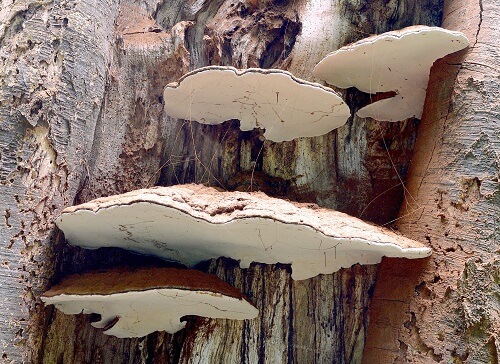 Bracket fungi on the Copper Beech in the cemetery
-
Hawthorn
Crataegus
As a member of the rose family, the hawthorn has an abundance of nectar-rich flowers which provide a vital food source for the invertebrates living in the parks. While we manage deadwood habitat for invertebrates that live in and feed on decaying wood, having flowering trees and plants is also a crucial food source for a large range of invertebrates.
Hawthorn is an important tree to the history of St. James’s Park and The Green Park as before the parks were parks, Royal grounds, or hunting forests, there was a swampy marshland area known as ‘Thorney Island’. Thorney Island itself is the historic location that Westminster Palace is built on but the land around it (including St. James’s Park and The Green Park) formed a series of small rivers and small islands from the river Tyburn. It was known as Thorney Island as some of the dominant tree species were hawthorn and blackthorn. Today there is a large collection of hawthorn trees in the parks which look great and provide a link to the past.

Holly
Ilex aquifolium
The holly is one of the easiest trees in the cemetery to recognise, because of its familiar shiny prickly leaves and red berries. This holly is ‘variegated’, with vivid green leaves edged in bright yellow.
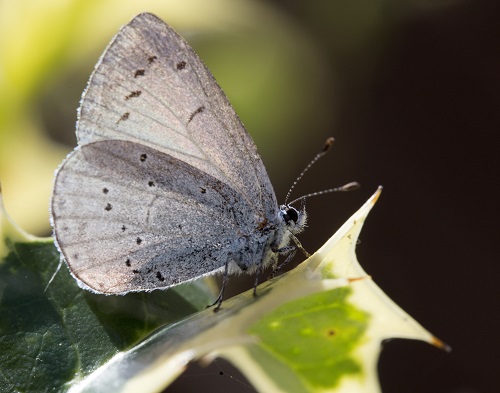
The caterpillars of the holly blue butterfly, and a number of other moths, eat holly leaves. The flowers provide nectar and honey for bees, and the tree’s dense foliage gives good shelter for nesting birds.
Hollies are traditionally associated with everlasting life, because they are evergreen (they keep their leaves all year). They can also live for up to 300 years. We bring sprigs of its bright green leaves into the house in winter, to remind ourselves of new life to follow in the spring. The spiky leaves and blood-red berries are also associated with Jesus’s crown of thorns.
Many people believe it is unlucky to cut down a holly tree. This may be because of its reputation for protecting people and homes against lightning strikes. There’s actually some science to back this up – the spikes on the leaves act as miniature lightning conductors!



Holm Oak
Quercus ilex
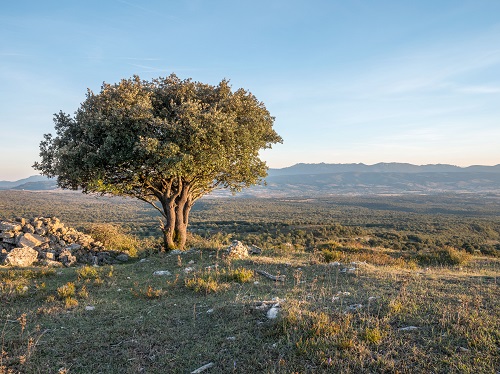
A sacred tree that’s one of the few evergreen oaks in Britain.
The evergreen holm oak, originally from the Mediterranean, is also known as ‘holly oak’ because of its distinctive spiny leaves. Holm is an old word for holly.
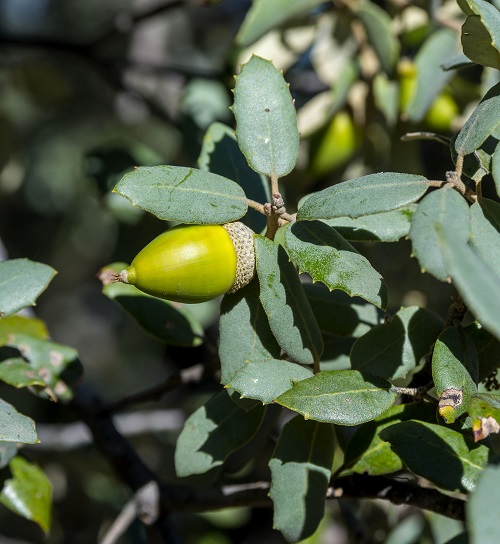
The holm oak produces distinctively pointed acorns in the autumn. In Spain and Portugal, the pigs grown for ‘iberico ham’ are fed on them. Holm oaks are also one of best trees to use in truffle orchards – pigs and dogs are used to sniff out the prized fungi that grow among the roots.
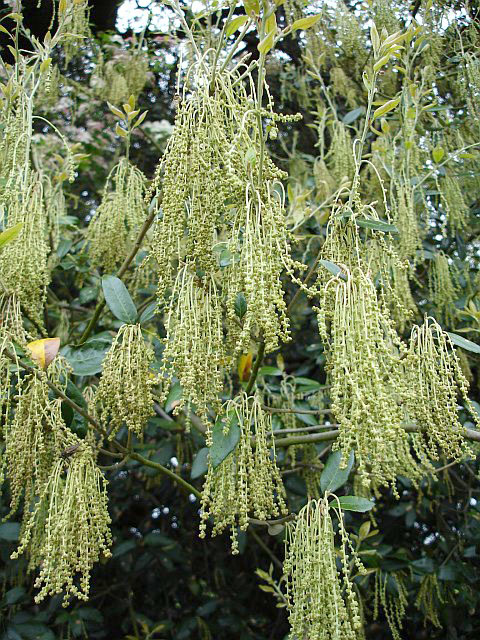
Birds nest in cracks and crevices in the branches, protected by the year-round leafy canopy. The trees’ abundant yellow catkins in early spring provide pollen for bees and other insects.
Holm oaks are considered by many to be sacred, and were planted in sacred places to keep away evil spirits. The ancient Greeks used the leaves to tell the future. The trees also symbolise strength and long life, and the wood is certainly very hard and strong. The Romans used it to make cartwheels, wagons and tools. It’s also a slow-burning firewood and used to make charcoal.


Hornbeam
Carpinus betulus
The word hornbeam comes from Old English, with ‘horn’ meaning iron and ‘beam’ meaning wood. So the hornbeam is the ironwood; this is reflected in the tree's traditional uses as the wood was used for load bearing timbers, the middle cog of a cartwheel and a variety of tool handles. Before London’s industry was fuelled by coal and metal, it would have largely been fuelled by firewood and charcoal. As the wood of the hornbeam burns for longer and hotter than many other species, its charcoal was a vital component of pre-industrial London.
Large areas of forest and woodland such as Epping Forest and the Great North Wood would have had hornbeam coppice and pollards that were regularly cut to fuel the city. The hornbeam tree is arguably one of the most important living things in the history of London!

London Plane
Platanus x hispanica
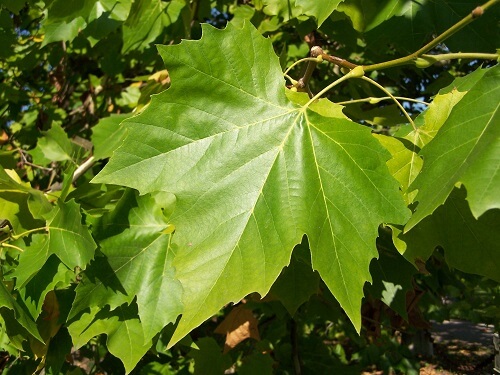
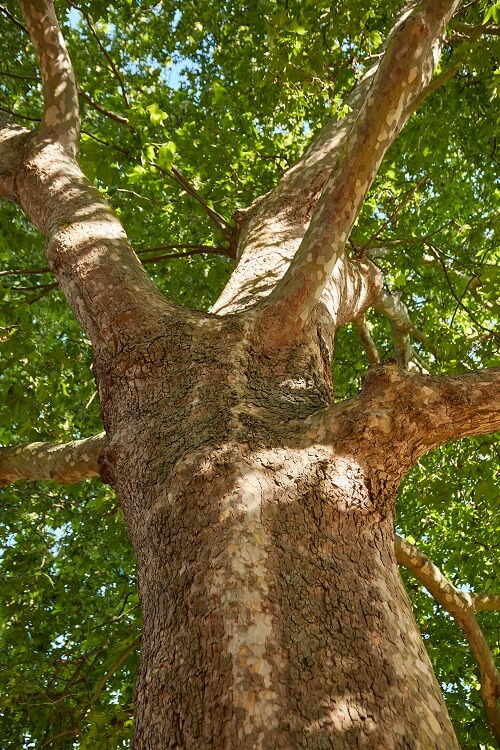
The London plane is a popular tree for planting along streets and in parks, because it is hardy and long-lived. These trees really don’t mind living in polluted towns and cities. Rain easily cleans their shiny leaves and they regularly shed their dirty bark. You will often see clean white patches on the trunks.
London planes can live for several hundred years, and grow to be over 30m (100 feet) tall. Their leathery five-lobed leaves are similar to those of a maple or sycamore, and turn a spectacular yellowy-orange in the autumn.
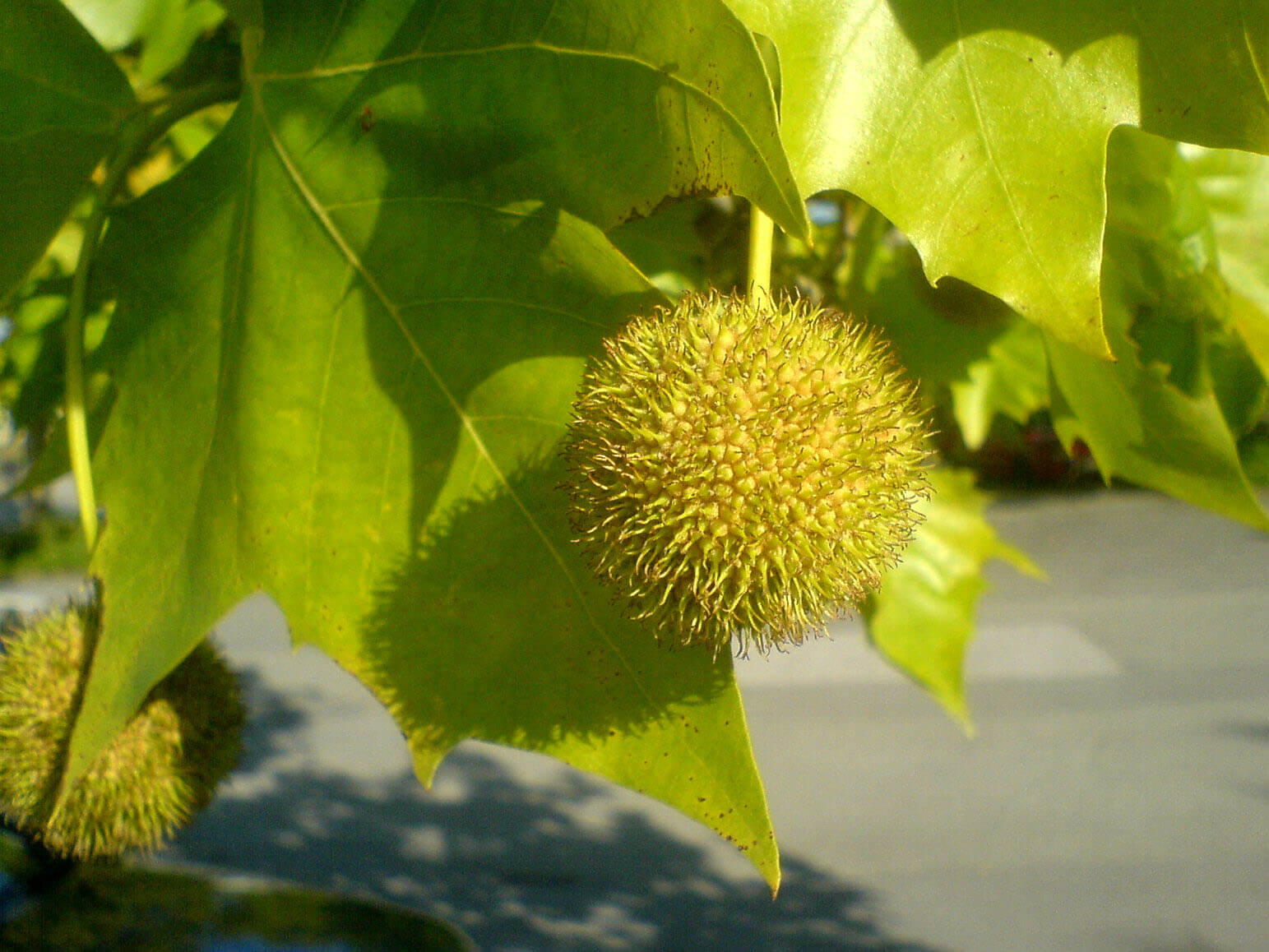
London planes produce ball-shaped clusters of seeds, which stay on the tree all winter. The clusters gradually break up in the spring, and the tiny seeds are dispersed by the wind. The seeds – and the leaves when they first appear – are covered in tiny hairs, which can irritate your nose and eyes.
The wood of the London plane, known as lacewood, was very popular for making veneers. It has a decorative lacy appearance, with patterns of red-brown flecks against a lighter background.


Oak
When you think of Richmond Park, two things probably come to mind: deer and oak trees! Richmond Park is an ancient hunting forest, which is part is the reason why it still has so many ancient oak trees today. As the park has been enclosed since the 1600s and been royal land since the 1200s, it has had a rare level of protection and landscape continuity that sets it apart from many other parks. The continual presence of deer and careful management has kept Richmond Park looking more or less the same for nearly 1,000 years, in contrast to the formal landscaping projects that have made some of the other Royal Parks what they are today.
The ancient oak trees of Richmond provide some of the rarest and most important deadwood habitats for invertebrate species in Britain. The deadwood conditions have developed over centuries and provide a variety of habitats from dead branches in the tree, dead wood on the ground, all manner of fungi and decaying wood in the trunk of the trees. Some of the rarest and most important habitats can be found at the base of cavities in the trunks of the oak trees; the long-term deadwood areas are decayed by a succession of invertebrates and fungi, the rarest of which can only live off of the late-stage decay which can take centuries to develop. This is why the continuity of landscape management and protection of these trees is so important.


Oregon Maple (Big Leaf Maple)
Acer macrophyllum
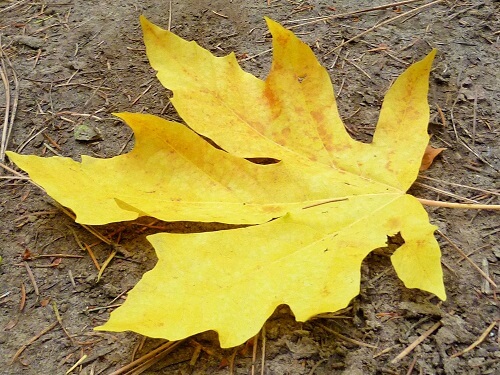
The leaves of the Oregon Maple really are big. They can grow up to 30cm wide – nearly twice as big as your outstretched hand – and turn a spectacular yellowy gold in the autumn.
This tree is quite unusual in Britain. It’s also known as the Big Leaf Maple, and originally comes from the Pacific coast areas of north west America, growing mainly between Canada’s Vancouver Island and California.
Back home they can grow up to 50 metres tall – that’s about the same height as Nelson’s Column in London’s Trafalgar Square. The ones in Brompton Cemetery aren’t quite as big as that, despite being over 100 years old. They’re beginning to decay, but that’s great for the cemetery’s wildlife. Look out for insects and bird’s nests tucked in the bark’s cracks and crevices.
The sap of the Oregon Maple is sometimes used to make maple syrup, and the wood is popular in America as veneer for furniture and musical instruments. It’s also known as the ‘paddle tree’ by the First Nation people of Vancouver Island, who use it to make paddles and spindles.


Paulownia
Paulownia tomentosa
The Paulownia is one of the most spectacular flowering trees. The flowers emerge before the leaves do and form a foxglove shape, vivid purple trumpet-like flower. The tree proudly stands out, showing off its purple flowers which brighten up whole areas of the park. As the flowers change into seeds, these can be seen throughout the year before falling from the tree. As the seeds are so vast in number, lightweight and soft, they were used in packaging before polystyrene was invented. The tree also spread around the world, growing in port cities as the seeds were shipped to protect precious cargo.
The paulownia is also known as the empress tree and the princess tree. In Japan, aristocratic families would plant one of these trees when a daughter was born. As the tree grows so quickly, it would mature at the same time as the new family member. The tree would then be cut down to be used as furniture for the daughter in adulthood.

Père David's Maple (a species of Snakebark Maple)
Acer davidii
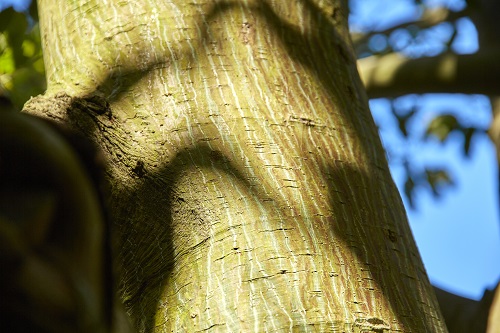
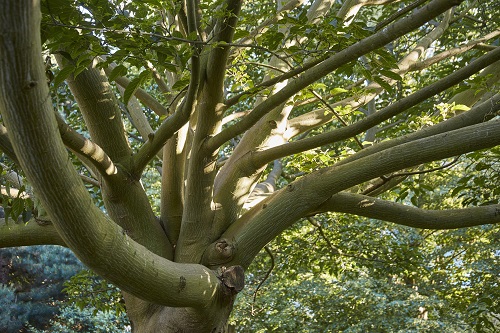
Not surprisingly, snakebark maples can be identified by their colourfully striped bark. The leaves also turn spectacular shades of orange and yellow in the autumn.
These deciduous trees originate in east Asia, growing between the eastern Himalayas and Japan. They are popular for parks and gardens in this country for their handsome bark, and because they grow quickly at first, and then more slowly as they mature.
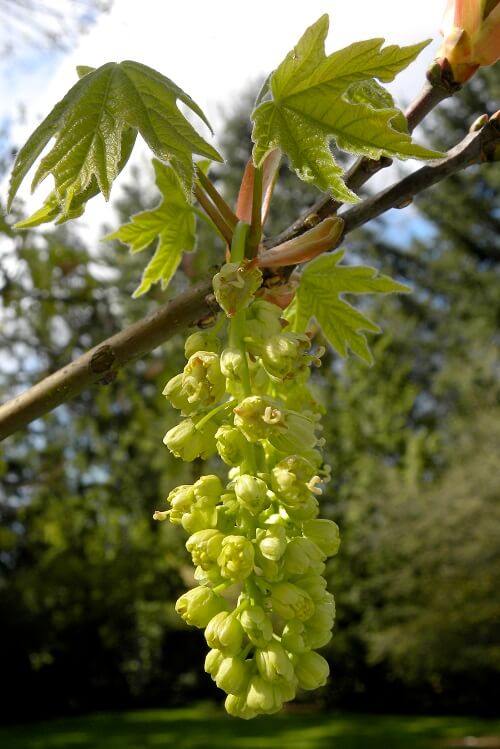
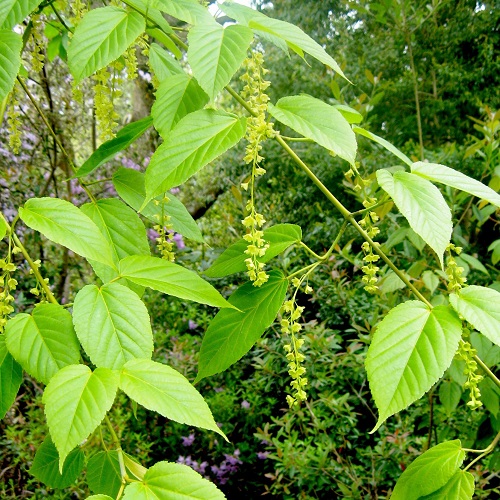
Snakebark maples produce delicate strings of yellow flowers in spring. These are followed by pinkish-brown winged seeds, which are spread by the wind.
This particular species is also known as Père David’s maple (Acer davidii). It was discovered in central China in about 1869 by a missionary priest and botanist called Jean Pierre Armand David. A few years later, it was rediscovered and introduced to Britain by Charles Maries, a plant hunter who worked for horticulturalist James Veitch in Chelsea.


-
 Brompton Cemetery
-
-
 Brompton Cemetery
Rowan
Sorbus aucuparia
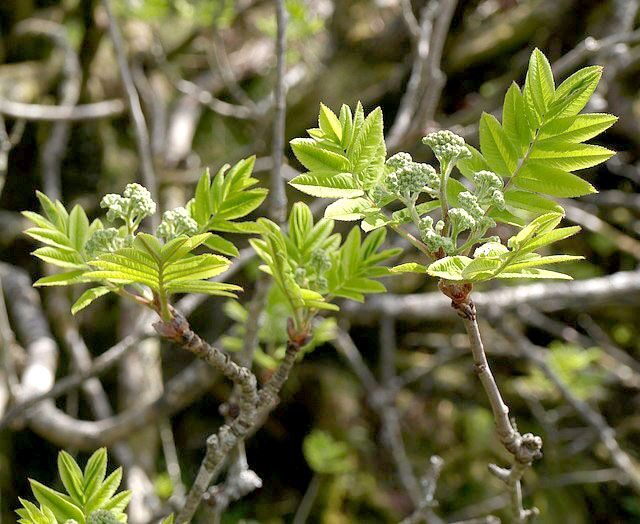
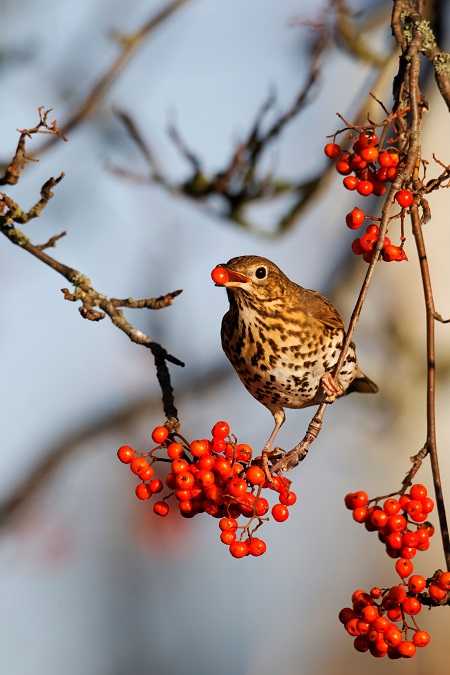
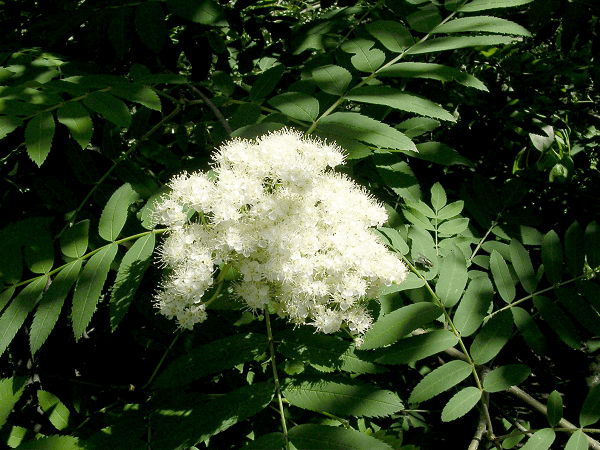
The colourful rowan, or mountain ash, wears clusters of white blossoms in spring and rusty red berries in autumn. It’s an important tree for wildlife in the cemetery. Moth caterpillars eat the leaves, bees and other insects feast on the flowers, and birds love the berries.
The rowan is native to Britain and northern Europe. You can still see it growing wild, especially in Scotland, and it is very popular tree for planting in streets, parks and gardens.
Rowan has traditionally been used to protect people, homes and animals from evil spirits, witches and fairies. In Ireland and Scotland they are often planted by front doors and gates, or bundles of rowan twigs are hung above the door. It’s believed to be very bad luck indeed to cut down a rowan tree.
Red is said to be the best colour to protect against being enchanted, so the rowan’s bright berries and autumn leaves may be the key to its reputation. In many places in Britain, people used to carry a simple rowan twig cross, tied with red thread, for protection.
Rowan berries taste very bitter when raw, but are used across Europe to make jams and drinks, including ale and cider. Its wood is popular for making walking sticks, tool handles and spinning wheels.


Strawberry tree
Arbutus
A colourful Mediterranean tree that’s great for British wildlife.
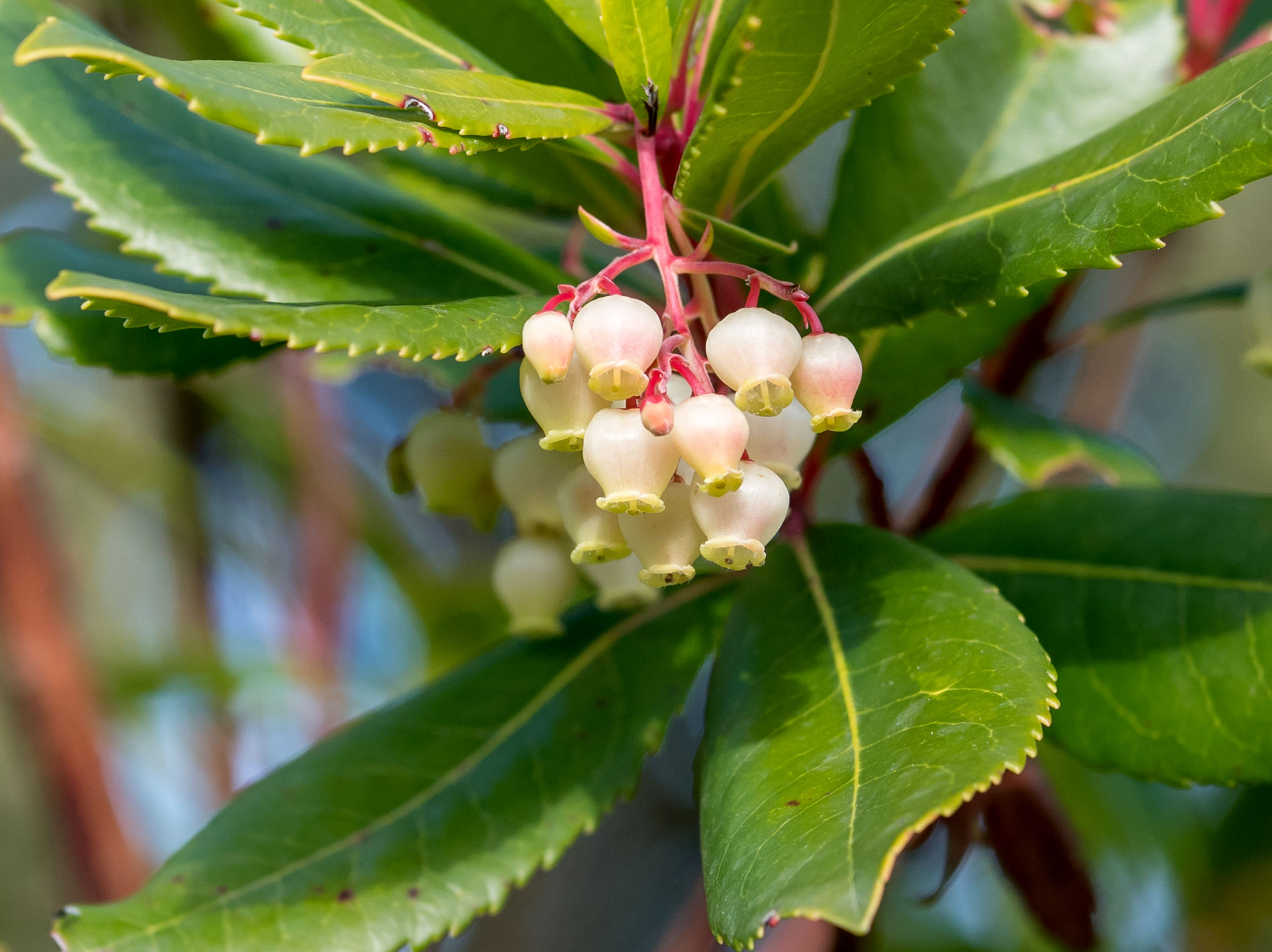
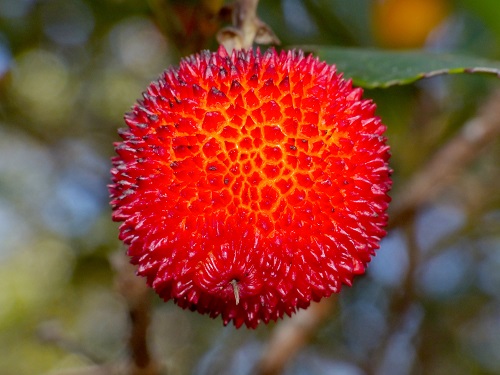
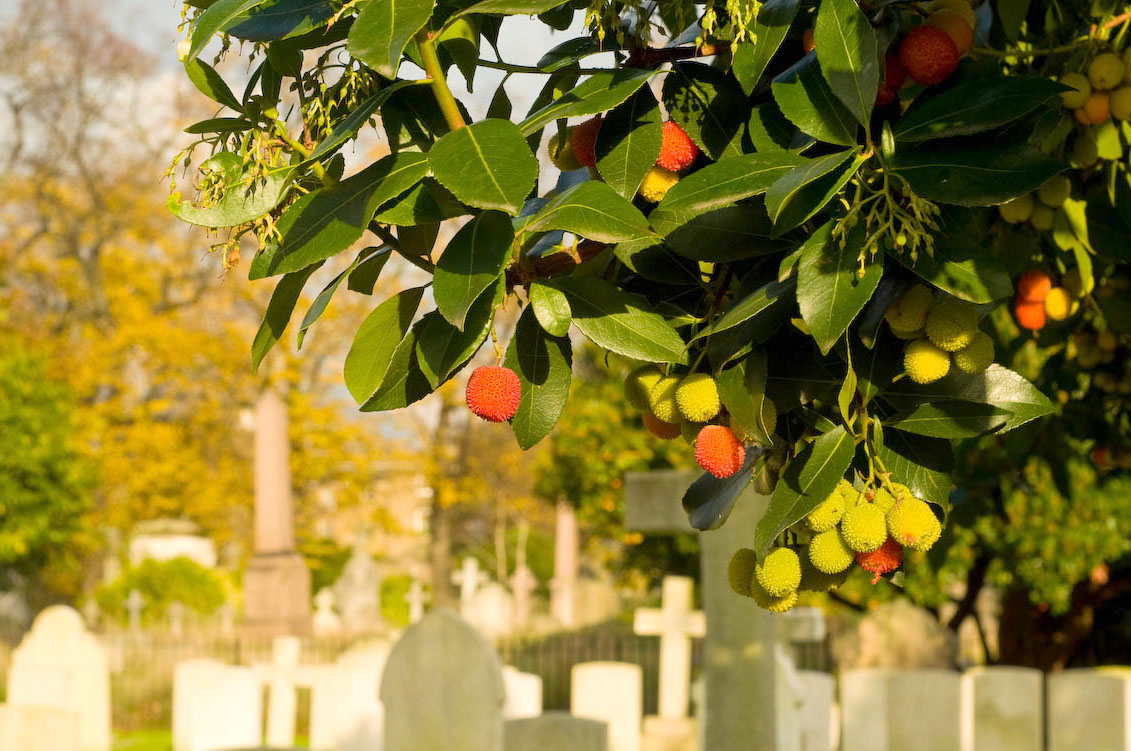
The evergreen Strawberry tree, originally from the Mediterranean, thrives in the cemetery. The trees are particularly colourful in the late autumn, when they are covered in fruit and flowers. The red fruits grow very slowly, so are still on the tree when the new flowers appear.
The sweet-smelling bell-shaped flowers provide nectar and pollen for bees and other insects, and birds feast on the fruit. Insects and small animals also find shelter among the dense evergreen foliage during the winter.
The tree’s strawberry-like fruit can be eaten raw, but don’t taste particularly nice. They are usually made into jam in Mediterranean countries, and to make alcoholic drinks. Strawberry tree honey, which has a distinctive bitter flavour, is also very popular.


-
-
-
 Brompton Cemetery
Sweet Chestnut
Castanea sativa
Something that makes Greenwich Park special compared to other parks in London is the collection of old sweet chestnut trees. While the view of the city, Greenwich Meridian and London Marathon may be most well-known, the sweet chestnut trees that date back to the ‘Grand Plan’ by Andre Le Notre in the 1660’s are arguably the park's greatest feature.
Sweet chestnut makes a particularly impressive old tree. As the tree ages the bark twists, creating a corkscrew pattern. It is normal for parts of the tree to die off, leaving large areas of deadwood on the trunk and branches. Older trees take on a gnarled form that is full of character.
It’s generally believed that the sweet chestnut was brought to England by the Romans. As the tree produces a nutrient and fat rich nut, it was a prized food source in the ancient world due to the versatility, ease of transport and nutrition that it provided. As the armies moved, they would plant new trees for food in the future; the nut was also ground down into flour to make a variety of breads and other foods.

-
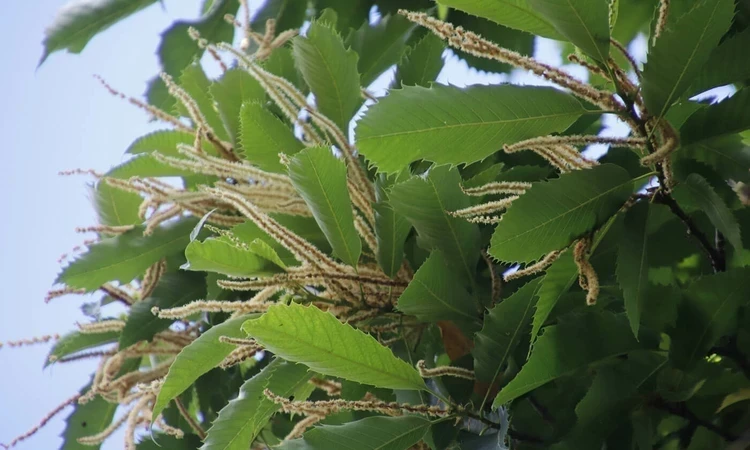 Leaves of a Sweet Chestnut tree
-
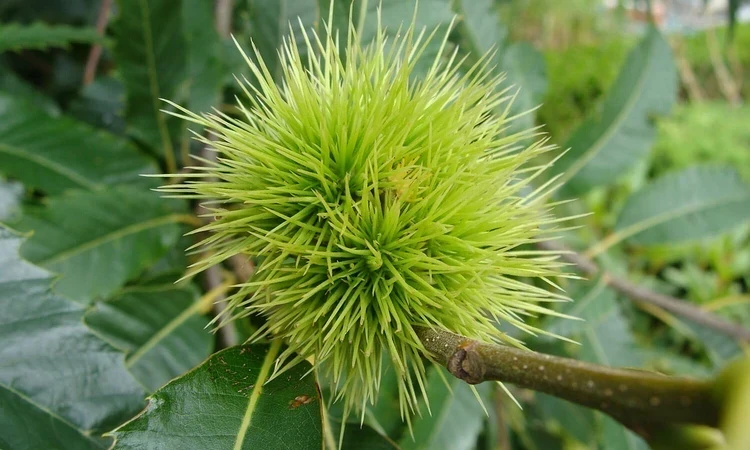 The chestnuts grow inside a spiky husk
-
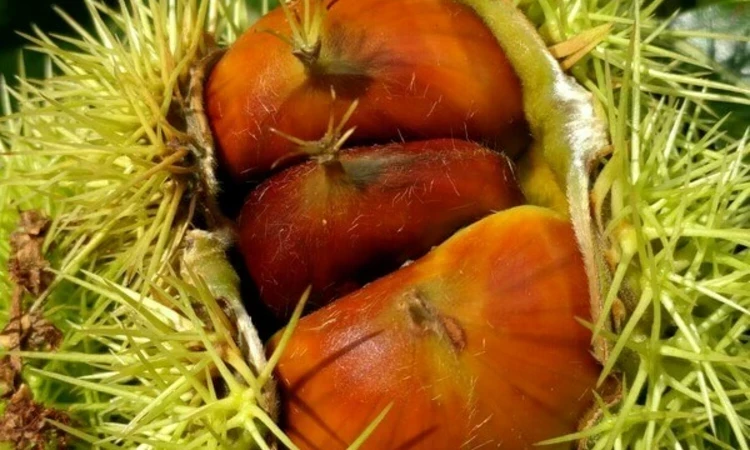 Sweet chestnuts


-
 Leaves of a Sweet Chestnut tree
-
 The chestnuts grow inside a spiky husk
-
 Sweet chestnuts
Weeping Silver Lime
Tilia tomentosa 'Petiolaris'
The Victorians planted 'weeping' trees to represent sorrow and mourning.
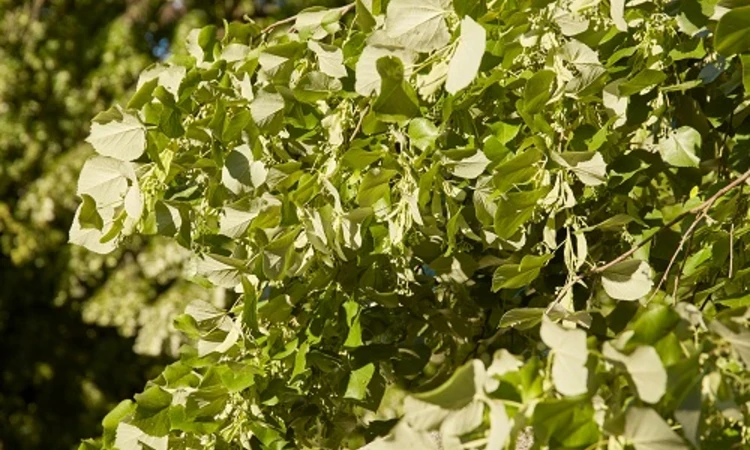
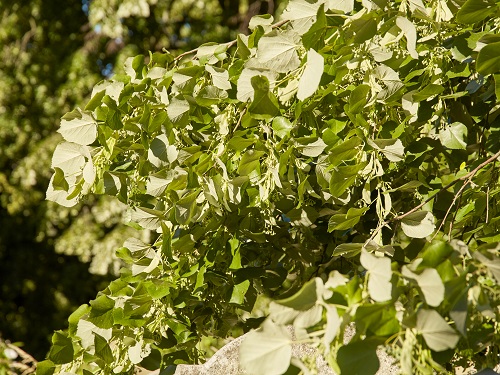
This tree lives up to its name, with branches that seem to droop sorrowfully, and leaves that are a silvery-grey on the back.
Its silver leaves may also be significant for another reason. We think this handsome tree may have been planted in the cemetery to mark Queen Victoria’s silver jubilee in 1862. However, the queen was in deep mourning after the death of Prince Albert, so she did not officially celebrate her 25 years on the throne.
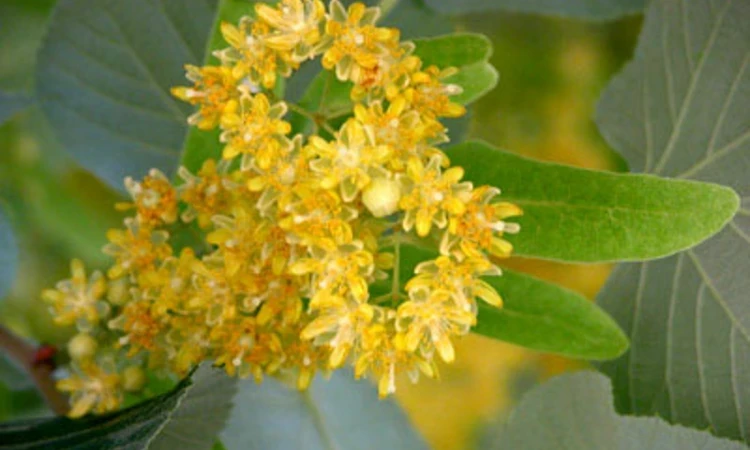
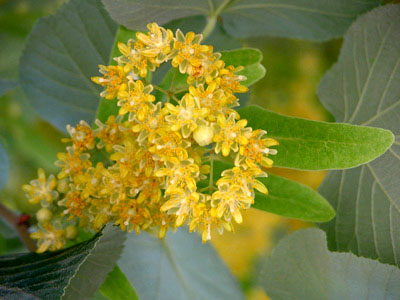
The weeping lime produces sprays of highly scented pale yellow flowers in July, which bees find irresistible. Unfortunately, the bees can’t digest the nectar, and it leaves some of them dozy or even unconscious!
Weeping varieties of trees, like the lime and ash, symbolised mourning and loss for the Victorians, and are often found in cemeteries. They also planted evergreen species, like cedars, pines and holly, to represent eternal life.

-
-
-
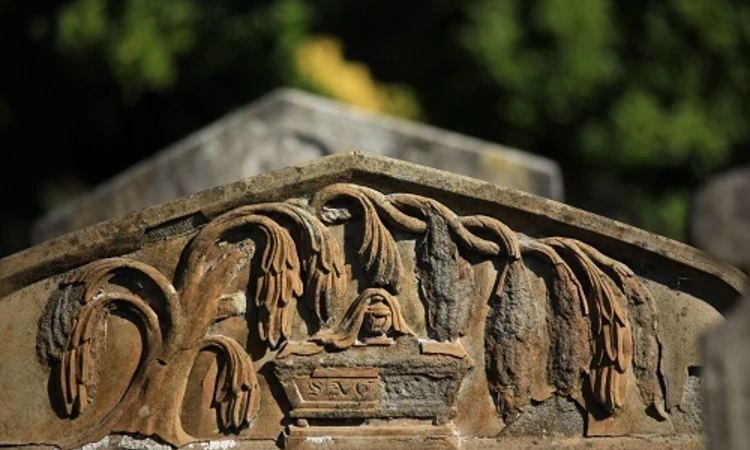 This weeping willow, carved on one of the cemetery’s headstones, is a symbol of mourning and loss.


-
-
-
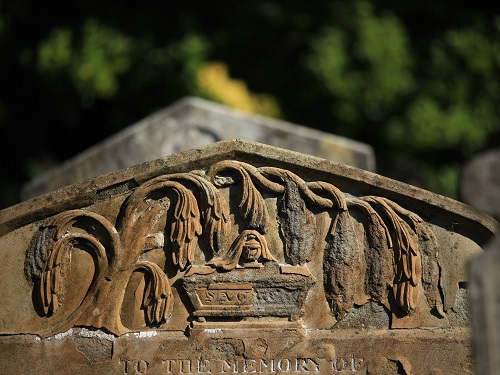 This weeping willow, carved on one of the cemetery’s headstones, is a symbol of mourning and loss.
Yew
Taxus baccata
Did you know that yew trees can live for thousands of years? One example in Brompton Cemetery is just a baby – it’s only about 200!
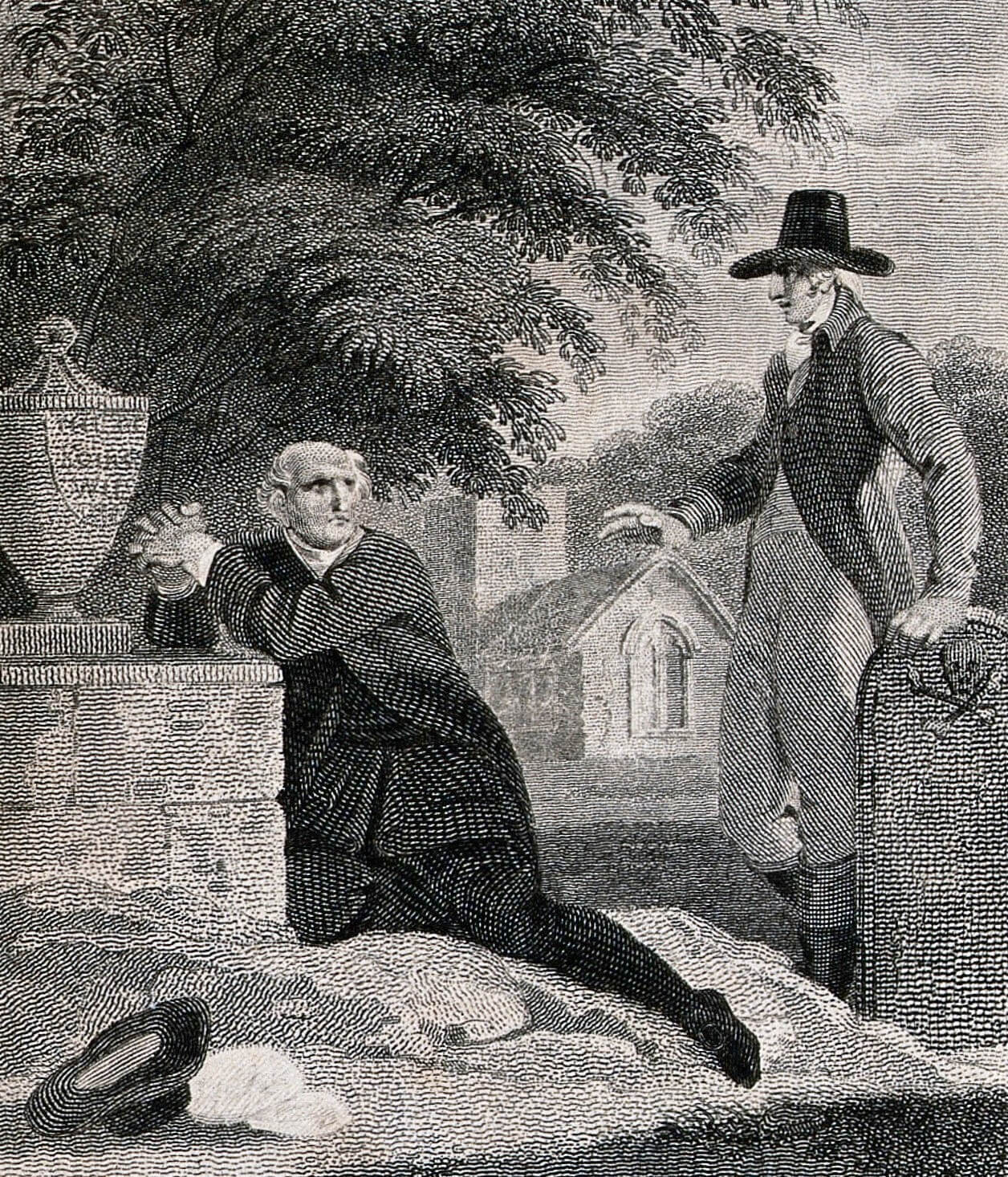
The yew’s very long life, and its ability to stay green all year round, has given it a mystical reputation. The trees are a symbol of immortality, and have stood as guardians of graveyards since ancient times. Some believed they marked the gateway to the underworld. Others thought the trees protected plague victims, and even purified the soil the bodies were buried in.
Thousands of yews were cut down in the medieval period, to use the strong springy wood to make longbows. It was forbidden to take churchyard yews to make weapons, so they survived the cull.
The yews within graveyard walls were also out of reach of cattle and sheep. That’s just as well, because the trees are very poisonous to people and animals. The red flesh around the seeds is the only part that isn't toxic, and birds love to feast on it in autumn.
Yew branches were often carried at funerals, and sprigs were tucked into coffins, in the hope of eternal life. But the trees’ presence in so many cemeteries and graveyards has given them a dark and deathly reputation too.
The Scottish poet Robert Blair summed up the yew in his poem called The Grave in 1743:
"Well do I know thee by thy trusty yew.
Cheerless, unsocial plant! that loves to dwell.
Midst skulls and coffins, epitaphs and worms."




Discover the trees of the Royal Parks
-
Why are trees so important?
Trees are vital. As the biggest plants on the planet, they give us oxygen, store carbon, stabilise the soil and give life to the world’s wildlife.
-

Tree species of the Royal Parks
Learn about some of the different species that you may come across during your visit to the Parks.
-

Best trees to see this Autumn in London’s Royal Parks
Autumn has arrived in the Royal Parks and we've put together a list of the best trees to see this season.
-
Tree Diseases: Taking Care of London's Trees
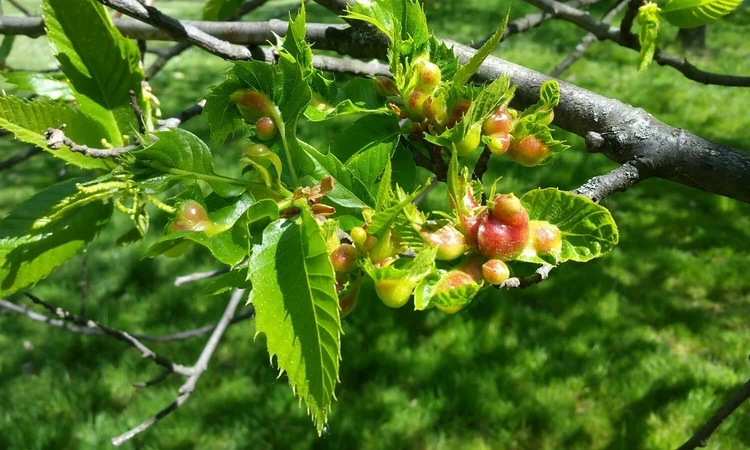
Managing tree disease within the Royal Parks
-

Tree Strategy
The Royal Parks Tree strategy
-

Music for Trees app
An immersive soundscape that combines original musical compositions with the trees that inspired them.
-

Trees through time at Greenwich Park
The trees of Greenwich Park have had a lot to contend with over the years.
-

National Tree Week
In this podcast episode, recorded for National Tree Week, Community Learning Officer Laura Ashfield talks to tree expert and arboriculturist Greg Packman.


